Commercial Stainless Steel Work Tables
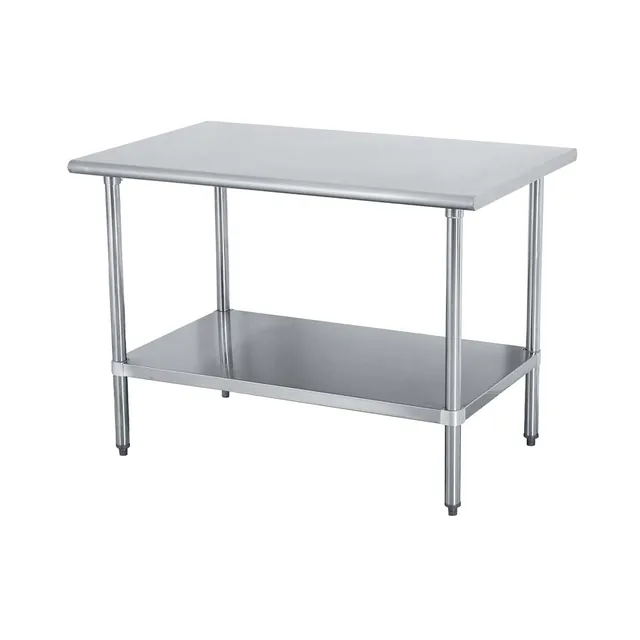
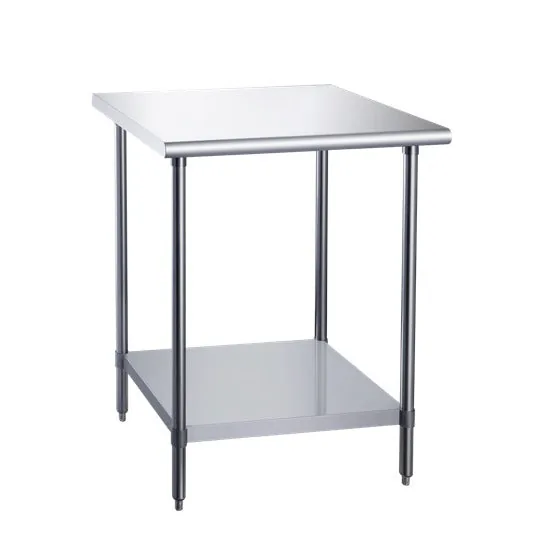
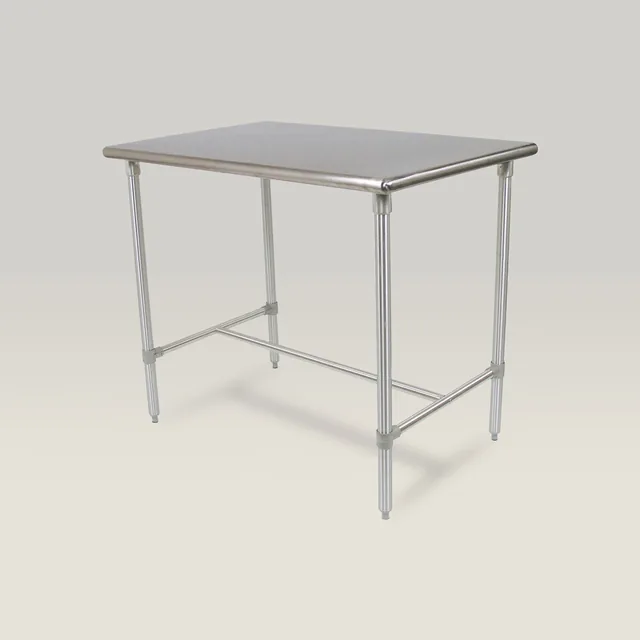
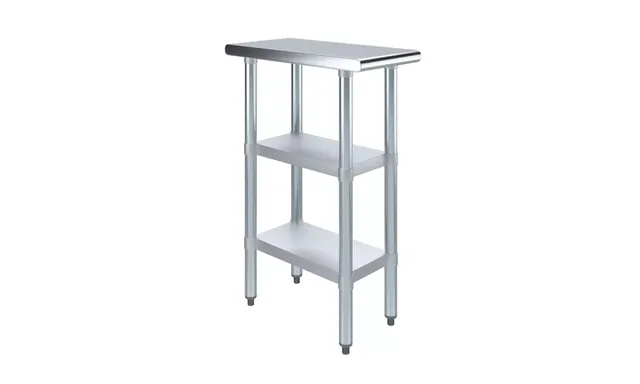
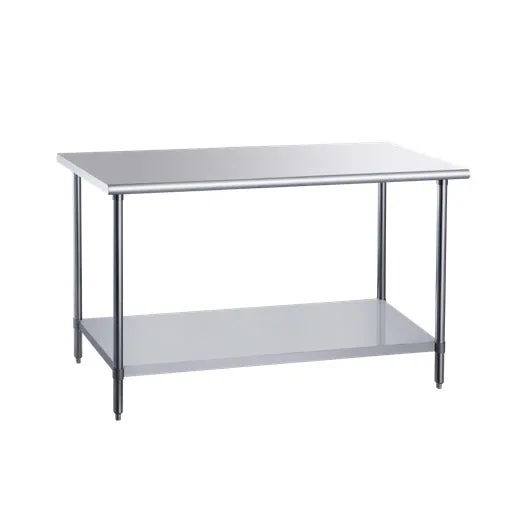
A commercial stainless steel work table is a freestanding, flat-topped prep surface built for professional kitchens — the sanitary, non-porous station where cutting, portioning, plating, and assembly happen. The specs that decide the right one are steel grade (304 resists corrosion and acidic foods; 430 costs less), gauge (14 heavy-duty, 16 all-purpose, 18 light-duty), size (24″–120″+ wide in 24″ or 30″ depths), base style (open, undershelf, or cabinet), and whether it has a rear backsplash. Filter the catalog below on those attributes to find models that fit your line.
Compare commercial stainless steel work tables across every brand by the specs that matter — width, depth, gauge, steel grade, and base style. Filter to exactly what fits your line, then compare on build quality, not marketing. Gauge (14/16/18) sets how much abuse the top takes; 304 stainless resists corrosion and acidic foods while 430 costs less.
Commercial stainless steel work tables: buying guide
A stainless steel work table is the workhorse of any commercial kitchen — the flat, sanitary surface where prep, plating, and assembly happen. This guide walks through every decision that matters, and the 1,385 models above let you filter by the exact specs as you read. The five that drive the choice are steel grade, gauge, size, base style, and backsplash.
Types of stainless steel work tables
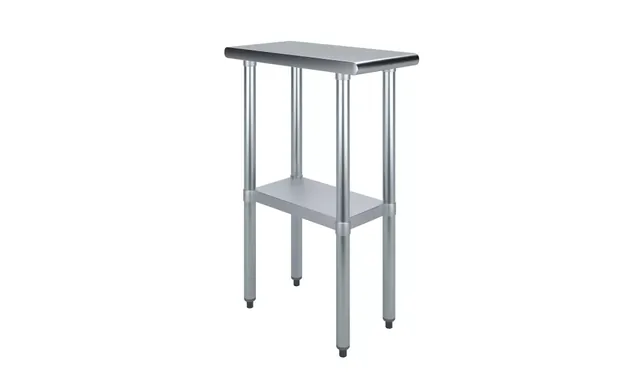
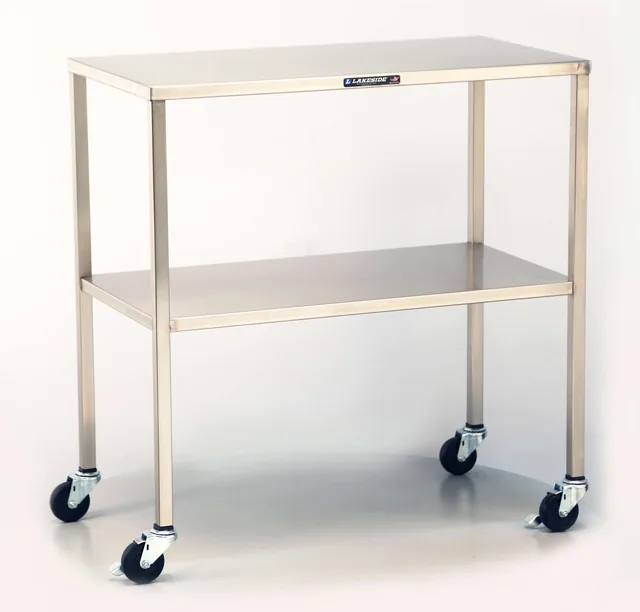
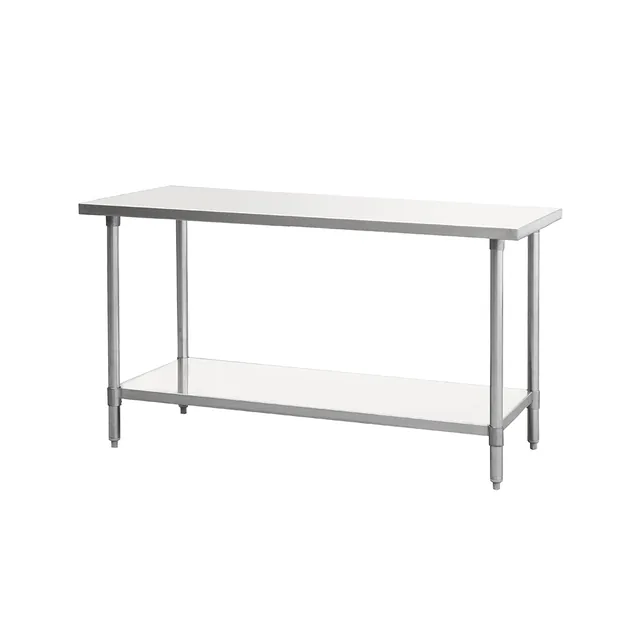
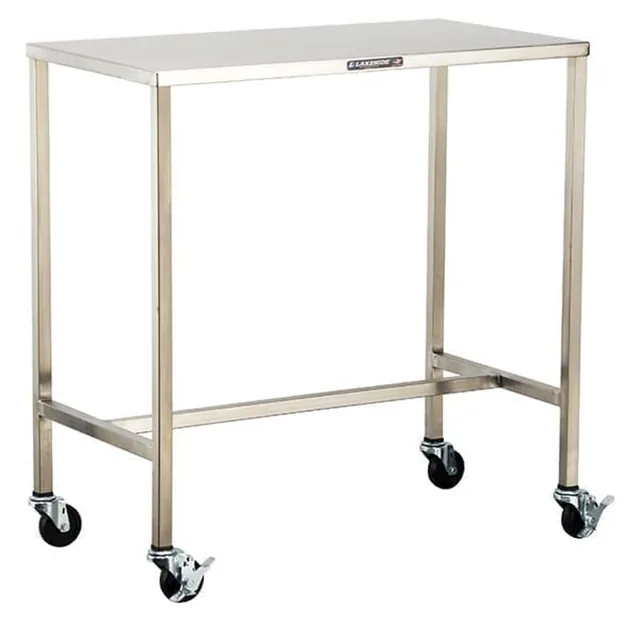
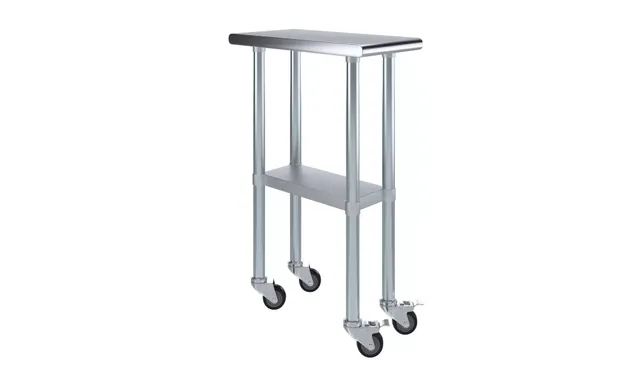
Most commercial tables fall into a few families: standard work tables (flat or with a rear backsplash), equipment stands (lower, built to hold a range or fryer), prep tables with a raised edge or sink, and mobile tables on casters. This page covers stainless-top work tables; maple/butcher-block tops are a separate category.
Common commercial work table sizes
Widths run from about 24" up to 120"+, in standard depths of 24" or 30" (a few 18" wall tables and 36" deep tables exist). Overall height is typically 34–35" to the top, with adjustable feet. On this site the listed width is the left-to-right dimension and depth is front-to-back — confirm orientation before you measure, since some makers label the short side "width."
304 vs 430 stainless steel for work tables
304 (18/8, contains nickel) resists corrosion and acidic foods and is the durable pick near sinks, citrus, and washdown. 430 is a magnetic, nickel-free grade that costs less and suits general prep, legs, and undershelves in drier areas. If the top will see salt, acid, or constant moisture, pay for 304.
14- vs 16- vs 18-gauge stainless work tables
Gauge is the thickness of the top, and the number runs backwards — lower is thicker. 14-gauge is heavy-duty for chopping, portioning, and mounted equipment; 16-gauge is the commercial all-purpose standard; 18-gauge is thinner and more economical for light-to-medium prep. Thicker tops flex and dent less.
| Feature | Best use | Important consideration |
|---|---|---|
| 304 stainless steel | Wet, salty, or acidic environments | Better corrosion resistance |
| 430 stainless steel | General preparation and storage | More economical |
| 14 gauge | Heavy equipment and demanding use | Heavier and more expensive |
| 16 gauge | High-volume commercial kitchens | Strong all-purpose option |
| 18 gauge | Light-to-medium preparation | Lower cost |
| Backsplash | Against a wall | Helps contain spills |
| Flat top | Center islands | Accessible from every side |
Tables with or without backsplashes
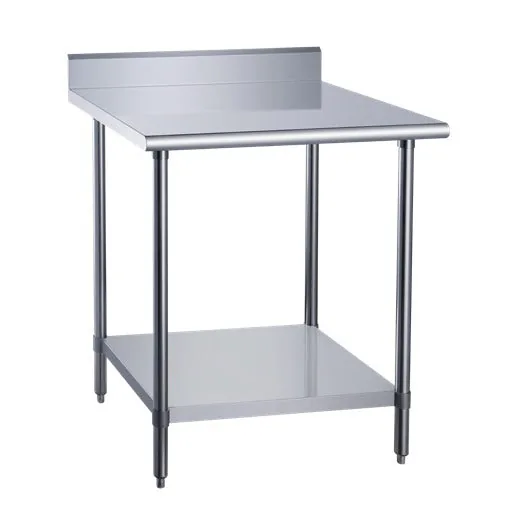
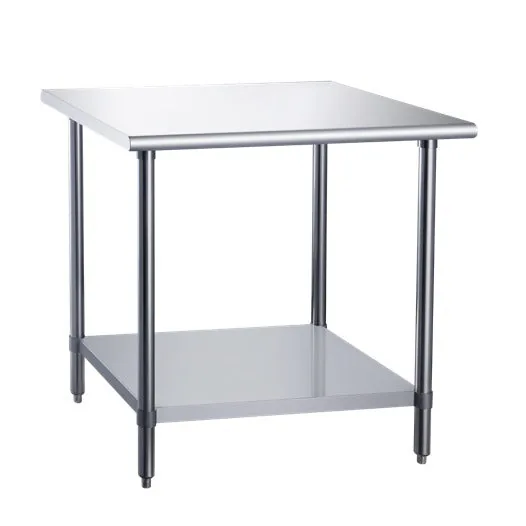
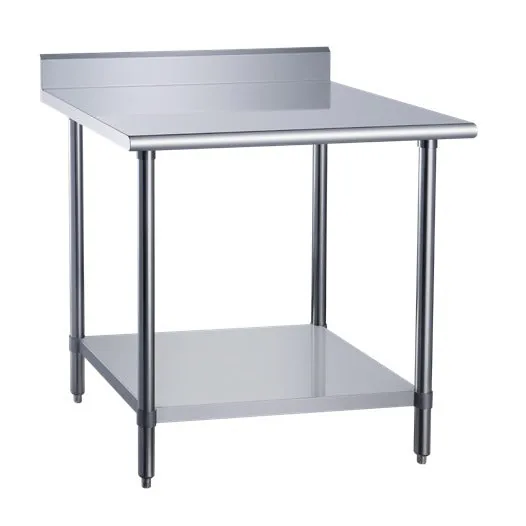
A rear backsplash (upturn) keeps splashes and debris from running behind a table set against a wall, and protects the wall. Choose a flat top for center islands or back-to-back layouts where the table is worked from both sides.
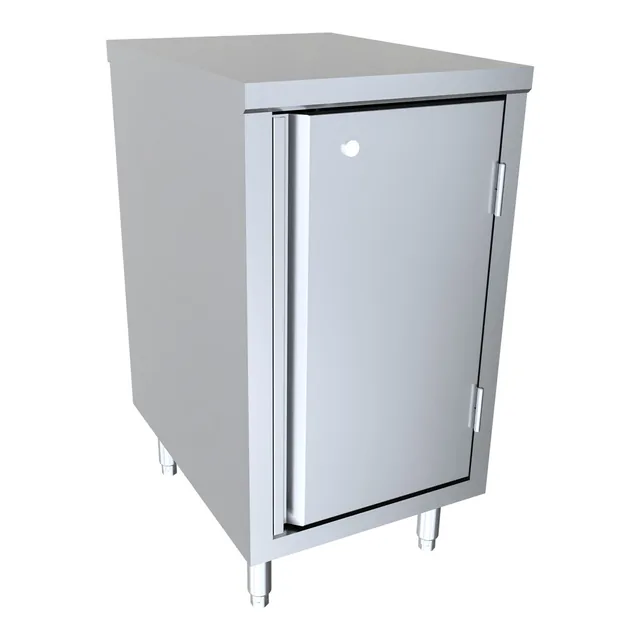
Undershelf, open-base, and enclosed-base options
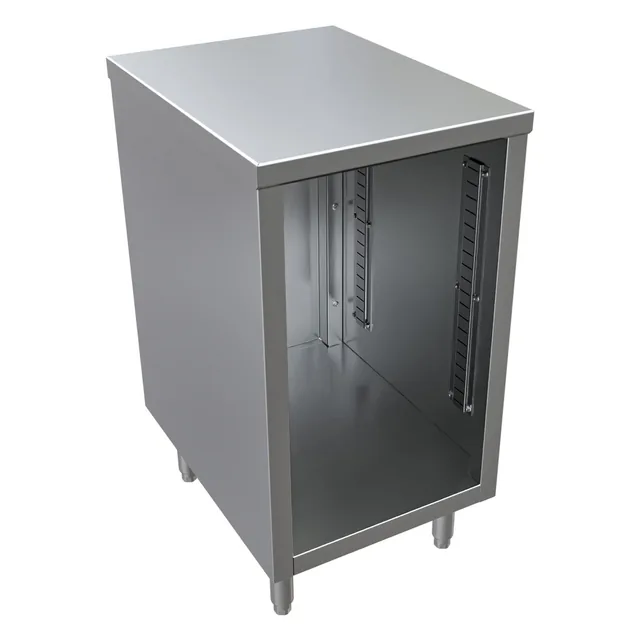
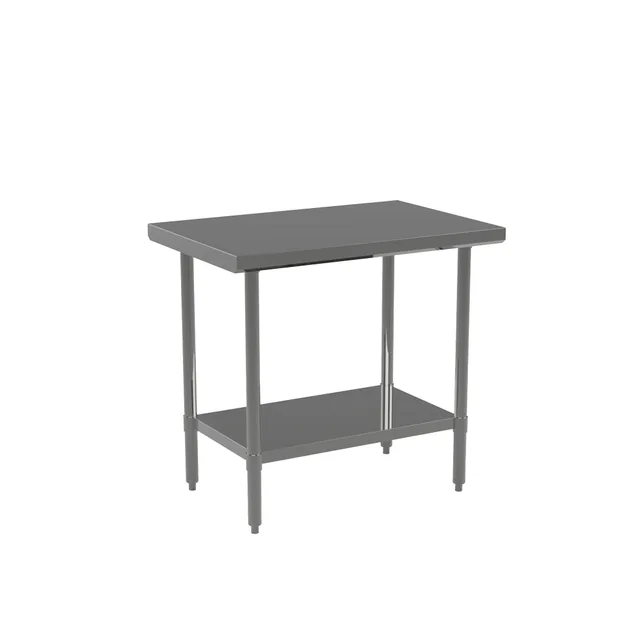
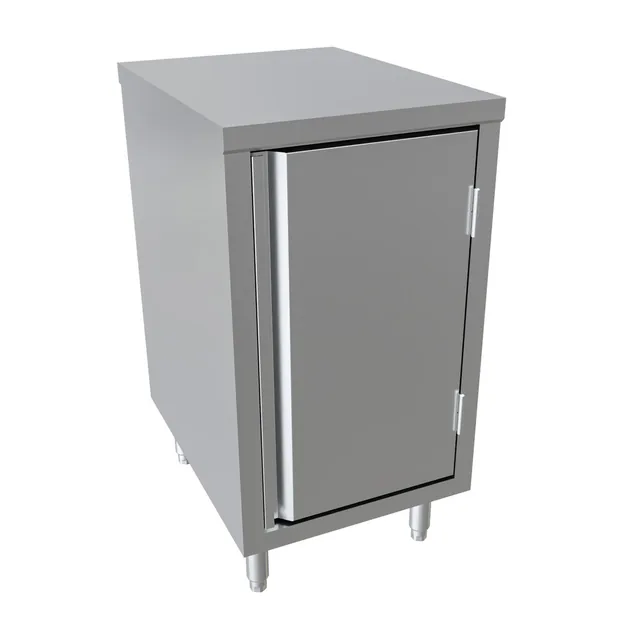
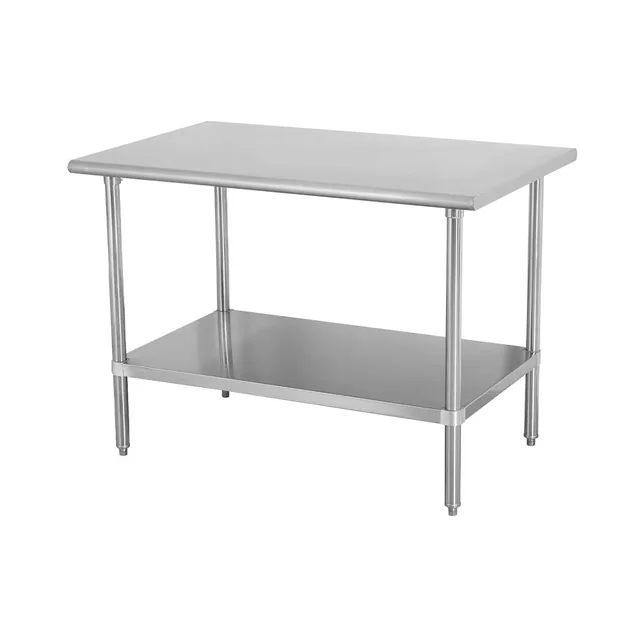
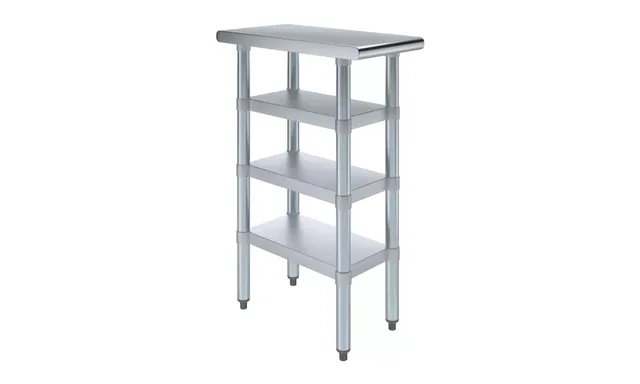
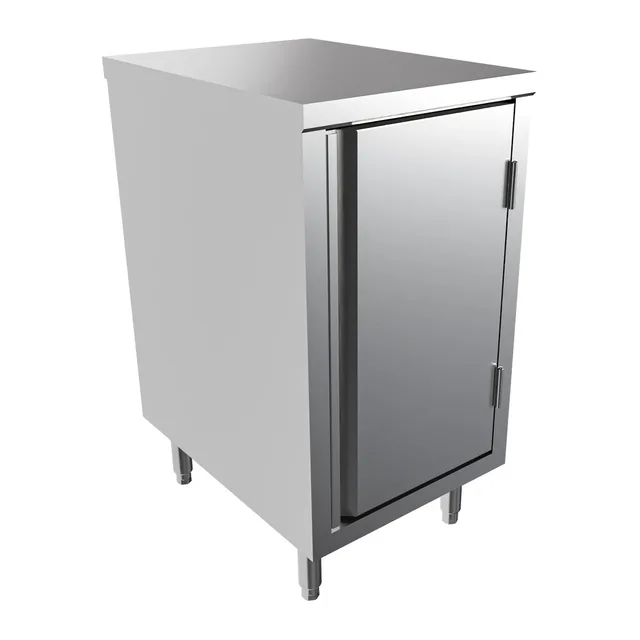
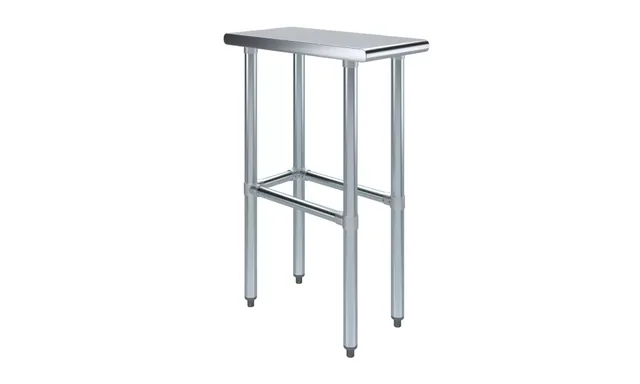
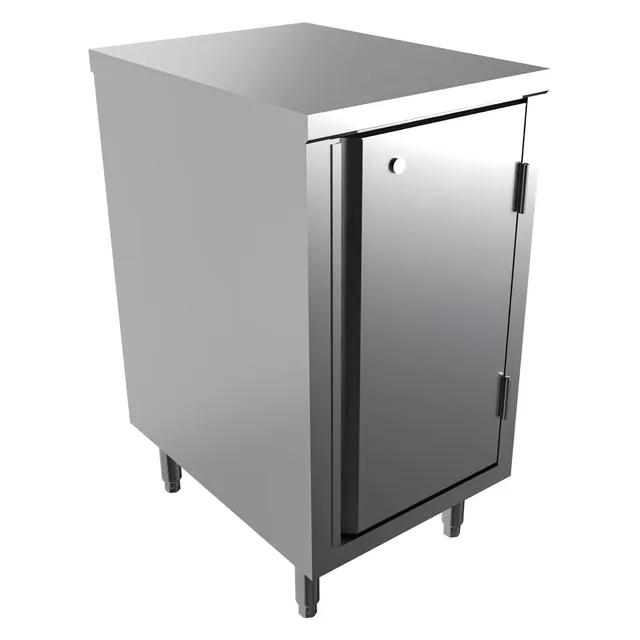
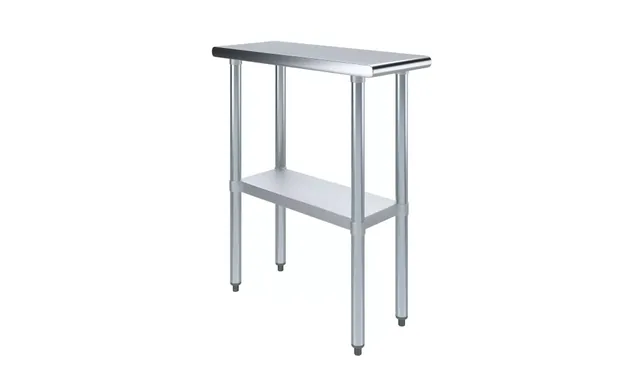
An open base cleans easiest, airs out, and leaves room for a trash can or bins. An undershelf adds storage for pans and smallwares — check whether it is stainless (better for wet areas) or galvanized (cheaper, for dry storage). An enclosed cabinet base locks product away and hides clutter but costs more and is harder to keep clean underneath.
NSF certification
An NSF/ANSI listing certifies that the table's materials, welds, and design meet sanitation standards — smooth, cleanable, food-safe surfaces — which is what a health inspector verifies on plan review. It covers cleanability and construction, not load capacity, and requirements vary by jurisdiction — confirm the specific listing if the kitchen is being permitted.
Weight capacity and construction
Rigidity comes from gauge, leg diameter (1⅝" tubing is common), gusseted or bracket-mounted legs, and a boxed or channel-reinforced top. For heavy or vibrating countertop equipment, choose 14- or 16-gauge and check the published load rating. Adjustable bullet feet level the table on uneven floors.
How to measure your kitchen
Measure the wall run the table will occupy, then subtract clearance for aisles — plan at least a 36" working aisle (more in main paths per local code). Budget roughly 24" of width per prep cook. Confirm the top clears doorways, corners, and any equipment it must pass on the way in.
Cleaning and maintenance
Wipe stainless with the grain using warm water and mild detergent; avoid steel wool and chlorine-based cleaners, which pit the surface. Rinse after using sanitizer and dry to prevent water spots. For 430 or galvanized undershelves, keep them dry to avoid rust. A quick daily wipe-down and periodic passivation keep a stainless top looking new for years.
How the brands compare
Size span, typical construction, street-price range, warranty, and best fit for the brands with the most work tables here — a quick way to see who sits in the budget 18-ga / 430 tier versus the heavier 16-ga / 304 tier. A starting point, not a substitute for checking the specific model.
| Brand | Models | Size range | Gauge | Grade | Street price | Warranty | Best suited for |
|---|---|---|---|---|---|---|---|
| BK Resources | 633 | 24–96″ W | 14 ga / 16 ga / 18 ga | 304 / 430 | $170–$12,060 | 1 year | Heavy-duty / mounted equipment |
| AmGood | 394 | 12–96″ W | 18 ga | 304 / 430 | $130 | — | Value / lighter-duty |
| Sapphire | 272 | 24–120″ W | 16 ga / 18 ga | 430 | — | 1 year | Value / lighter-duty |
| Atosa | 40 | 24–96″ W | 18 ga | 430 | — | 90-day limited | Value / lighter-duty |
| Lakeside | 25 | 20–72″ W | 18 ga | — | — | — | Value / lighter-duty |
| Dukers | 10 | 30–72″ W | 18 ga | 430 | — | 90-day limited | Value / lighter-duty |
Frequently asked questions
Which steel grade should I choose — 304 or 430?
Choose 304 (18/8) for any table near sinks, citrus, brines, or heavy washdown — the nickel content resists corrosion and pitting. Choose 430 to save money on tables used for general prep and storage in drier areas. 430 is magnetic and 304 usually is not, which is a quick way to tell them apart.
Does a lower gauge mean thicker steel?
Yes — gauge runs backwards, so a lower number is thicker metal. 14-gauge is the thickest and most rigid, 16-gauge is the commercial all-purpose standard, and 18-gauge is thinner and more economical for light-to-medium prep. Thicker tops flex and dent less under heavy use.
Can the tabletop support countertop equipment?
For a mixer, slicer, or other heavy countertop equipment, use a 14- or 16-gauge top and check the manufacturer's weight/load rating where published. Thin 18-gauge tops can flex or oil-can under a heavy, vibrating machine, so step up the gauge for mounted equipment.
Is the undershelf stainless or galvanized?
It varies by line: premium and 304 tables usually get a stainless undershelf, while budget 430 tables often use a galvanized undershelf to cut cost. Galvanized is fine in dry storage but can corrode in wet areas — this page lists the undershelf material per model where the manufacturer publishes it.
Is the listed width left-to-right or front-to-back?
On this site, width is the left-to-right (long) dimension and depth is the front-to-back dimension — so a 60" x 30" table is 60" wide along the wall and 30" deep. Manufacturers sometimes label the short dimension "width," so always confirm orientation before you measure the space.
Are casters compatible with these tables?
Most stainless work tables accept casters, and many lines offer a factory caster version or a bolt-on kit sized to the legs. Casters raise the working height a few inches, so account for that; use locking casters on at least two wheels for a stable mobile station.
Does the table ship assembled?
Many commercial work tables ship knocked-down (legs unattached) to reduce freight damage and cost, and bolt together in a few minutes. Some arrive fully welded and assembled. Check the product page — this affects both freight and setup time.
What does NSF certification cover?
NSF/ANSI listing means the table's materials, welds, and design meet sanitation standards — smooth, cleanable surfaces and food-safe stainless — which is what a health inspector checks on plan review. It certifies cleanability and construction, not load capacity.
How much clearance do I need around the table?
Plan a working aisle of at least 36 inches (many jurisdictions require more in a main path), and budget roughly 24 inches of width per prep cook. Confirm the table clears doorways and corners on the way in before ordering a long top.
When is a backsplash necessary?
Use a rear backsplash whenever the table sits against a wall — it stops splashes and debris from running behind the table and protects the wall. Choose a flat top for center islands or back-to-back layouts where the table is accessed from both sides.
What size work table should I buy?
Match the top to your wall run and staffing: about 24 inches of width per cook, in a 24" or 30" depth. Deeper tops give more landing room but eat floor space; measure the aisle and doorways first.
Open base, undershelf, or enclosed cabinet?
An open base cleans easiest and leaves room for bins; an undershelf adds storage for pans and smallwares; an enclosed cabinet locks product away but costs more and is harder to clean under. Pick based on storage needs versus sanitation.
About this data
Last verified: August 2026. Specs are compiled from manufacturer spec sheets and authorized dealer listings; where a value isn't published we leave it blank rather than guess.
Methodology: every work-table model is compared on the same set of specifications, and dimensions are checked (for sinks, overall width must exceed the combined bowl widths) — figures that fail validation are corrected from the manufacturer model number or omitted. “Street price” is the lowest legitimate published price we've found and can change.
Sourcing: product specs come from the manufacturer; regulatory statements link to the source (e.g. the FDA Food Code and NSF). Code requirements vary by jurisdiction — confirm with the authority reviewing your plans.
Disclosure: FoodServiceNerd is vendor-neutral and free to use. Some “where to buy” links may be affiliate links — we may earn a commission at no cost to you, and it never changes what we list or how we rank it. We don't sell equipment ourselves.
Editorial: compiled and reviewed by the FoodServiceNerd equipment desk (about us). Spot an error? Tell us and we'll correct it.