Wood-Top & Butcher-Block Work Tables
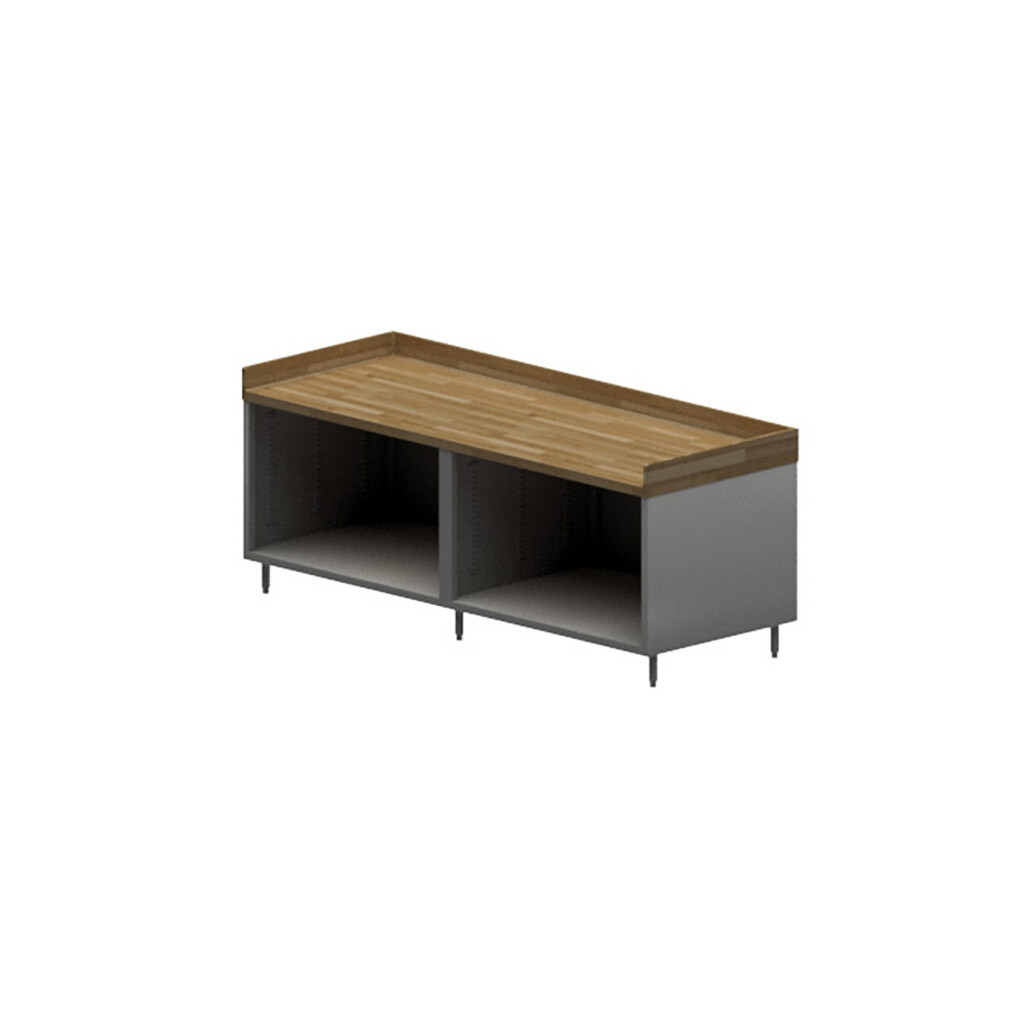
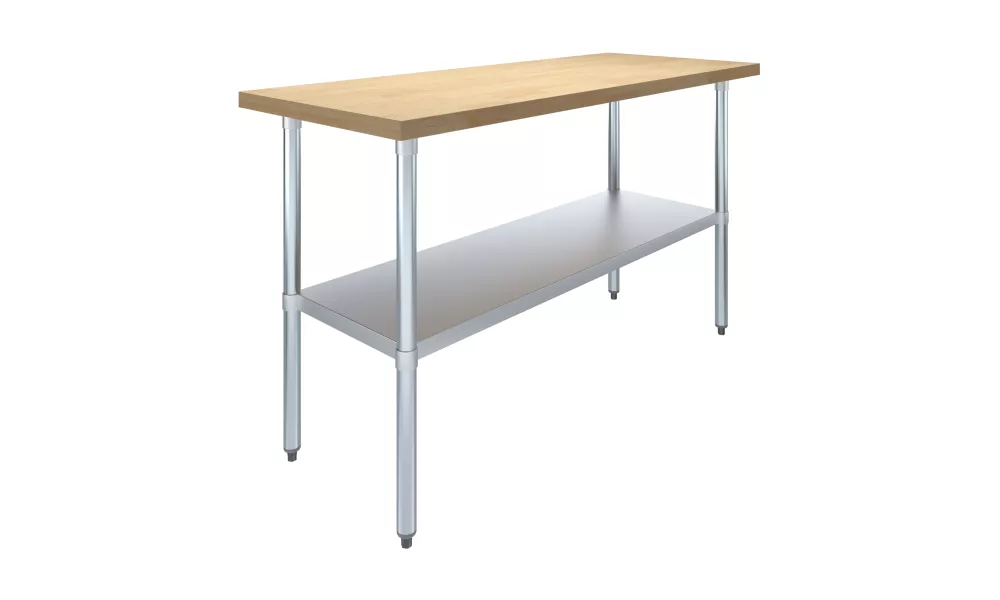
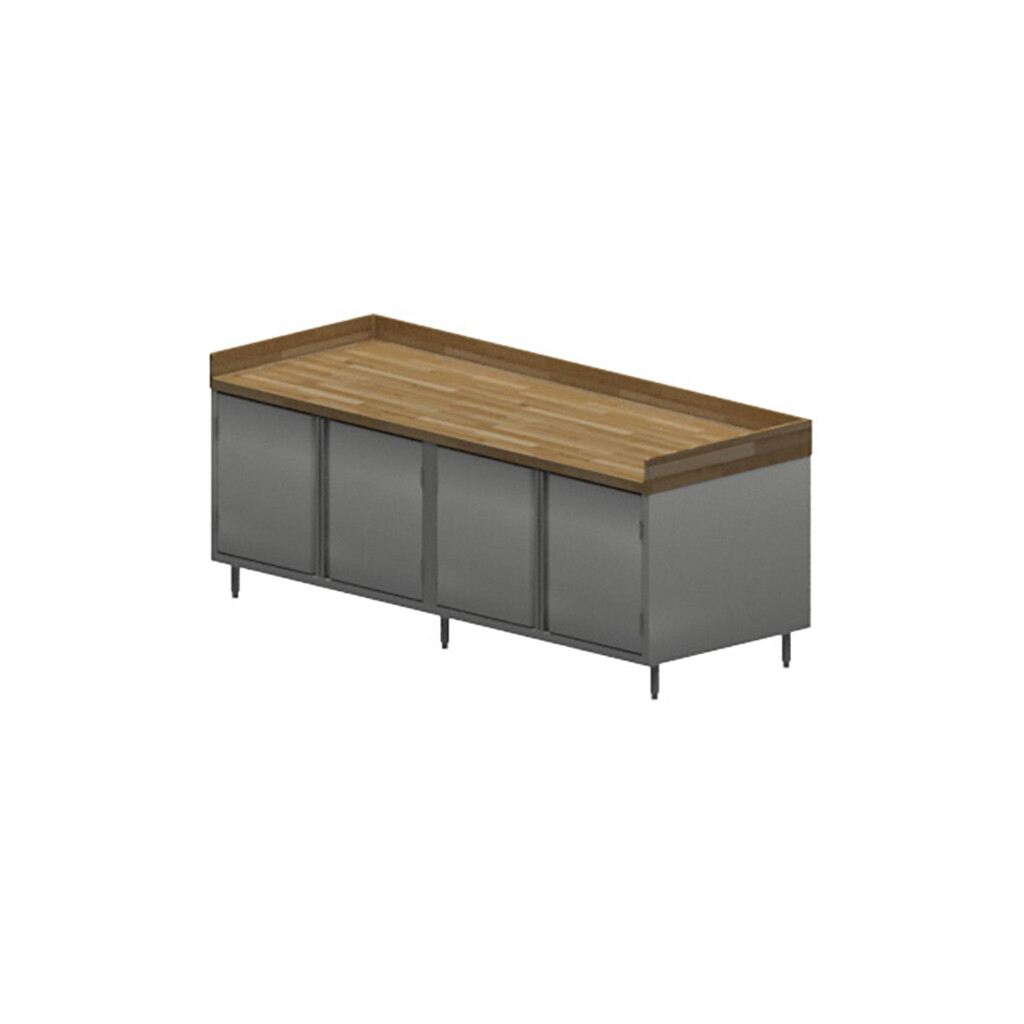
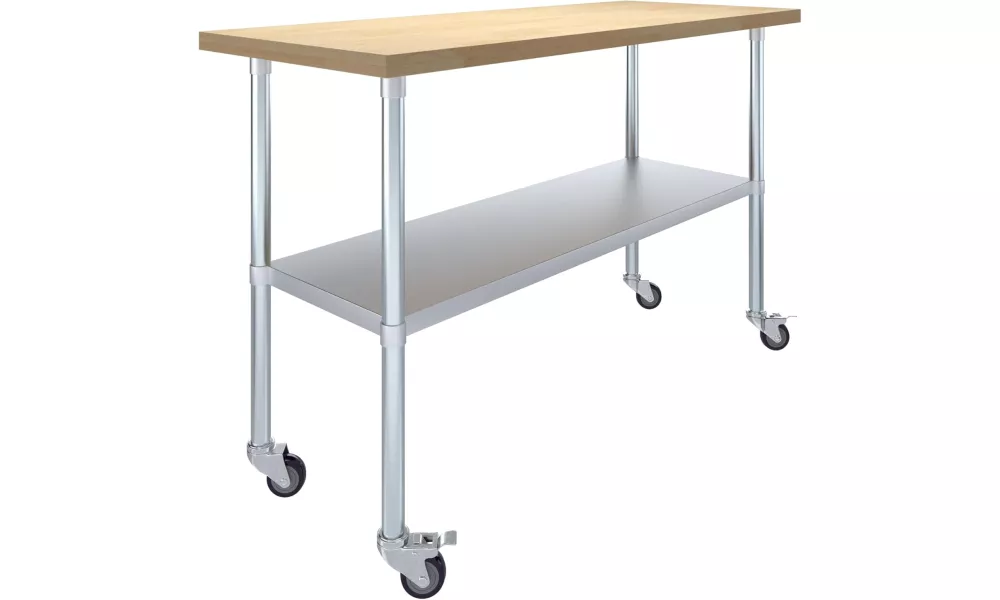
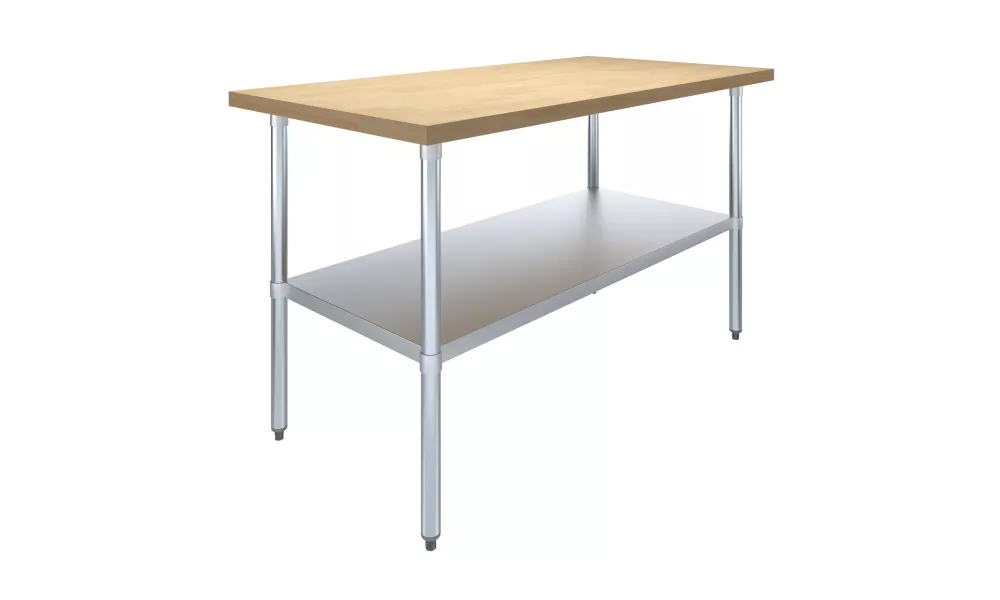
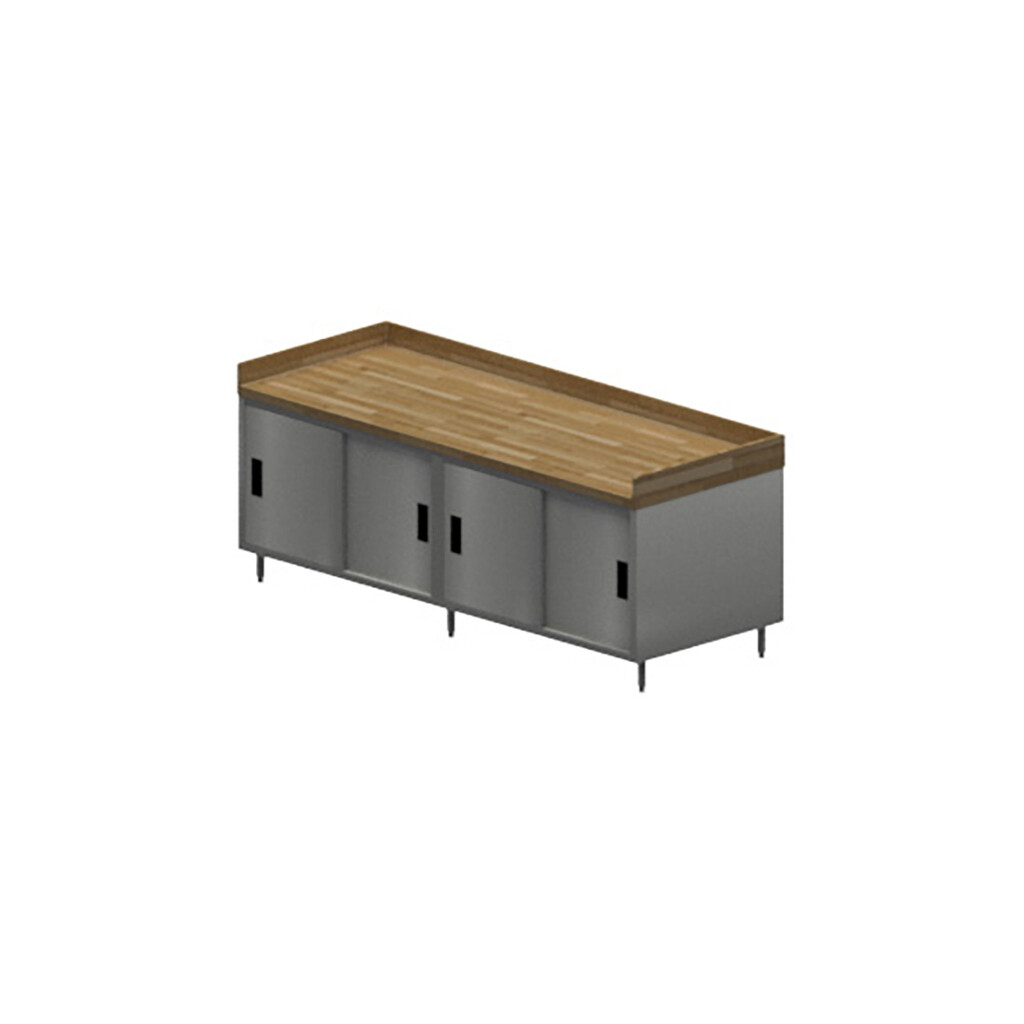
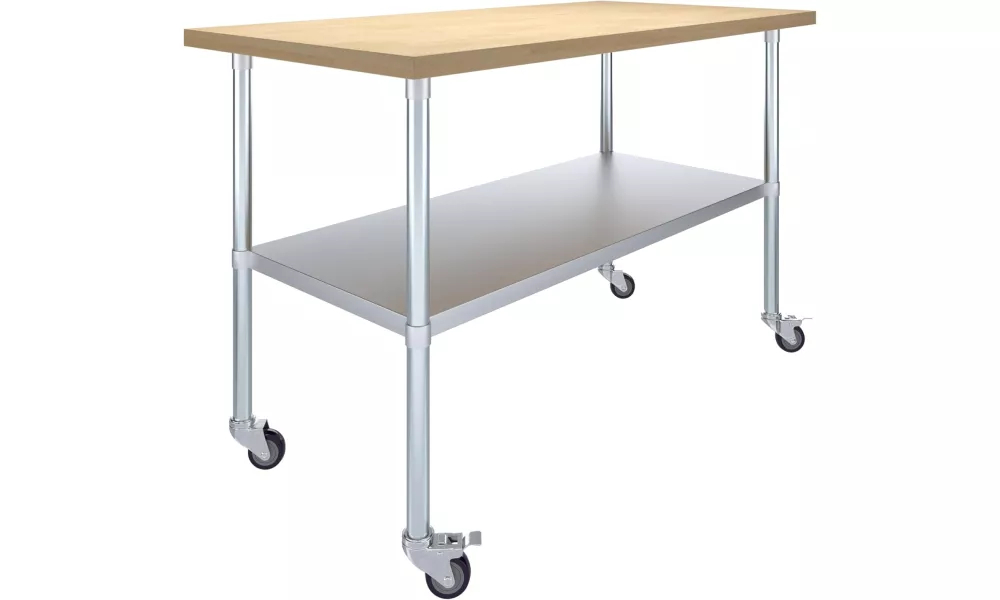
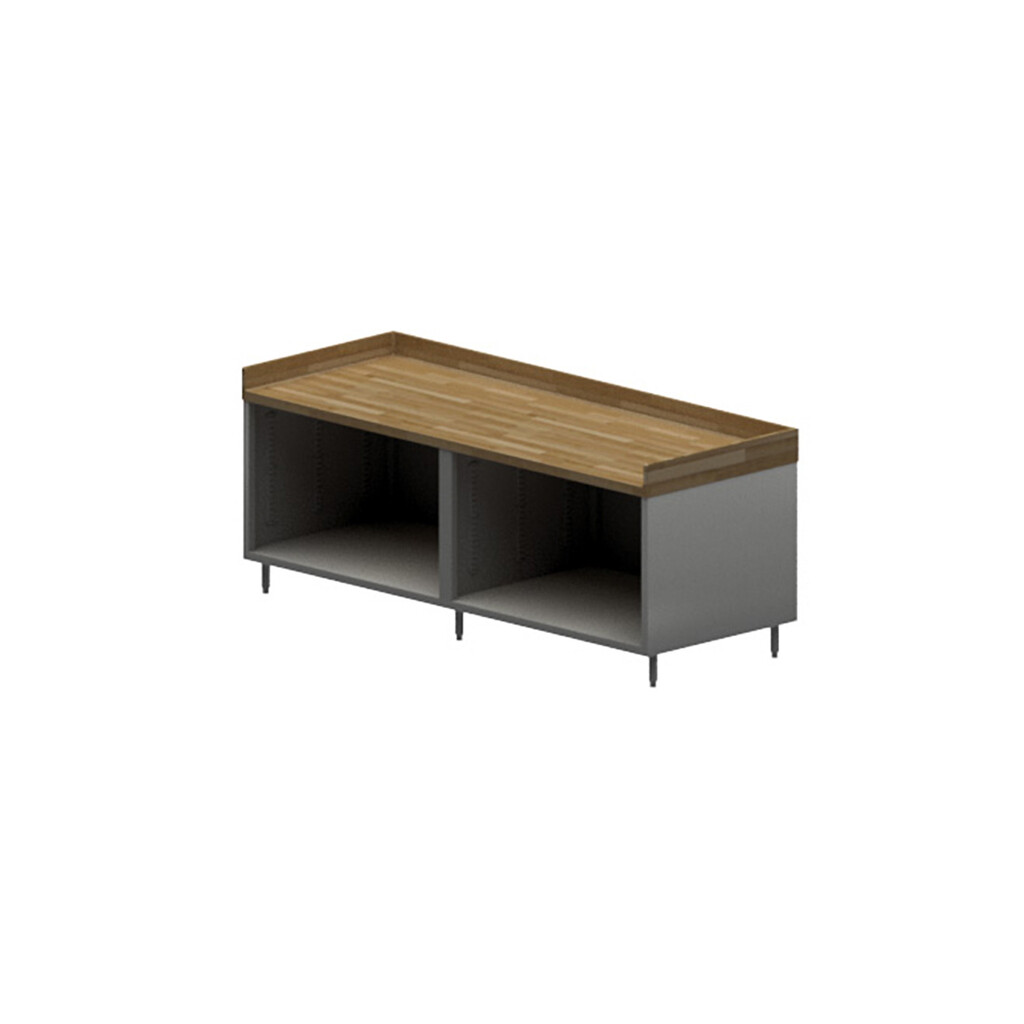
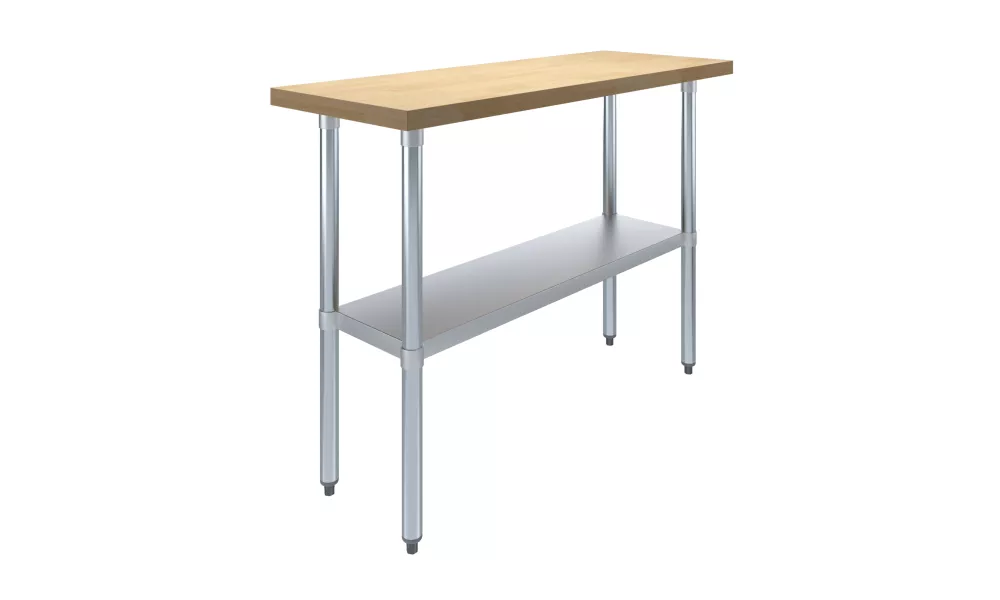
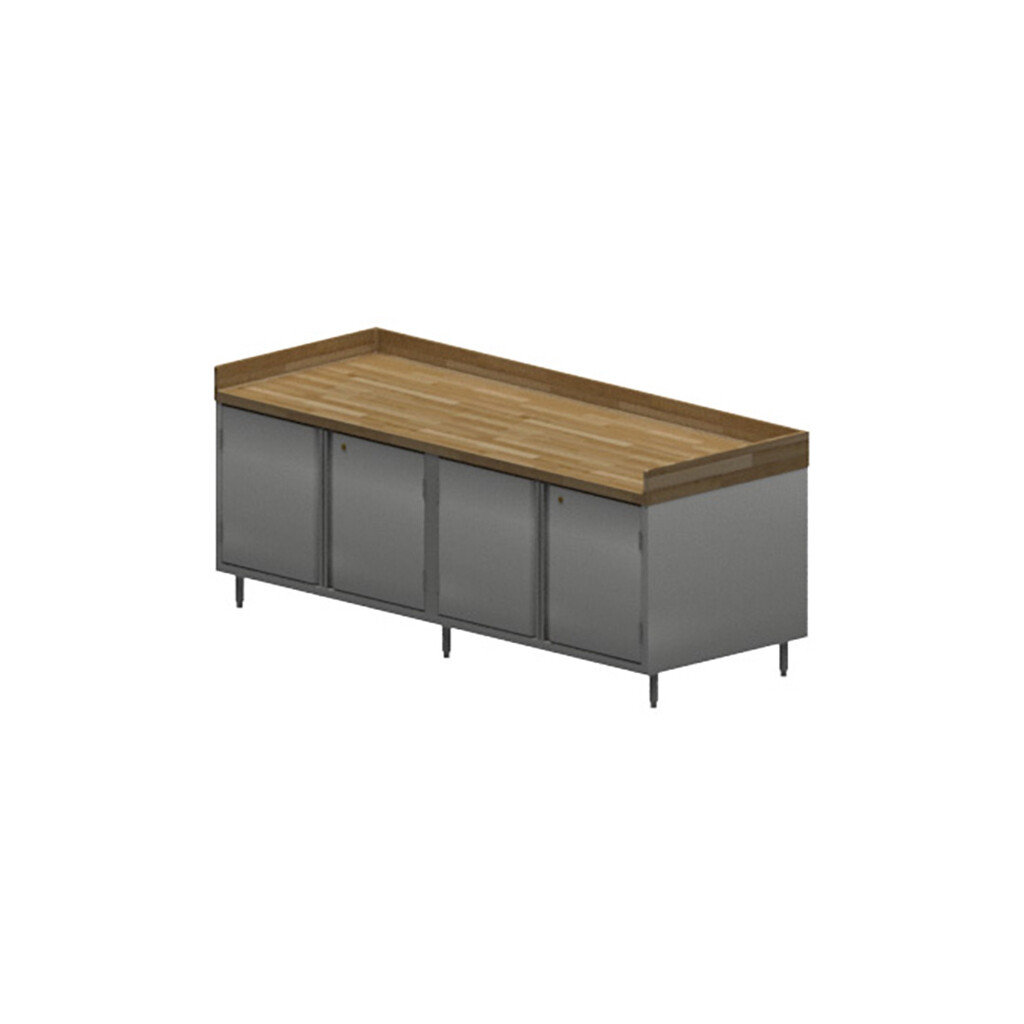
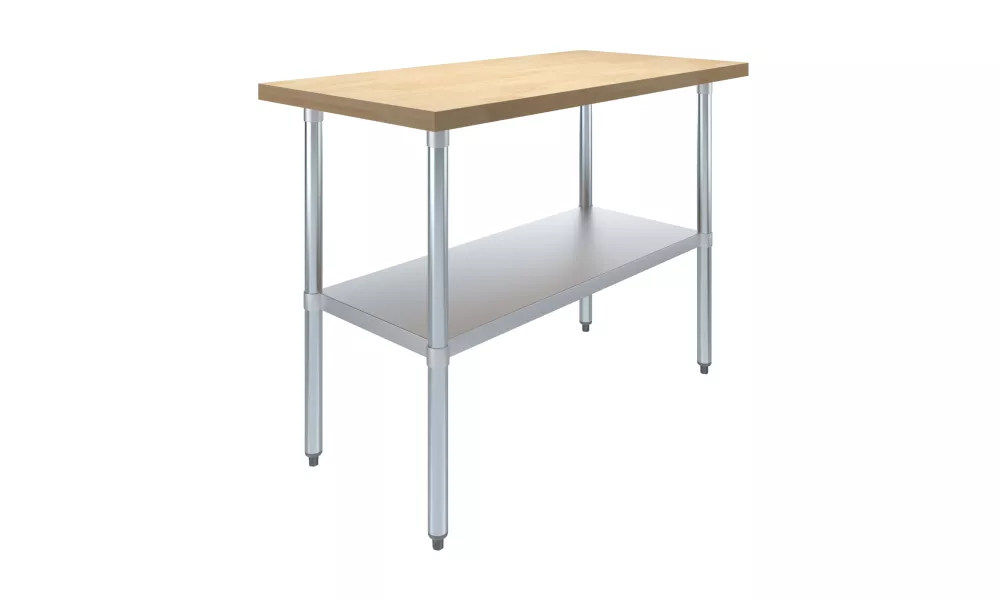
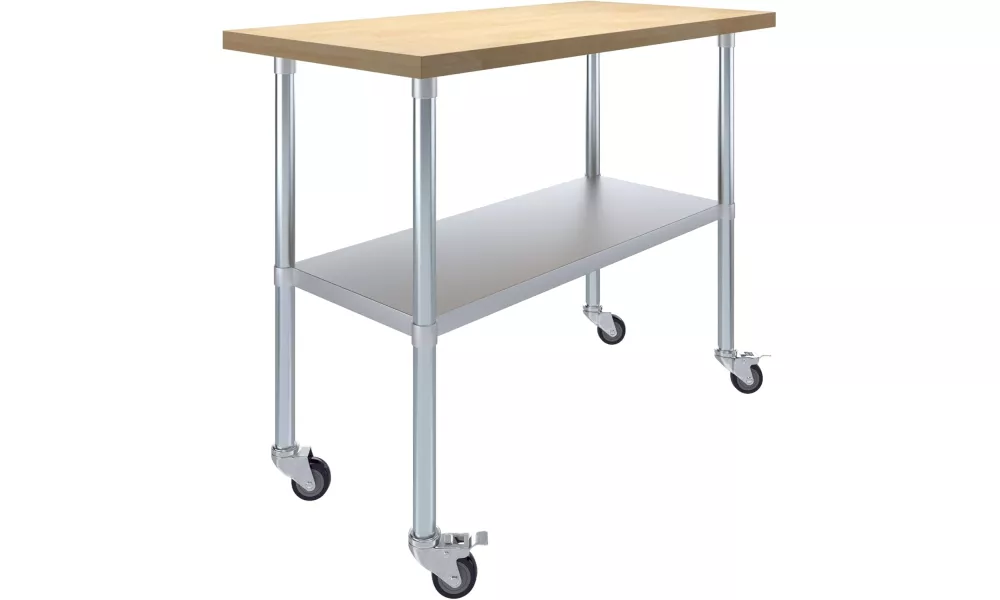
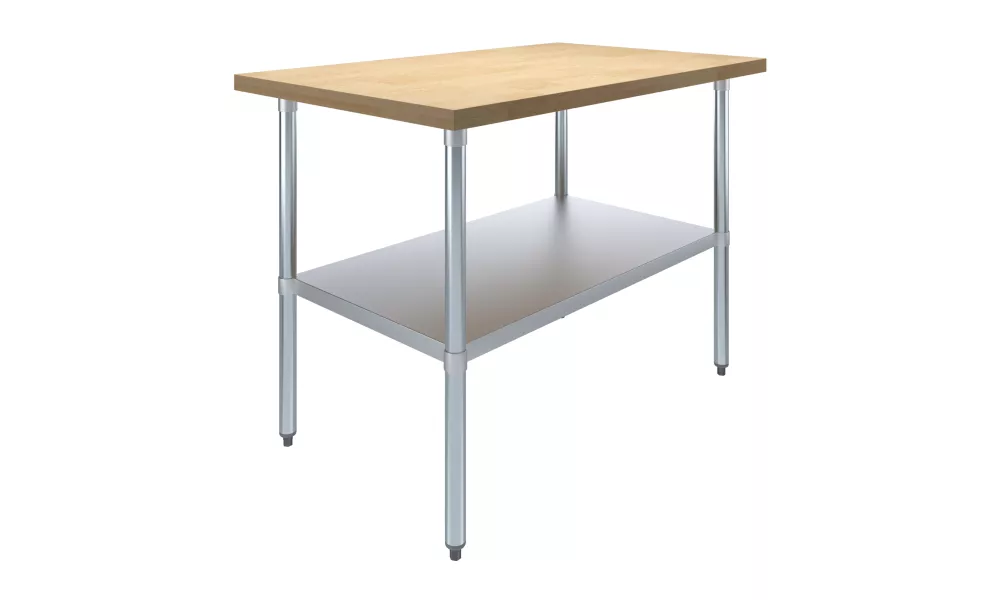
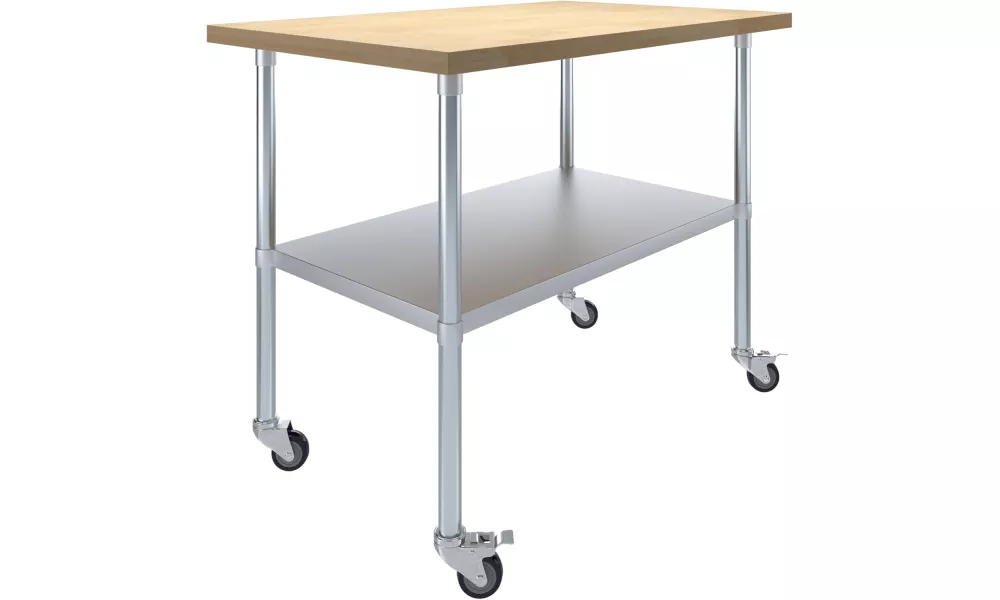
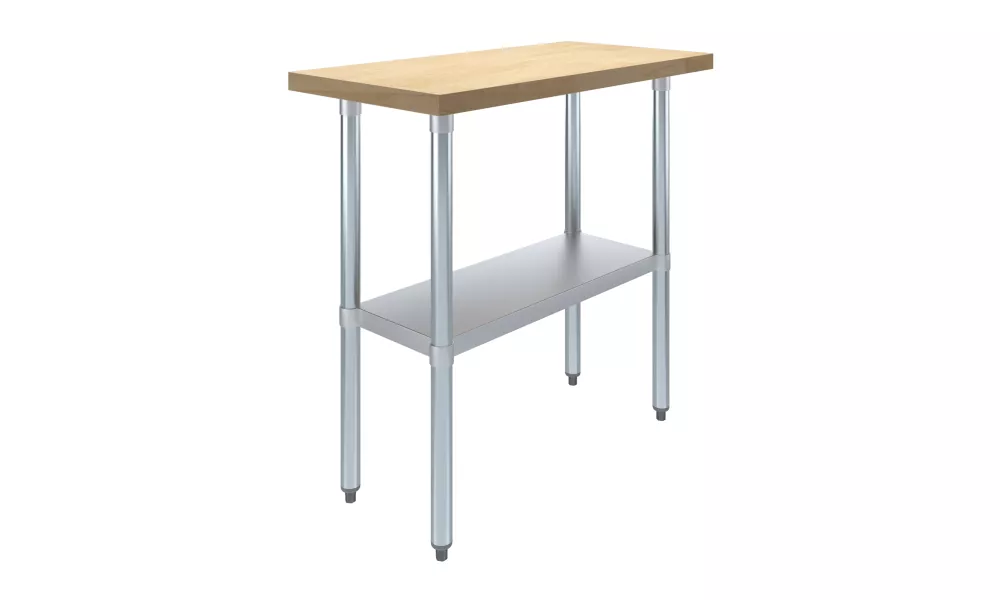
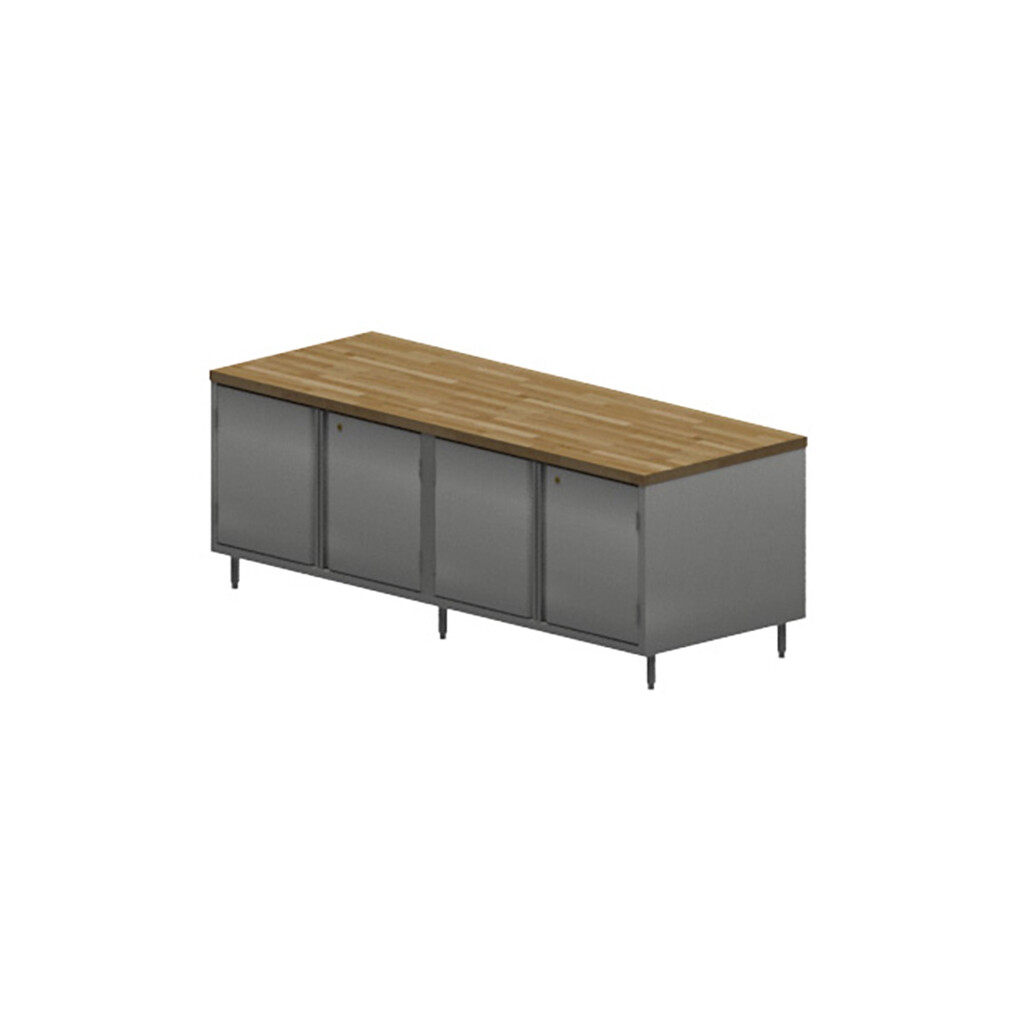
A wood-top work table tops a stainless or wood base with a laminated hard-maple surface — knife-friendly, gentle on blades, and ideal for dough, bread, and cutting where a steel top would dull knives and bounce. A thick end-grain butcher block (4″ and up) is built for heavy chopping. Choose by top thickness (a ~1½″ bakers top for general prep, a 4″+ block for a butcher station), overall width and depth, and base style — open, undershelf, cabinet, a replacement top for an existing frame, or a freestanding block. Maple needs periodic food-grade mineral-oil treatment, and check your health code before using bare wood for raw proteins.
Compare wood-top, maple, and butcher-block work tables across brands by top thickness, size, and base style, then by price. Filter to the surface and footprint your prep line needs. This consolidates the maple bakers tops, butcher blocks, and cabinet-base chef tables into one place.









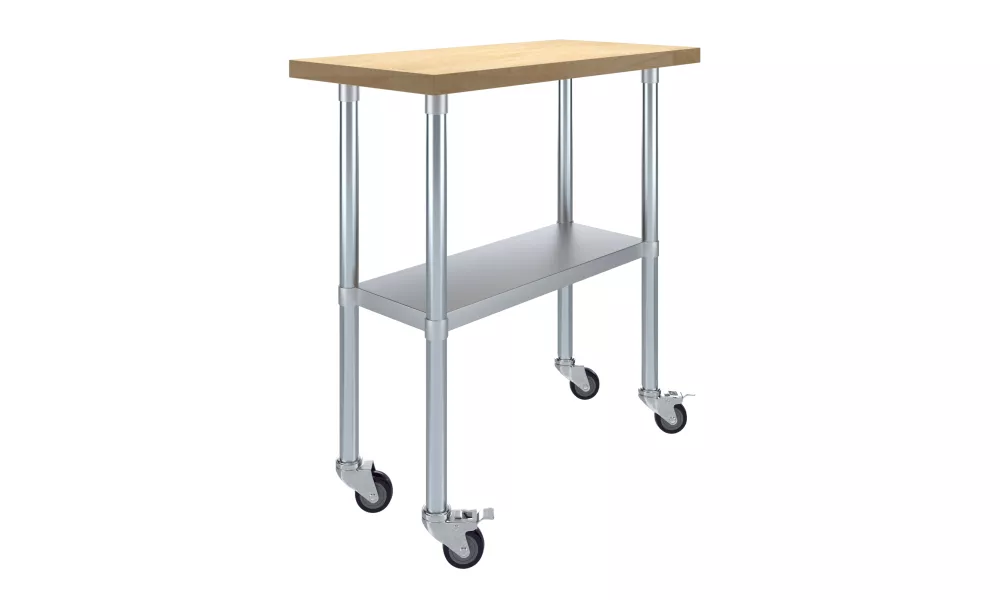


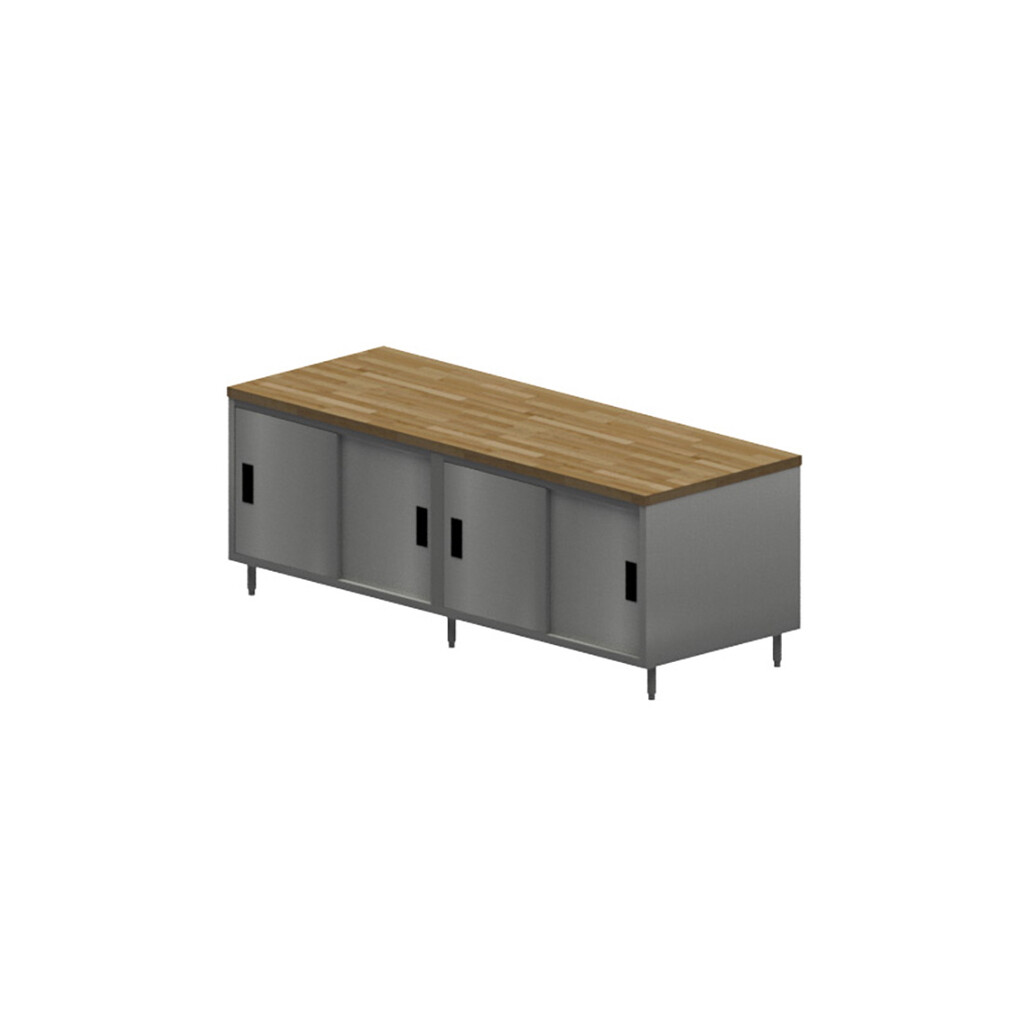
Wood-top & butcher-block tables: buying guide
A hard-maple top is knife-friendly and ideal for dough, bread, and cutting. The 308 models above filter by top thickness, size, base style, and price.
Thickness sets the job
A ~1½″ bakers/work top suits dough and general prep; a 4″+ block takes heavy chopping; 10–16″ end-grain blocks are for a dedicated butcher station.
Base style
Open base gives airflow and room for a bin; an undershelf adds storage; a cabinet base locks storage away; a replacement top swaps onto an existing frame; a freestanding butcher block stands on its own legs.
Care and code
Maple needs periodic food-grade mineral oil to keep it from drying and cracking, and it should not be used bare for raw proteins unless your health code allows it — many kitchens keep a maple top for dough and a stainless top for meat.
How the brands compare
Model count, width span, and street-price range for the brands with the most models here — a starting point, not a substitute for the specific model’s spec sheet.
| Brand | Models | Width range | Street price |
|---|---|---|---|
| BK Resources | 168 | 48–96″ | $453–$8,096 |
| John Boos | 128 | 12–120″ | — |
| AmGood | 12 | 36–60″ | — |
Frequently asked questions
Maple top vs. stainless top?
Maple is better for dough, bread, and knife work — it won't dull blades and is quieter to work on; stainless is better for raw proteins and easy sanitizing. Many kitchens keep one of each.
How thick should a butcher block be?
A ~1½″ bakers/work top suits dough and general prep; 4″ and up is a true chopping block; 10–16″ end-grain blocks are for a dedicated, heavy-use butcher station.
How do I maintain a maple top?
Scrape clean, wash with mild soap, dry, and periodically treat with food-grade mineral oil to keep it from drying and cracking. Don't soak it or run it through a dish machine.
Can I cut raw meat on a wood top?
Only where your health code allows bare wood for raw proteins — many jurisdictions restrict it. A common setup is a maple top for dough and produce and a separate sanitizable surface for raw meat.
Where do your specs and prices come from?
Specifications are compiled from manufacturer spec sheets and authorized dealer listings; where a value isn’t published we leave it blank rather than guess. “Street price” is the lowest legitimate published price from an online dealer we track for that exact model — equipment only, and it changes often. Many models here have no published online price and show “check dealer pricing.”
Does this equipment need to be NSF listed?
Storage and dish-room equipment used in a commercial kitchen is generally expected to be NSF/ANSI listed for cleanable, food-safe construction — that’s what a health inspector checks on plan review. We don’t assert a listing for a specific model unless the manufacturer publishes it; confirm the exact model’s listing when you permit your kitchen.
About this data
Last verified: August 2026. Specs are compiled from manufacturer spec sheets and authorized dealer listings; where a value isn't published we leave it blank rather than guess.
Methodology: every wood-top table model is compared on the same set of specifications, and dimensions are checked (for sinks, overall width must exceed the combined bowl widths) — figures that fail validation are corrected from the manufacturer model number or omitted. “Street price” is the lowest legitimate published price we've found and can change.
Sourcing: product specs come from the manufacturer; regulatory statements link to the source (e.g. the FDA Food Code and NSF). Code requirements vary by jurisdiction — confirm with the authority reviewing your plans.
Disclosure: FoodServiceNerd is vendor-neutral and free to use. Some “where to buy” links may be affiliate links — we may earn a commission at no cost to you, and it never changes what we list or how we rank it. We don't sell equipment ourselves.
Editorial: compiled and reviewed by the FoodServiceNerd equipment desk (about us). Spot an error? Tell us and we'll correct it.