Commercial Reach-In Freezers
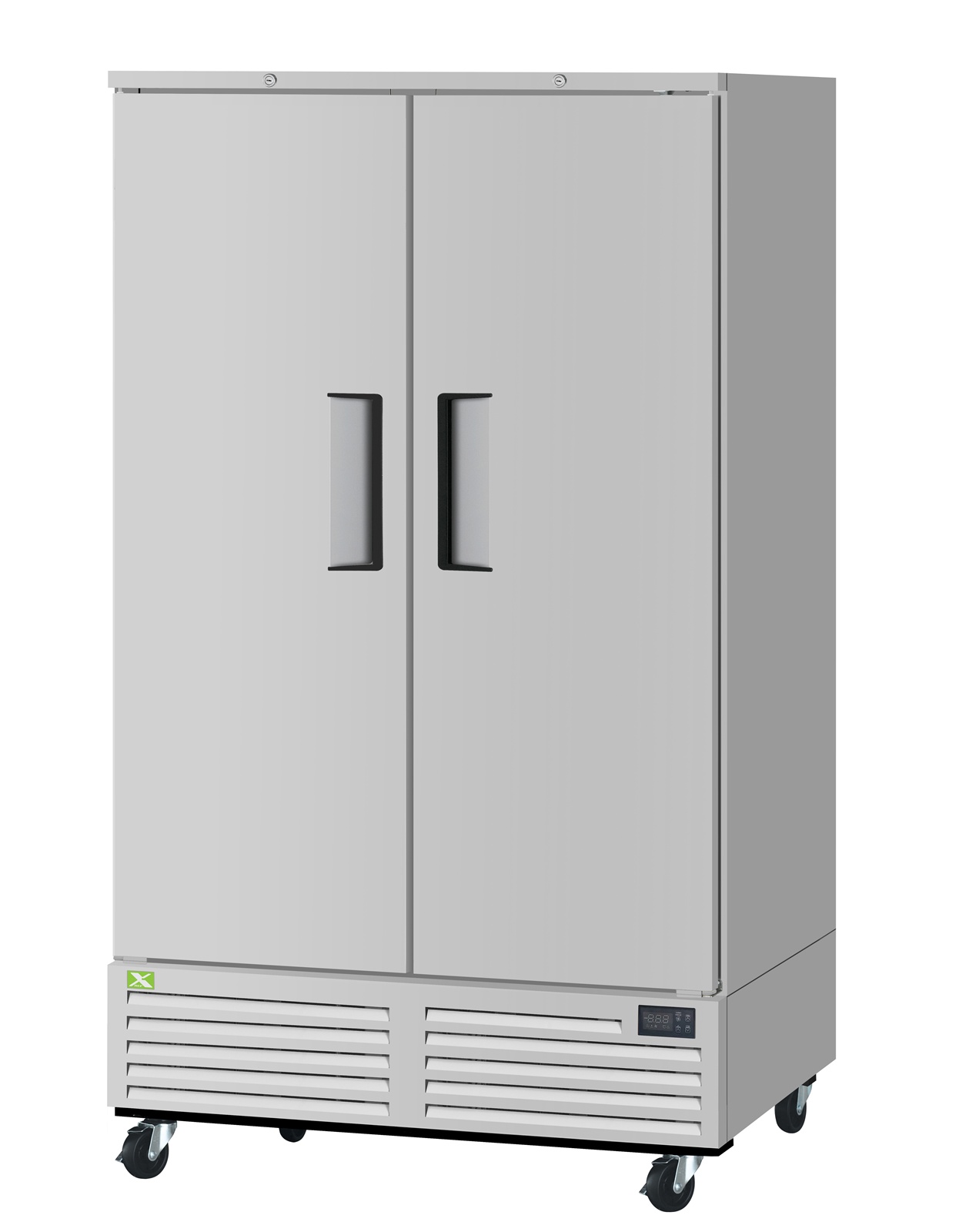
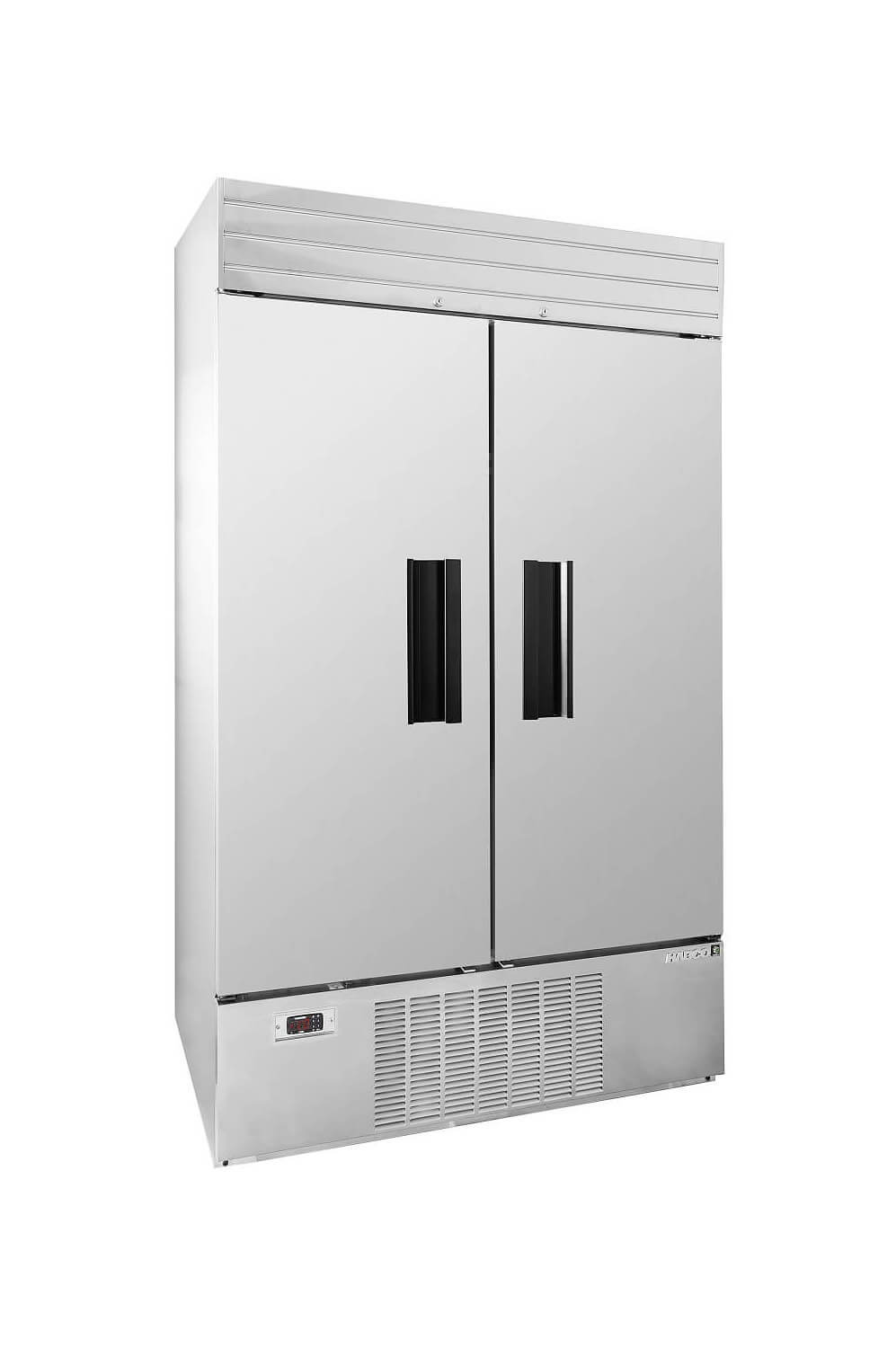
A commercial reach-in freezer holds frozen product (around 0°F, many rated −10°F to 0°F) and is sized by sections (1/2/3 doors) and capacity in cubic feet. Choose the defrost method (automatic, hot-gas, or manual) and door style for your use; newer units use efficient R290 refrigerant. Commercial models are generally NSF/ANSI-7 listed.
Deciding? Compare who really makes each freezer brand, the refrigerant it uses, and the model-number decoder.






🌡️ New to low-GWP refrigerants? Read the commercial refrigerant phase-out, explained — what the EPA rules mean for reach-ins, ice machines and walk-ins.
Which one should you buy?
Shortlists filtered to a real buying need — not paid placements or reviews. Each links to full specs.
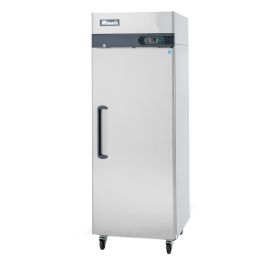
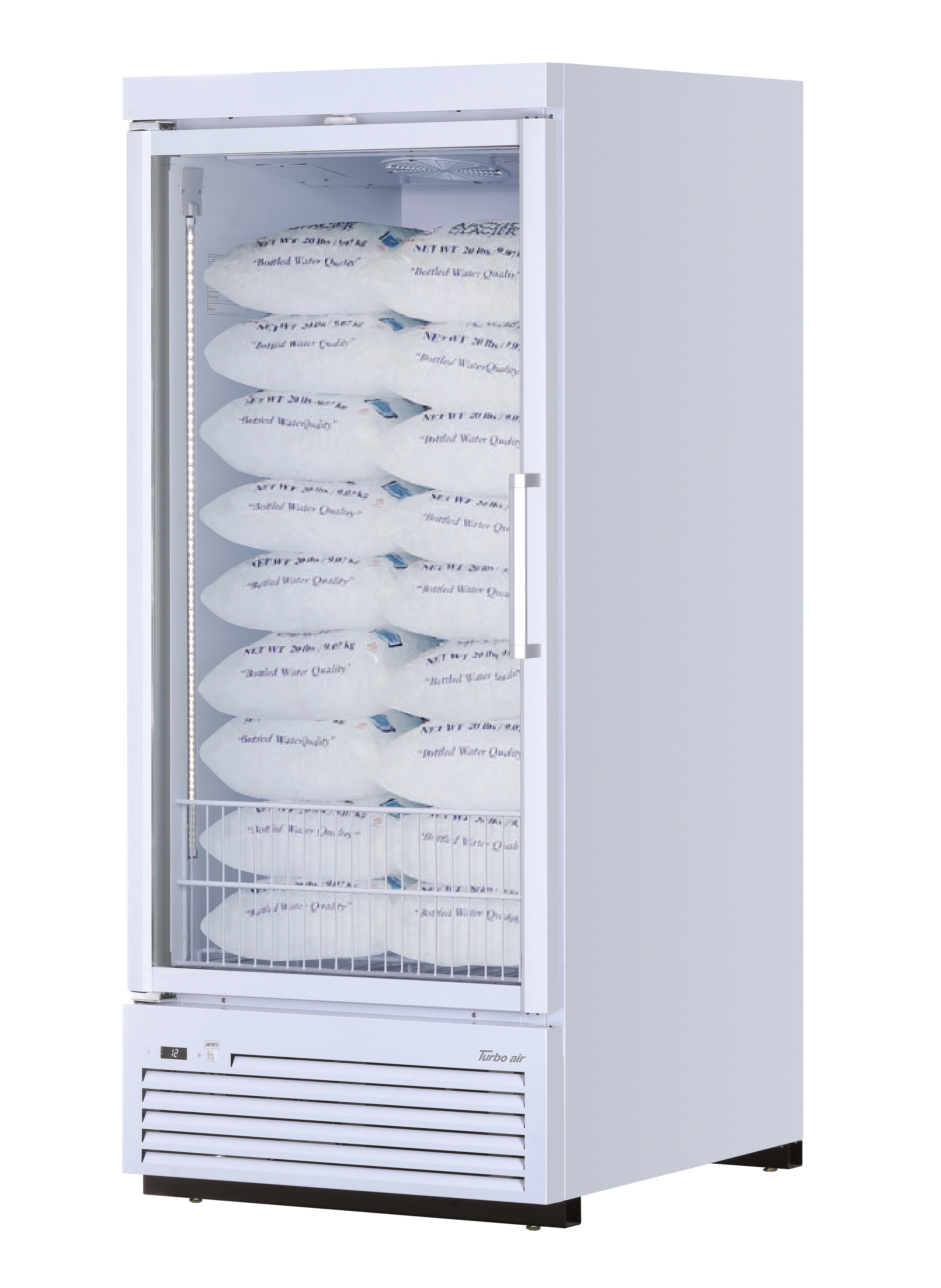
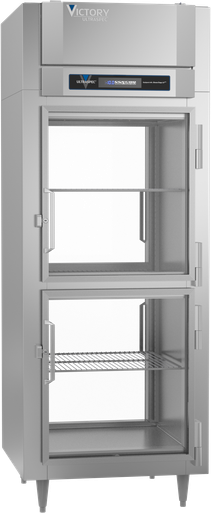
Best 1-door freezers
Single-section frozen storage for a line or small kitchen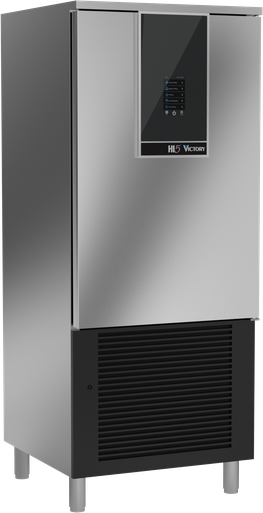
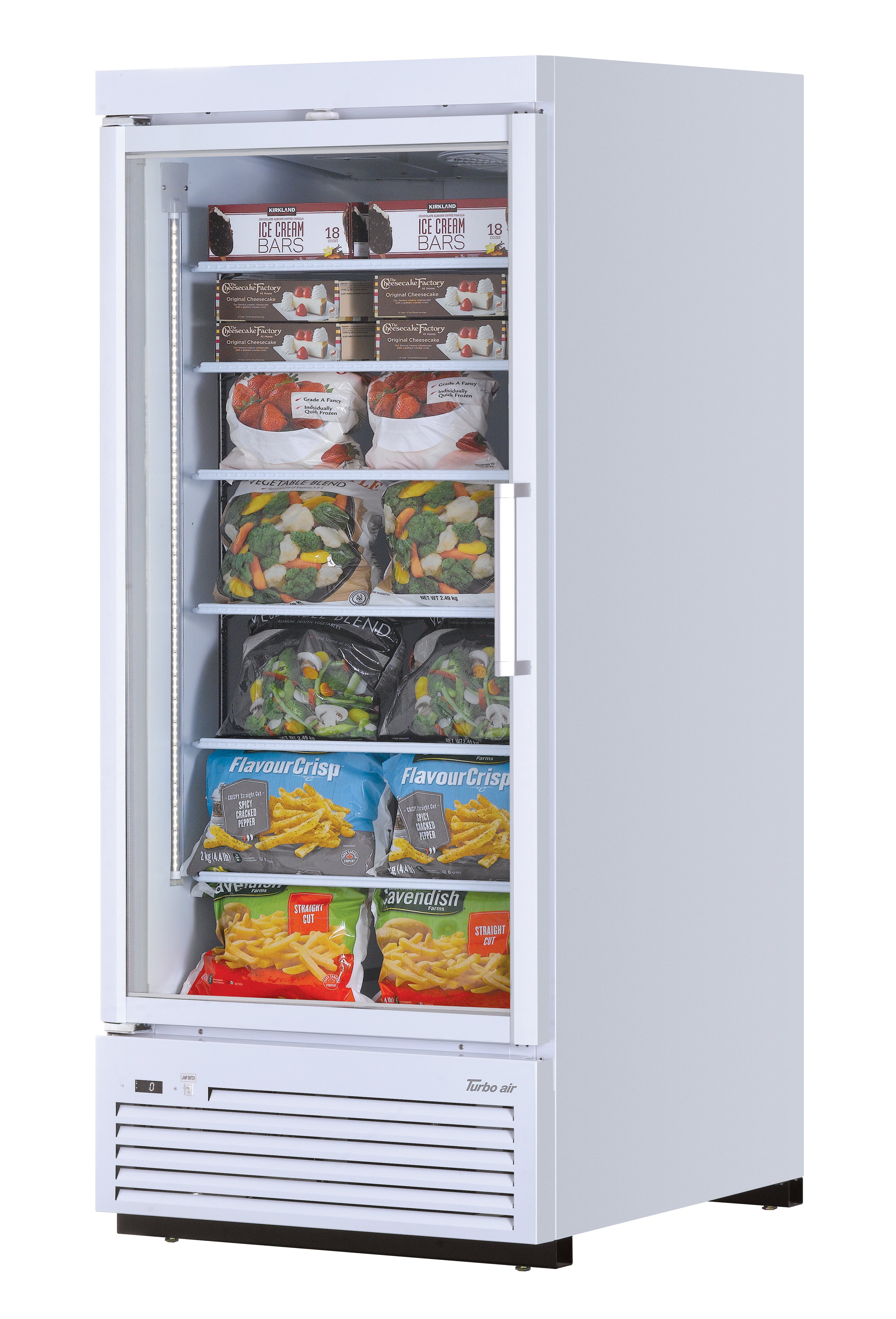
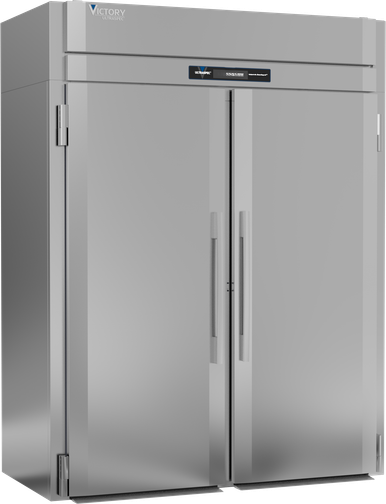
The 2-door workhorse
The most common size — biggest capacity first
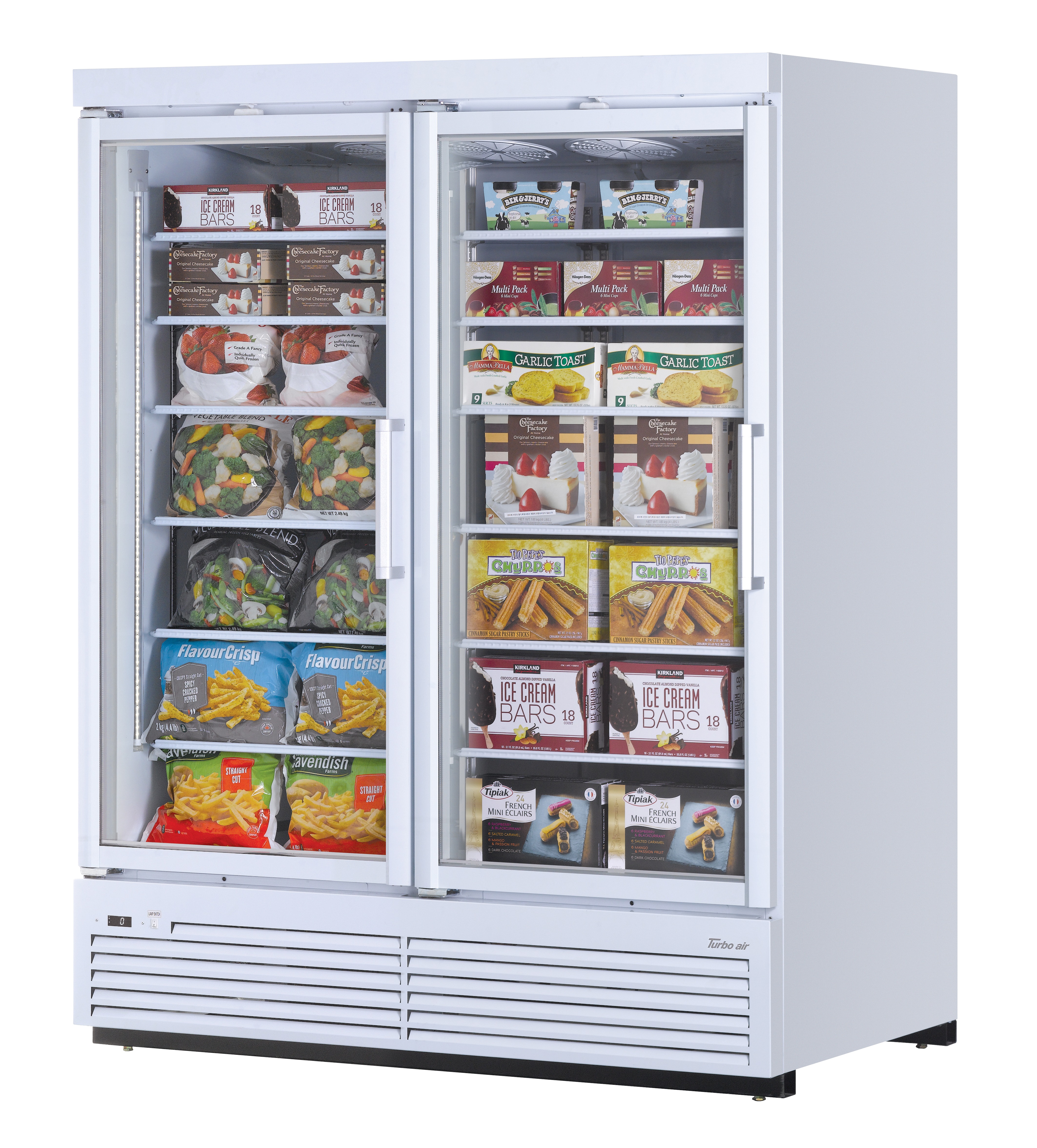
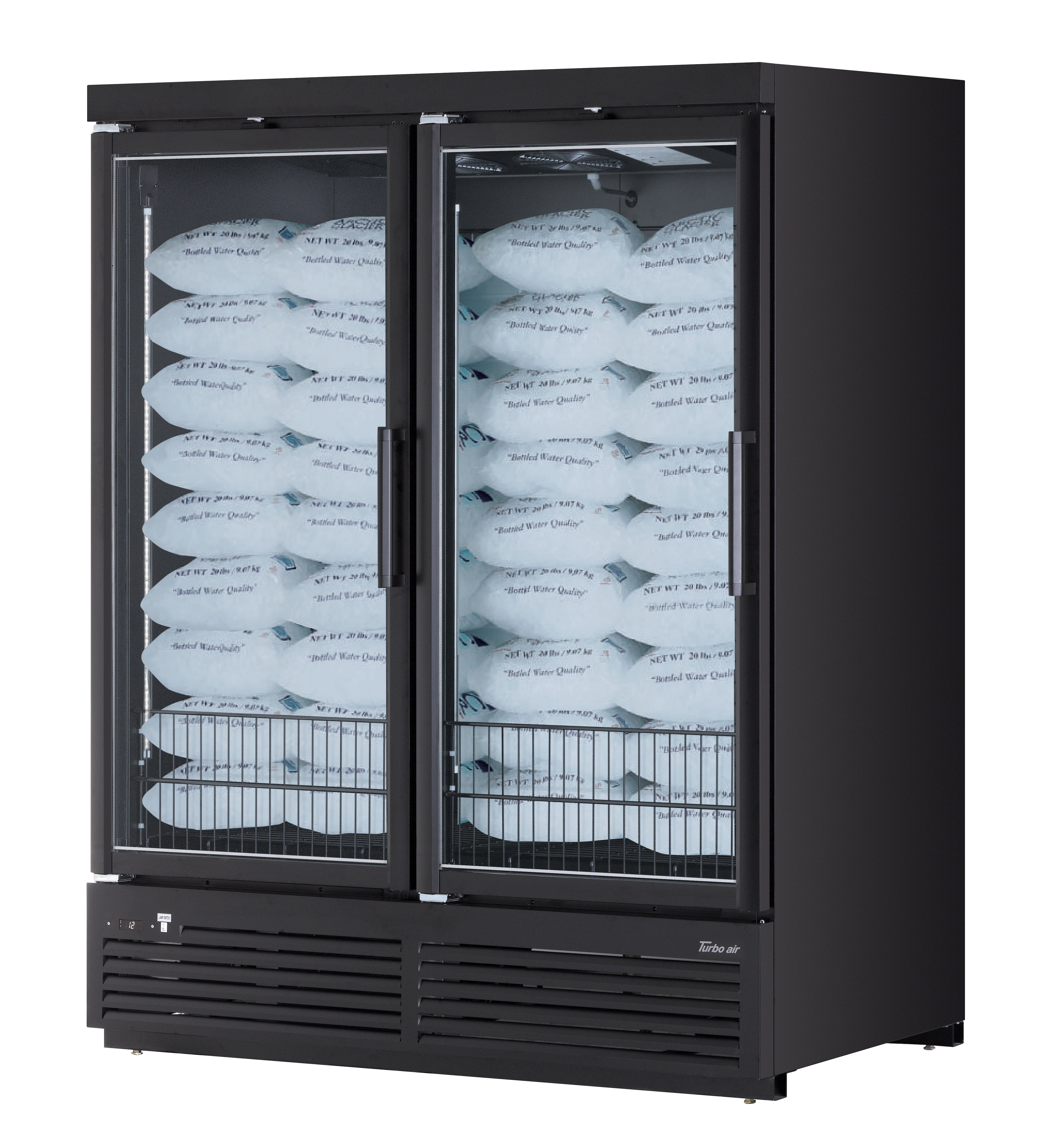
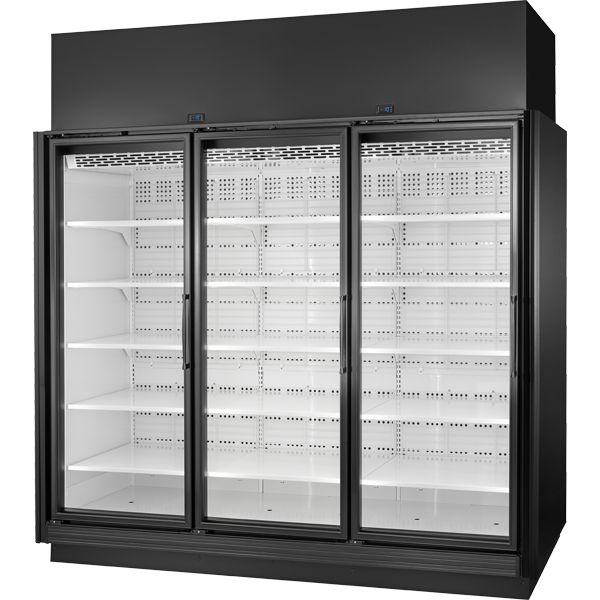
Glass-door freezer merchandisers
Show frozen product front-of-houseMost capacity
Maximum cubic feet for high-volume frozen storageHot-gas defrost
Faster temperature recovery for heavy useBottom-mount, easy service
Coil out of the floor grease; simpler to cleanCommercial reach-in freezers: buying guide
A reach-in freezer is sized by sections and capacity, then chosen by door style, defrost method, refrigerant, and compressor position. Commercial models are generally NSF/ANSI-7 listed — confirm the specific model with your local authority. Here is how to read the 346 models above.
Sections and capacity
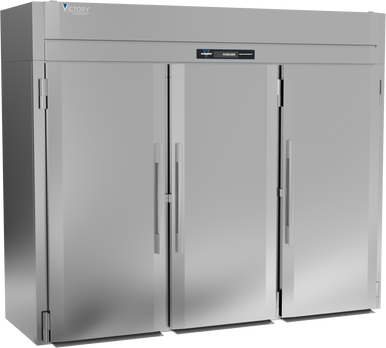
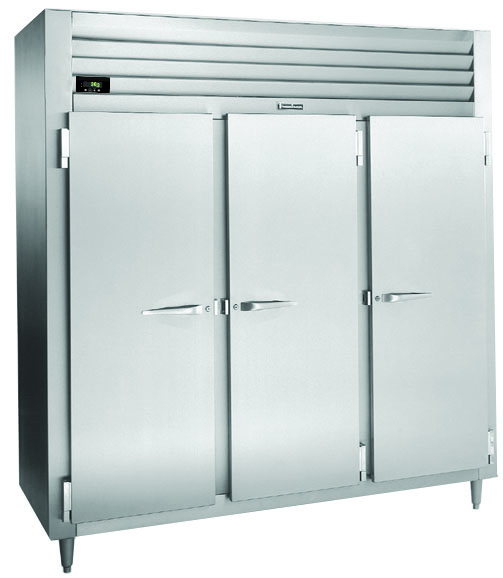
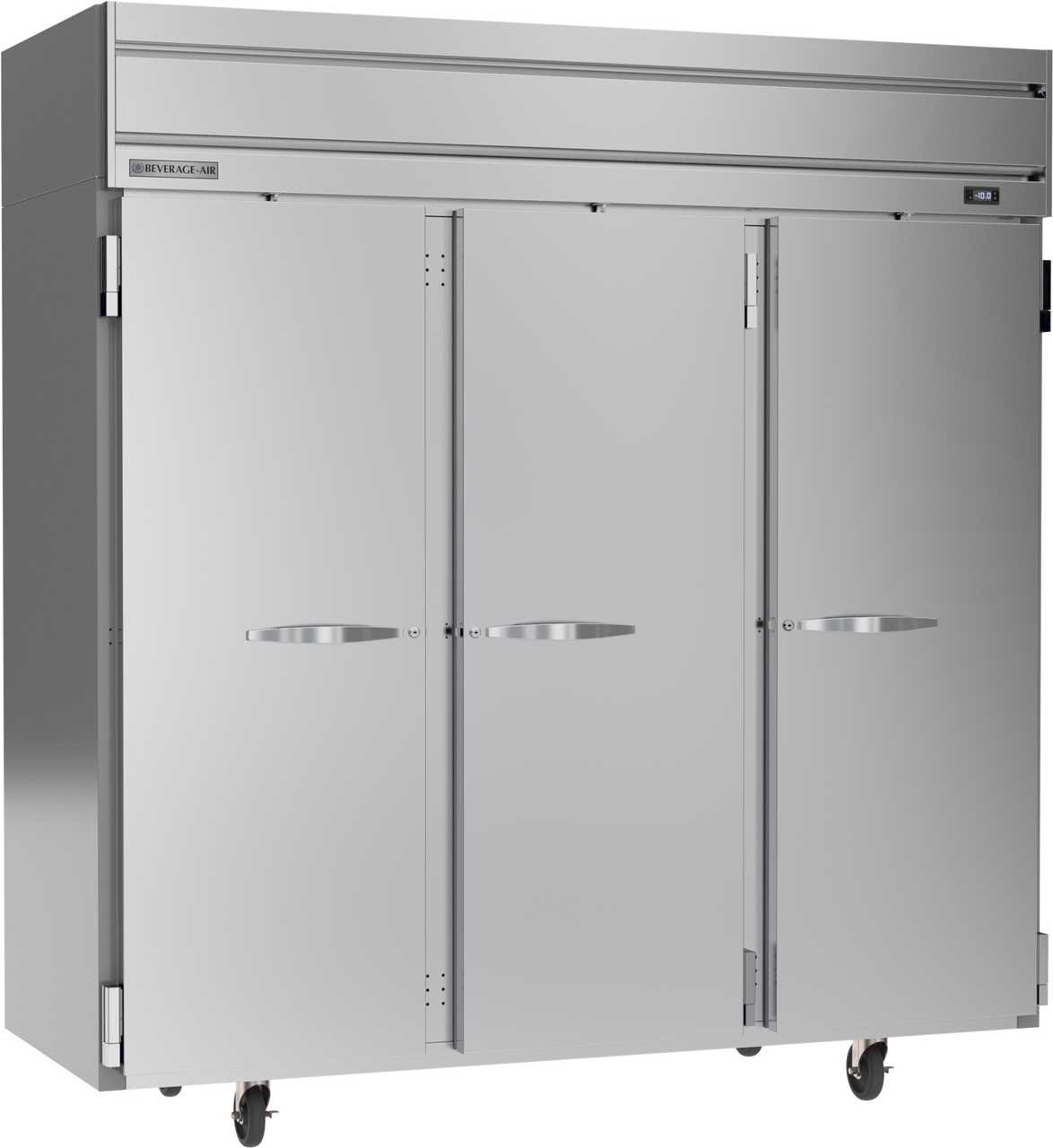
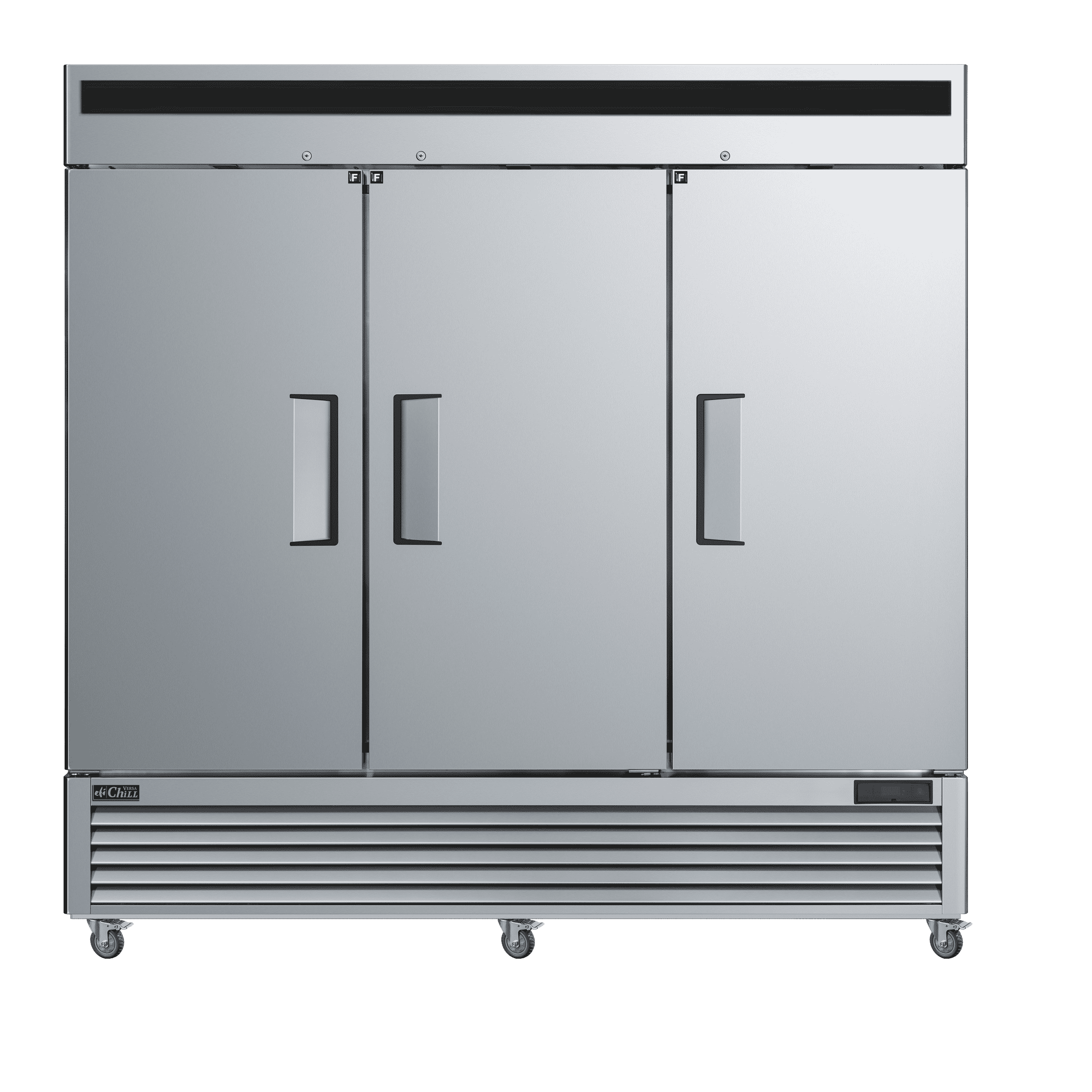
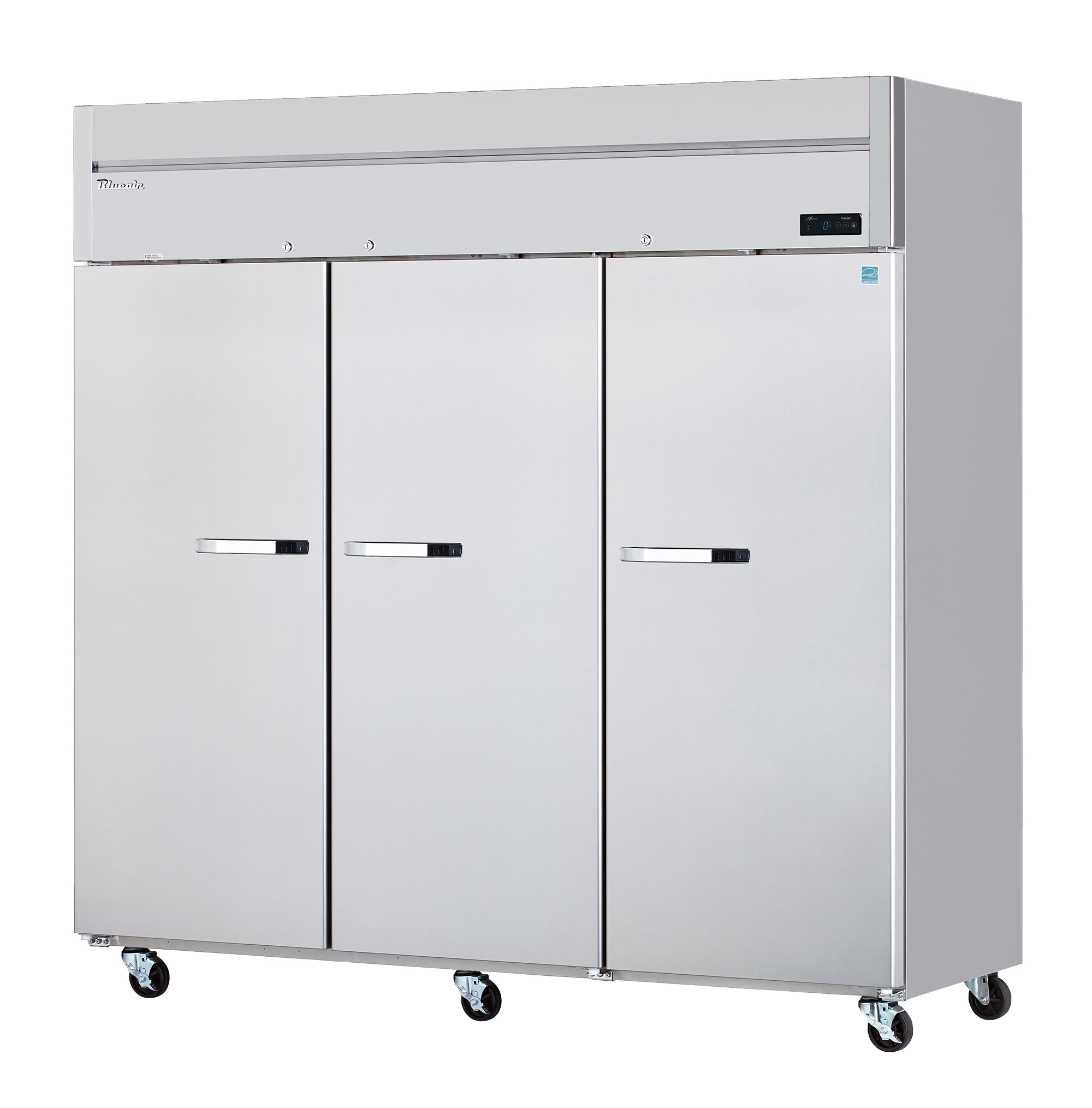
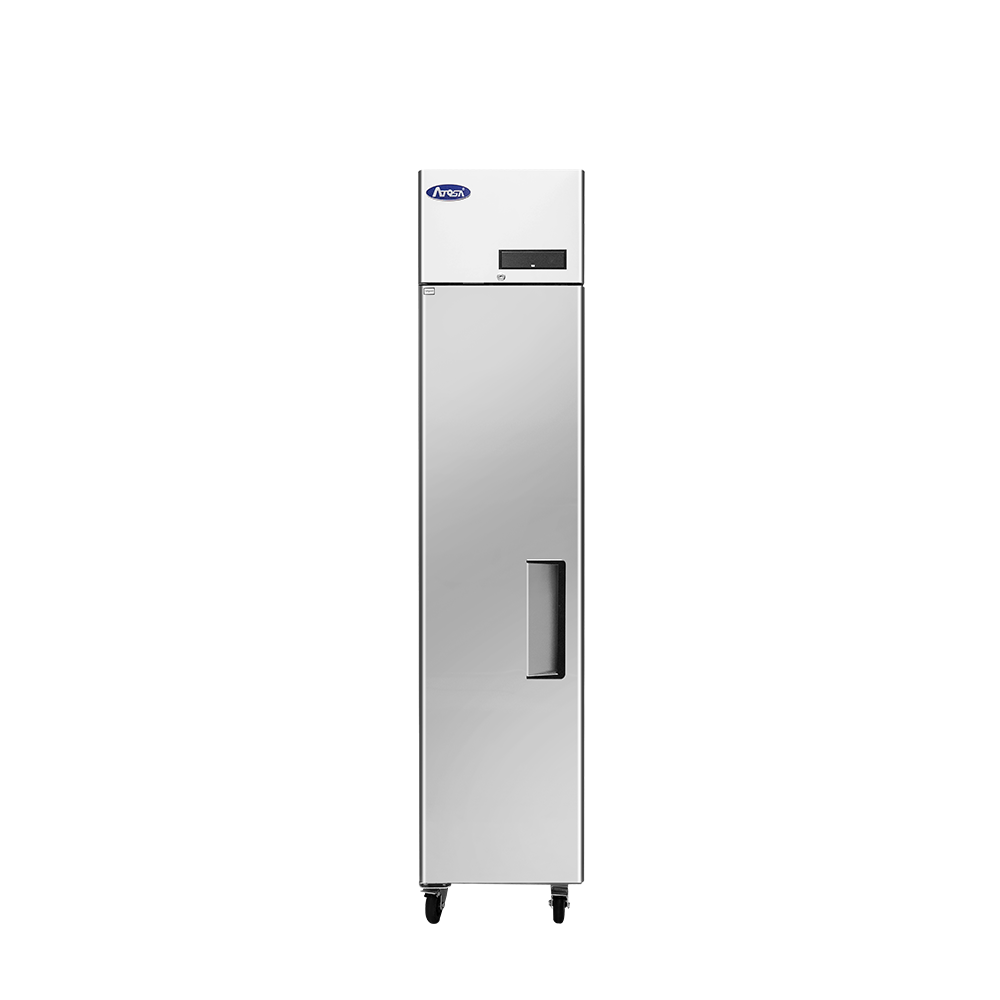
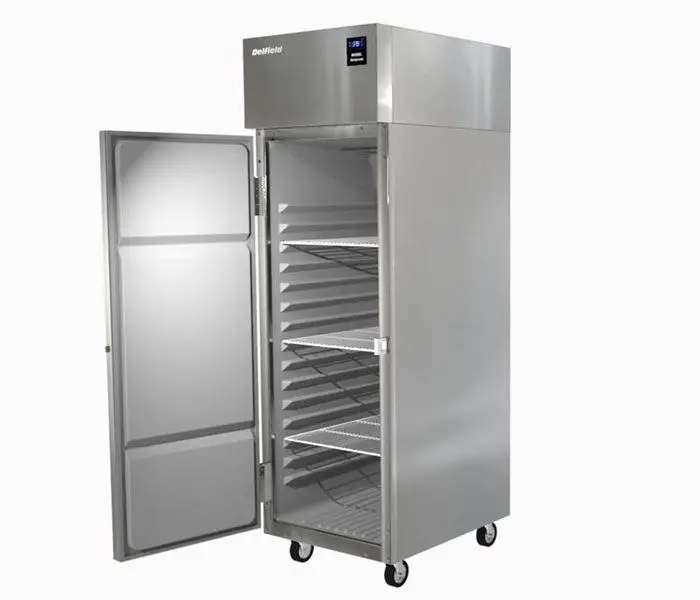
Freezers come in 1-, 2-, and 3-section widths (about 27″, 54″, and 78″), roughly 18-23 cu ft per section. Match interior cubic feet to your frozen par levels, buy for the busiest day, and confirm the cabinet clears doorways.
Temperature and defrost
A reach-in freezer holds frozen product — typically around 0°F, many rated −10°F to 0°F. Frost buildup must be cleared: automatic (electric) defrost is the hands-off standard; hot-gas defrost recovers temperature faster for heavy or lower-temp use; manual is simplest but you must defrost on a schedule.
Solid vs glass vs half doors
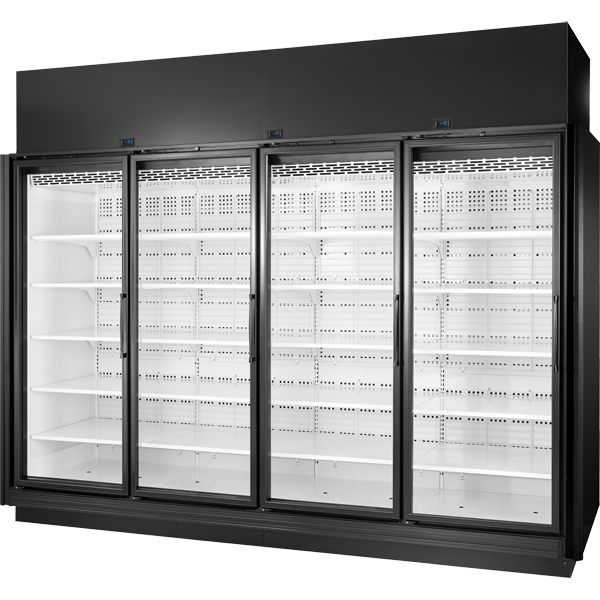
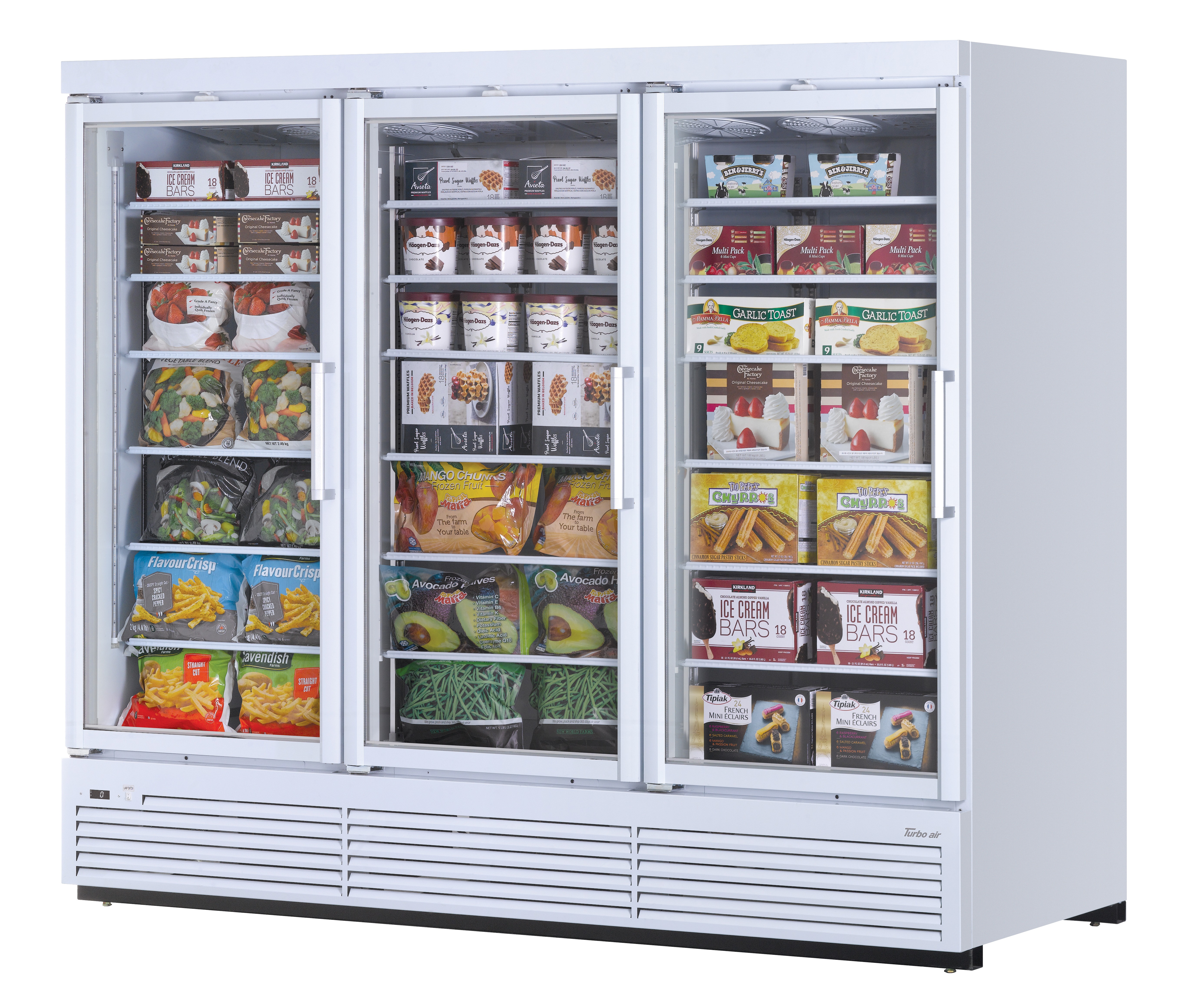
Solid doors insulate best and cost least to run. Glass doors merchandise frozen product but use more energy and need anti-condensate heaters. Half-doors reduce cold-air loss on a busy line.
Refrigerant
Newer freezers increasingly use R290 (efficient, low-GWP). Many units use R404a (traditional low-temp) or R448a (a lower-GWP replacement). R290 systems are factory-sealed with a small, safe charge.
Compressor location
Bottom-mount keeps the coil out of ceiling heat and is easier to service; top-mount frees floor space. Keeping the coil clean matters even more on a freezer holding sub-freezing temps.
| Choice | Best use | Consideration |
|---|---|---|
| 1 section (~27″) | One door, ~18-23 cu ft | Line or small kitchen |
| 2 section (~54″) | Two doors, ~40-49 cu ft | The workhorse size |
| 3 section (~78″) | Three doors, ~70 cu ft | High-volume frozen storage |
| Solid door | Frozen storage | Holds temp, cheapest to run |
| Glass door | Merchandising frozen product | Higher energy; anti-sweat heaters |
| Automatic defrost | Most uprights | Timer-based, hands-off |
| Hot-gas defrost | Heavy / low-temp use | Faster temperature recovery |
| R290 refrigerant | New builds | Efficient, low-GWP |
NSF and installation
Look for the NSF/ANSI-7 listing (commonly required on plan review). Leave the manufacturer’s air clearance around the compressor, plus door-swing and aisle room.
Warranty and maintenance
Commercial freezers typically carry a multi-year parts & labor warranty plus a longer compressor warranty. Clean the condenser coil monthly, check door gaskets and the anti-sweat heaters on glass doors, and keep the unit clear of heat sources — a dirty coil or bad gasket is the most common cause of a freezer that frosts up or can’t hold temperature.
How the brands compare
Door styles, capacity range, defrost, refrigerant, and warranty for the brands with the most reach-in freezers here — a starting point, not a substitute for checking the specific model.
| Brand | Models | Door types | Capacity | Defrost | Refrigerant | Warranty |
|---|---|---|---|---|---|---|
| Victory | 49 | Glass / Half / Solid | 6.5–106.8 cu ft | Automatic | R290 | 6-year parts & labor, 7-year compressor |
| Traulsen | 35 | Glass / Solid | 17.6–77.5 cu ft | Automatic | R290 | 3-year parts & labor, 5-year compressor |
| Beverage-Air | 33 | Glass / Half / Solid | 21.0–69.1 cu ft | Automatic | R290 | 7-year parts & labor, 7-year compressor |
| True | 30 | Glass / Solid | 8.5–154.4 cu ft | Automatic | R290 | 3-year parts & labor, 7-year compressor |
| Turbo Air | 30 | Glass / Solid | 17.3–93.8 cu ft | Automatic | R290 | 5-year parts & labor, 7-year compressor |
| Atosa | 24 | Glass / Solid | — | Automatic | R290 | 2-year parts & labor, 5-year compressor |
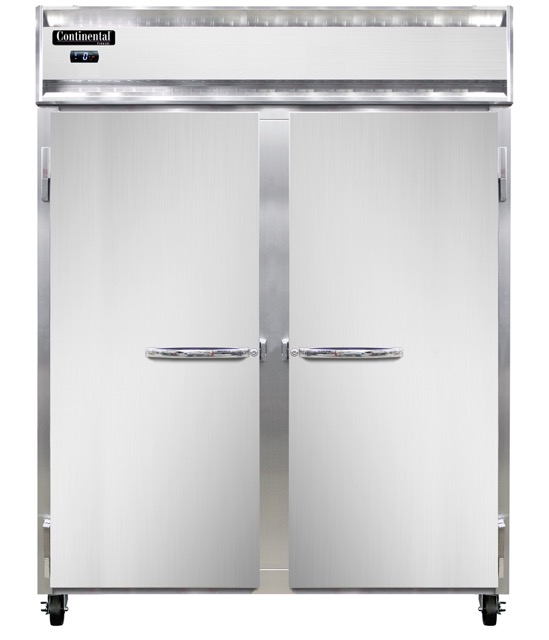
| Continental Refrigerator | 17 | Glass / Solid | 11.4–48.6 cu ft | Automatic | R290 | 6-year parts & labor, 7-year compressor |
| Migali | 11 | Glass | 43.8–43.8 cu ft | Automatic | R290 | 2-year parts & labor, 5-year compressor |
| Delfield | 10 | Glass / Solid | 7.1–64.6 cu ft | Automatic | R290 | — |
| Hoshizaki | 10 | Solid | 6.3–42.5 cu ft | Automatic | R290 / R404a | 3-year parts & labor, 5-year compressor |
| EFI | 8 | Glass / Solid | 7.1–68.3 cu ft | Automatic | R290 | 2-year parts & labor, 5-year compressor |
Frequently asked questions
How many sections (doors) of freezer do I need?
Size by your frozen par levels and line space. A 1-section (~27″) reach-in freezer holds roughly 18-23 cu ft; a 2-section (~54″) about 40-49 cu ft; a 3-section (~78″) about 70 cu ft. Buy the capacity your busiest day needs, then confirm it fits the wall run and clears doorways.
What temperature does a reach-in freezer hold?
A reach-in freezer is built to hold frozen product, typically around 0°F, with many rated to a −10°F to 0°F range. If you only need cold (not frozen) storage, that's a reach-in refrigerator (33-40°F) — a separate category. Confirm the rated range on the spec sheet for your product.
Automatic, manual, or hot-gas defrost?
Freezers build up frost that must be removed to keep running efficiently. Automatic (electric) defrost runs on a timer and is standard on most uprights. Hot-gas defrost recovers temperature faster and suits heavy-use or lower-temp applications. Manual defrost is simplest and cheapest but requires you to shut down and defrost on a schedule.
Solid, glass, or half doors on a freezer?
Solid doors insulate best and cost least to run — the default for frozen storage. Glass doors merchandise frozen product (ice cream, grab-and-go) but use more energy and need anti-condensate heaters. Half-doors cut cold-air loss on a busy line because you open only the half you need.
What refrigerant do reach-in freezers use?
Newer freezers increasingly use R290 (hydrocarbon) for efficiency and low global-warming-potential. Many existing units use R404a, the traditional low-temp refrigerant, and some use R448a as a lower-GWP replacement. R290 systems are factory-sealed with a small, safe charge.
Top-mount or bottom-mount compressor?
Bottom-mount keeps the condenser coil away from ceiling heat and is easier to clean and service, but raises the bottom shelf. Top-mount frees floor space and pulls cooler high air. On a freezer, keeping the coil clean matters even more — a dirty coil makes the compressor work harder to hold sub-freezing temps.
Does the freezer need to be NSF certified?
Commercial reach-in freezers are generally NSF/ANSI-7 listed, which certifies food-safe materials and cleanability and is commonly required on plan review. Confirm the specific model's listing with the manufacturer and your local health authority when permitting.
How much clearance does a reach-in freezer need?
Leave the manufacturer's specified air clearance around the compressor so it can shed heat, plus room for door swing and a working aisle. A freezer crowded against a wall or a heat source runs hot, frosts up faster, and fails sooner.
About this data
Last verified: August 2026. Specs are compiled from manufacturer spec sheets and authorized dealer listings; where a value isn't published we leave it blank rather than guess.
Methodology: every reach-in-freezer model is compared on the same set of specifications, and dimensions are checked (for sinks, overall width must exceed the combined bowl widths) — figures that fail validation are corrected from the manufacturer model number or omitted. “Street price” is the lowest legitimate published price we've found and can change.
Sourcing: product specs come from the manufacturer; regulatory statements link to the source (e.g. the FDA Food Code and NSF). Code requirements vary by jurisdiction — confirm with the authority reviewing your plans.
Disclosure: FoodServiceNerd is vendor-neutral and free to use. Some “where to buy” links may be affiliate links — we may earn a commission at no cost to you, and it never changes what we list or how we rank it. We don't sell equipment ourselves.
Editorial: compiled and reviewed by the FoodServiceNerd equipment desk (about us). Spot an error? Tell us and we'll correct it.