Commercial Grease Traps & Interceptors
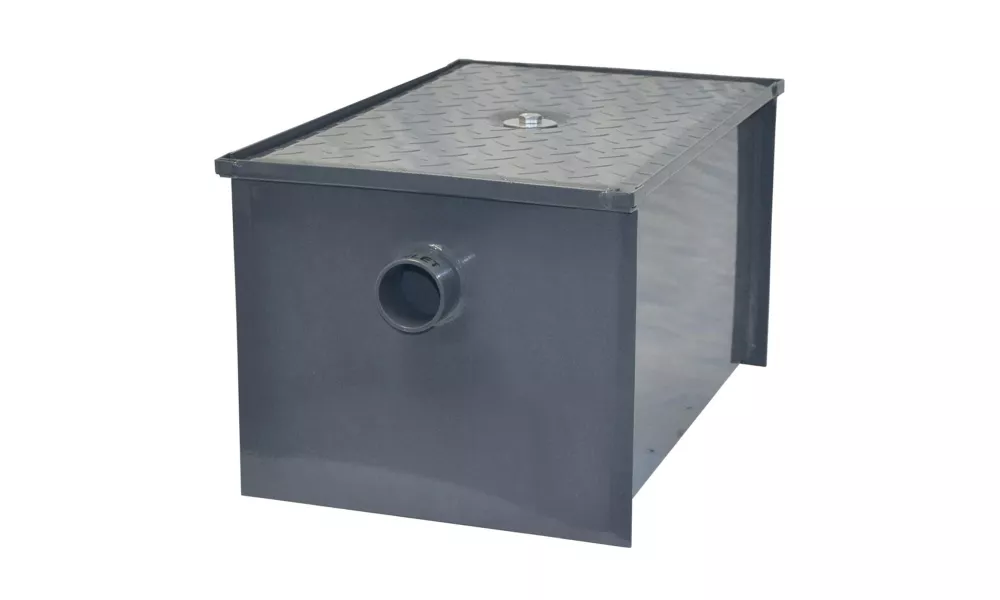
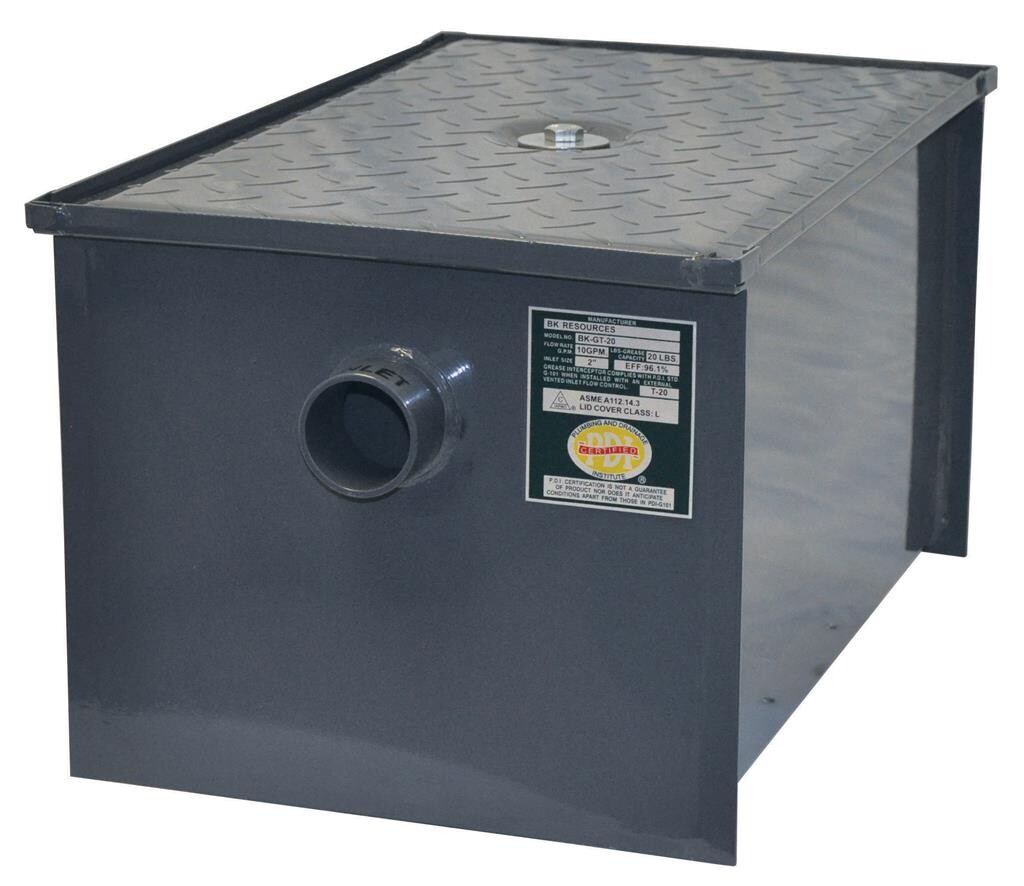
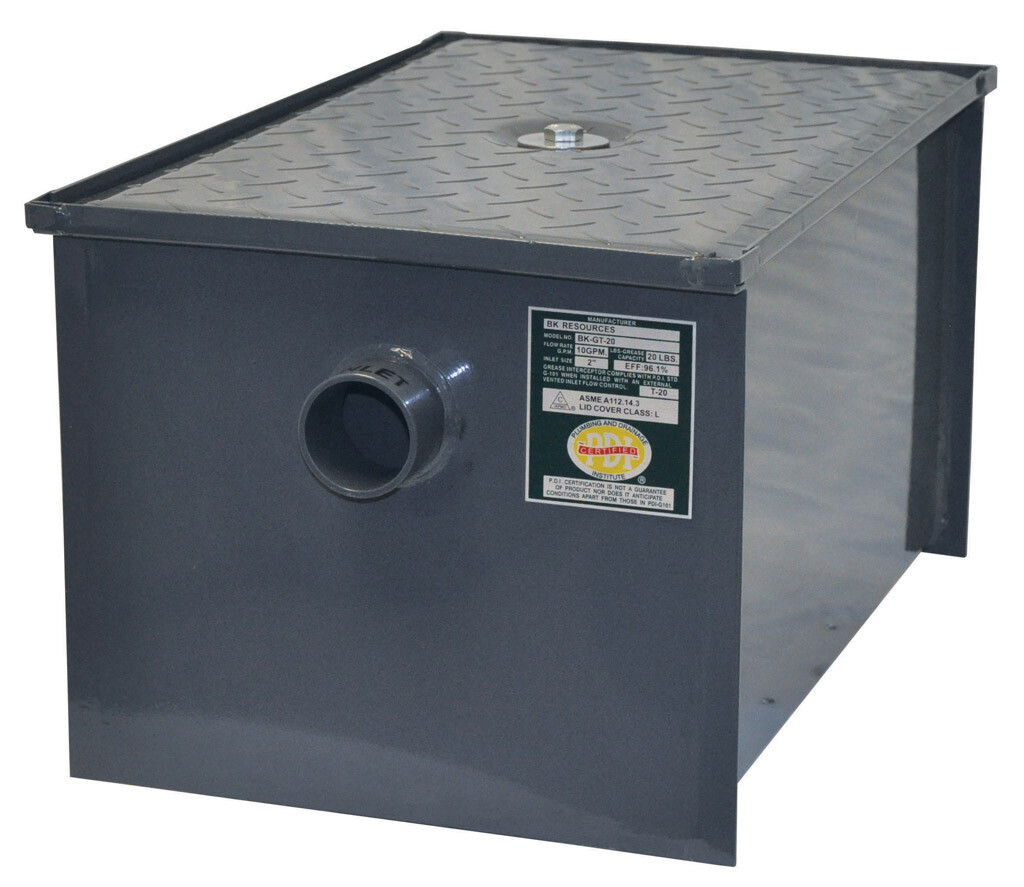
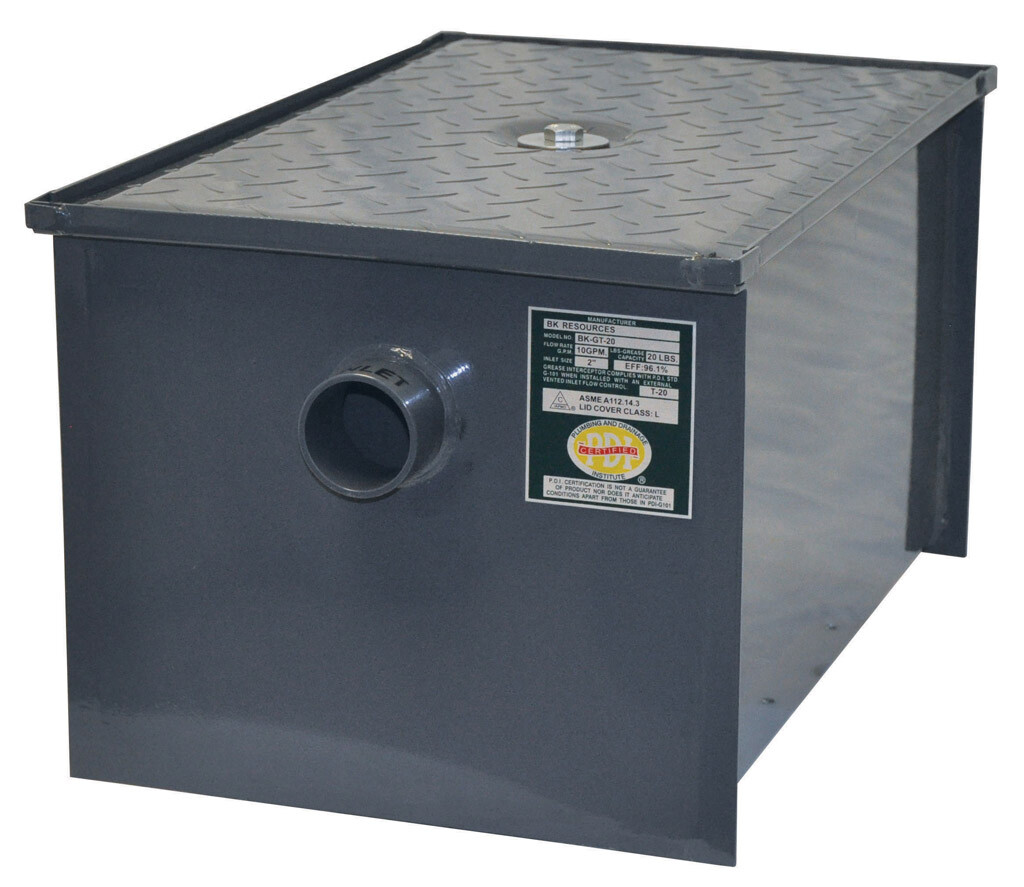
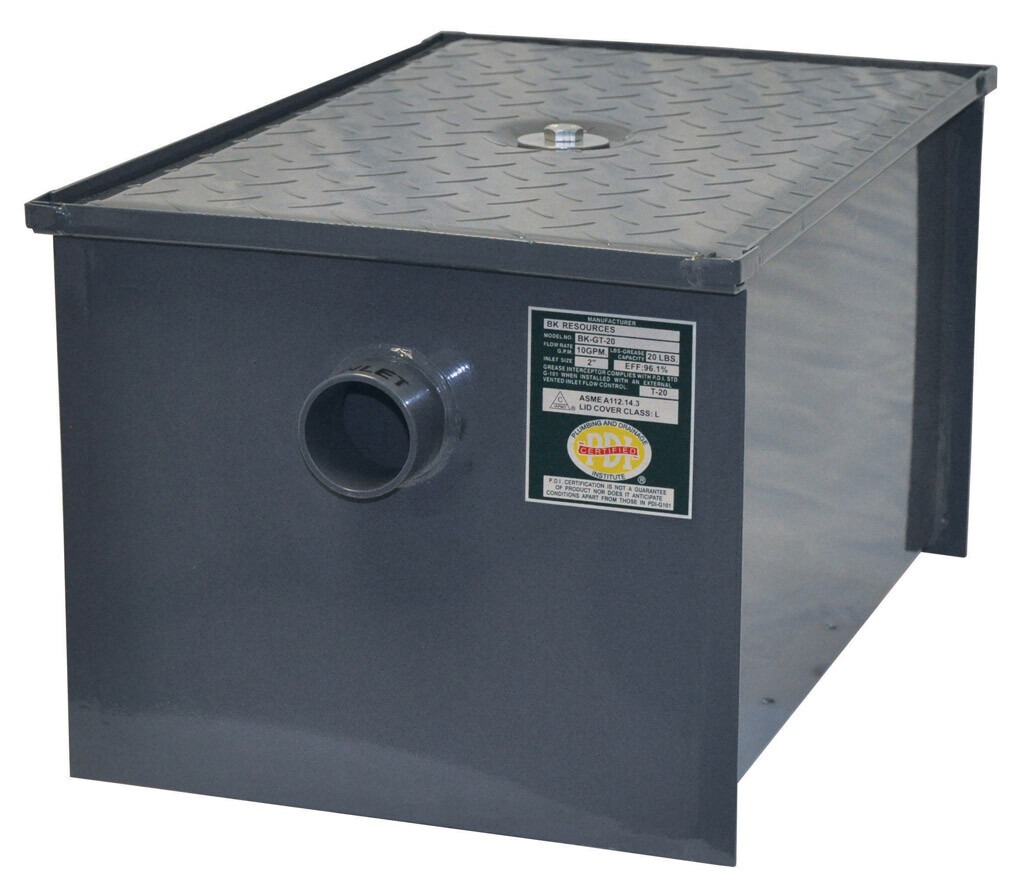
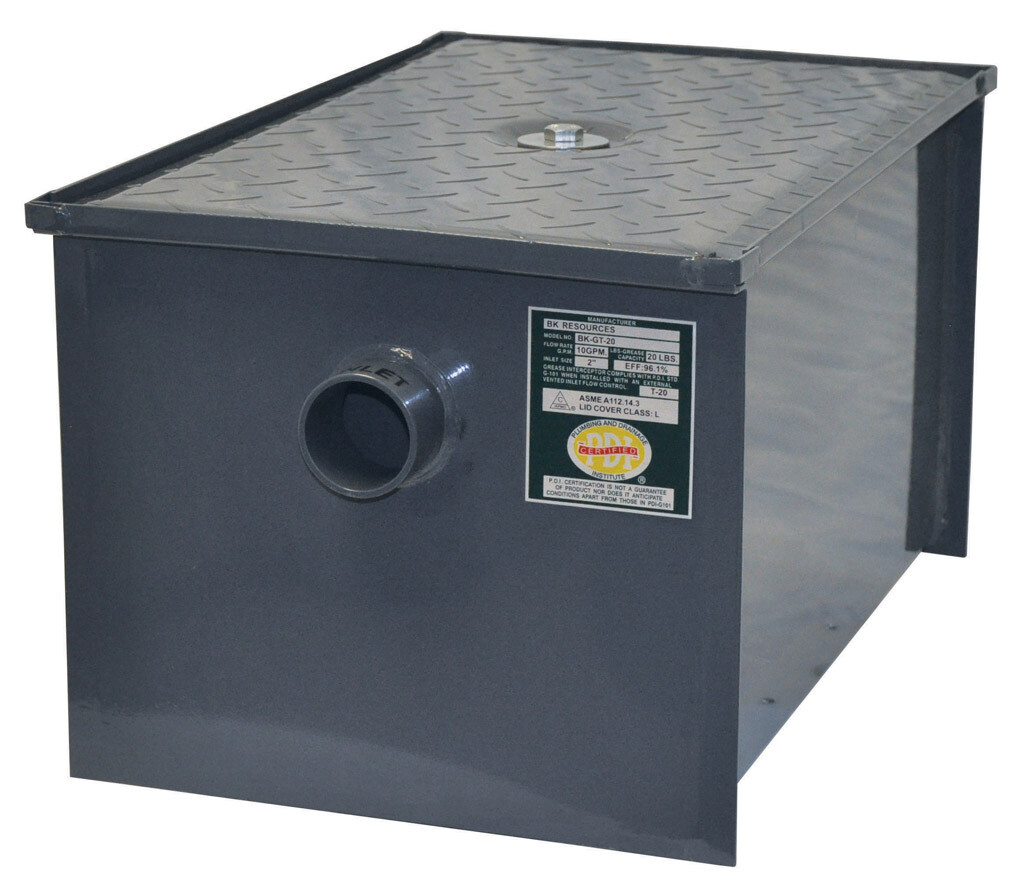
A commercial grease trap (grease interceptor) captures fats, oils, and grease from kitchen wastewater before it reaches the sewer. Size a point-of-use trap by flow rate (GPM) to match the fixtures it serves — a 3-compartment sink, dishmachine, or wok range — and by grease capacity (lb), which on the standard PDI series runs about twice the GPM. A flow-control fitting is needed to hold the rated flow. Requirements vary by jurisdiction, so confirm the size and type with your local plumbing authority before buying.
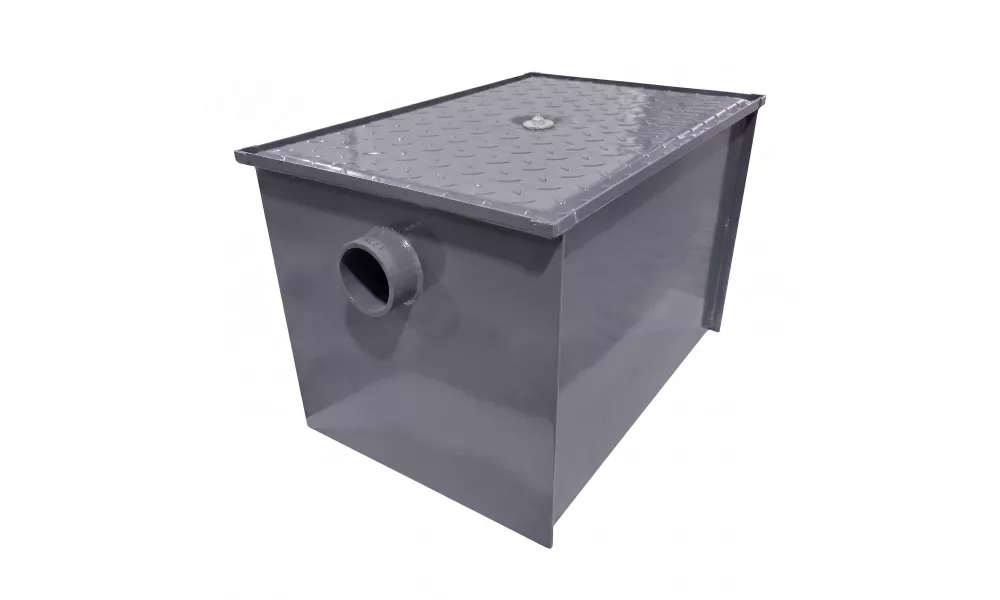
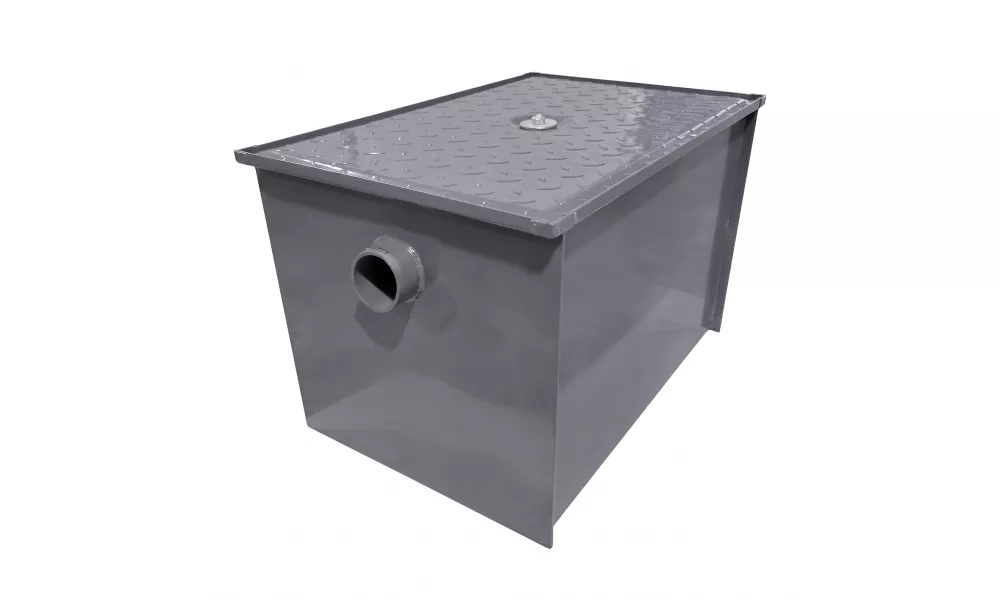
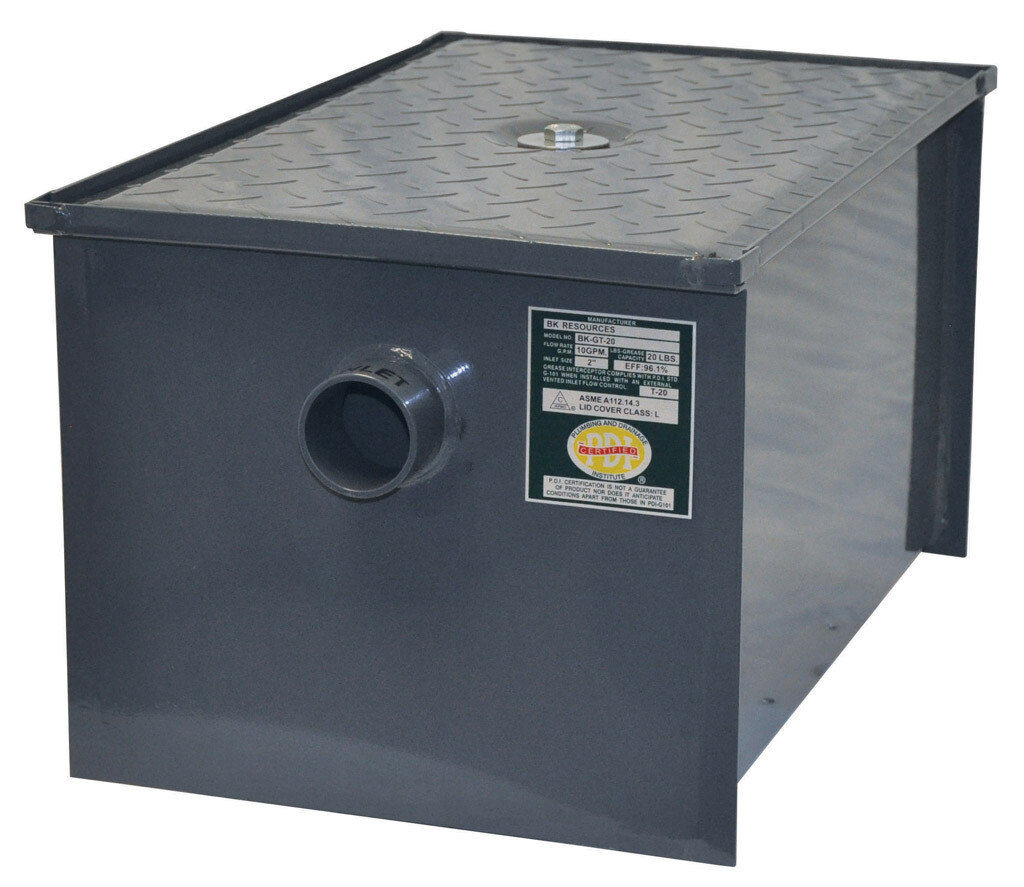
A grease trap (grease interceptor) keeps fats, oils, and grease out of the sewer line. These are compact point-of-use carbon-steel traps that install indoors near a sink or dishmachine. Size by flow rate (GPM) and grease capacity (lb) to match your fixtures — then confirm the required size and type with your local plumbing authority. Filter the catalog below, then read the sizing guide.
Grease traps & interceptors: sizing guide
A grease trap (grease interceptor) intercepts fats, oils, and grease (FOG) from a kitchen's wastewater before it reaches the sewer, where it would otherwise congeal and cause blockages. The 16 point-of-use steel traps here are sized on the standard PDI G101 series — filter by flow rate (GPM) and grease capacity (lb) to match your fixtures and local code.
How a grease trap works
Wastewater enters through a flow-control fitting that meters the flow. Inside, baffles slow the water so grease and light solids float to the top and settle, while cooler, clearer water exits from the bottom. The trap holds the accumulated grease until it is cleaned out.
| Factor | Why it matters | Note |
|---|---|---|
| Flow rate (GPM) | Matching the fixtures' drainage flow | Primary sizing number in most codes |
| Grease capacity (lb) | How long between cleanings | ≈ 2× the GPM on the PDI series |
| Flow-control fitting | Achieving the rated GPM | Required on PDI-style traps |
| Point-of-use steel | Under a sink or dishmachine, indoors | Larger sites may need an in-ground interceptor |
| Removable baffles / lid | Cleaning to the 25% rule | Makes scheduled pump-outs easier |
How to size a grease trap
Most codes size a point-of-use trap by the flow rate (GPM) of the fixtures it serves — often the drainage flow of a 3-compartment sink, dishmachine, or wok range. The pound rating (grease capacity) then follows the PDI pairing, roughly twice the GPM. Requirements vary widely by jurisdiction, though: some size by fixture-unit count, pipe diameter, or seats served, and many cities require a specific interceptor type or a licensed plumber's calculation. Confirm the required size and type with your local plumbing authority (AHJ) and FOG program before buying.
Flow control is part of the rating
A trap only holds its rated GPM with the correct flow-control fitting installed, which includes a vented air intake. Skipping it lets a surge overwhelm the trap and push grease downstream. Install it per the manufacturer's instructions.
Point-of-use vs. in-ground interceptors
The steel traps here are point-of-use: compact units that sit indoors near the fixture, on the floor or in a cabinet base. High-volume kitchens and many new builds instead require a larger in-ground or outdoor gravity grease interceptor. Which is permitted — and how big — is set by your jurisdiction.
Cleaning and the 25% rule
Clean a trap before the combined grease and solids reach about 25% of the liquid depth; past that, separation efficiency drops. Busy kitchens may need weekly service. Keep a cleaning log — many municipal FOG programs require one and set a maximum interval.
Certification and code
These models follow the PDI G101 size series. A specific third-party PDI, ASME A112.14.3, or NSF listing is flagged only where the manufacturer states it. Confirm the exact listing your inspector requires on plan review.
How the brands compare
Flow-rate and grease-capacity range and price for the brands here — both offer the standard PDI size series in coated carbon steel (in fact the same OEM traps); compare on price and on which listing your jurisdiction accepts.
| Brand | Models | Flow rate | Grease capacity | Price range |
|---|---|---|---|---|
| AmGood | 8 | 4–50 GPM | 8–100 lb | $279–$1,099 |
| BK Resources | 8 | 4–50 GPM | 8–100 lb | $456–$1,671 |
Frequently asked questions
What size grease trap do I need?
Size a point-of-use trap to the flow rate of the fixtures it serves, in gallons per minute (GPM), then confirm against your local plumbing code — some jurisdictions size by fixture drainage, pipe size, or seats served instead. As a starting point, a single 3-compartment sink is often paired with a 20–35 GPM trap; a dishmachine or high-volume line needs more. Your local plumbing authority (AHJ) has the final say.
What's the difference between the GPM and the pound (lb) rating?
They describe the same trap two ways. GPM is the flow rate it can handle; the pound rating is how much grease it holds between cleanings. On the standard PDI G101 series the grease capacity is about twice the GPM (a 20 GPM trap holds ~40 lb). Some codes specify one number, some the other — this catalog lists both so you can match either requirement.
Do I need a flow-control fitting?
Yes, on PDI-style traps. A flow-control fitting (with a vented air intake) meters incoming flow so grease has time to separate and float; without it a trap can be overwhelmed and pass grease through. It's part of achieving the rated GPM. Confirm placement with the manufacturer's instructions and your inspector.
Where does a point-of-use grease trap install?
These smaller steel traps install indoors, close to the fixture — under or beside a 3-compartment sink, a dishmachine, or a wok/prep line — on the floor or in a cabinet base. Larger buildings may instead require an in-ground or outdoor gravity interceptor; which is allowed depends on your jurisdiction and flow.
How often do I clean a grease trap?
A common rule is the “25% rule”: clean when the combined grease and solids reach about a quarter of the trap's liquid depth. Busy kitchens may hit that weekly. Many municipalities also set a maximum interval and require a cleaning log — check your local FOG (fats, oils, grease) program.
Are these traps certified?
The models here are built to the standard PDI G101 size series (the GPM/pound pairings). Whether a specific model carries a third-party PDI, ASME, or NSF listing varies — this catalog flags a listing only where the manufacturer states it. Confirm the exact certification your plumbing authority requires before you buy.
About this data
Last verified: August 2026. Specs are compiled from manufacturer spec sheets and authorized dealer listings; where a value isn't published we leave it blank rather than guess.
Methodology: every grease-trap model is compared on the same set of specifications, and dimensions are checked (for sinks, overall width must exceed the combined bowl widths) — figures that fail validation are corrected from the manufacturer model number or omitted. “Street price” is the lowest legitimate published price we've found and can change.
Sourcing: product specs come from the manufacturer; regulatory statements link to the source (e.g. the FDA Food Code and NSF). Code requirements vary by jurisdiction — confirm with the authority reviewing your plans.
Disclosure: FoodServiceNerd is vendor-neutral and free to use. Some “where to buy” links may be affiliate links — we may earn a commission at no cost to you, and it never changes what we list or how we rank it. We don't sell equipment ourselves.
Editorial: compiled and reviewed by the FoodServiceNerd equipment desk (about us). Spot an error? Tell us and we'll correct it.