Commercial Compartment Sinks
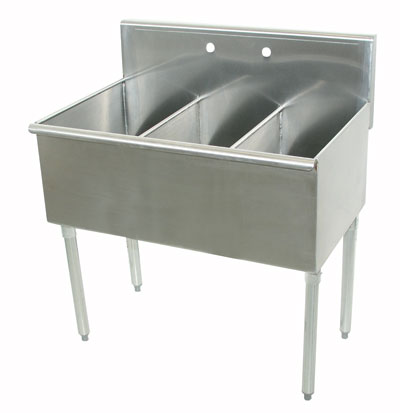
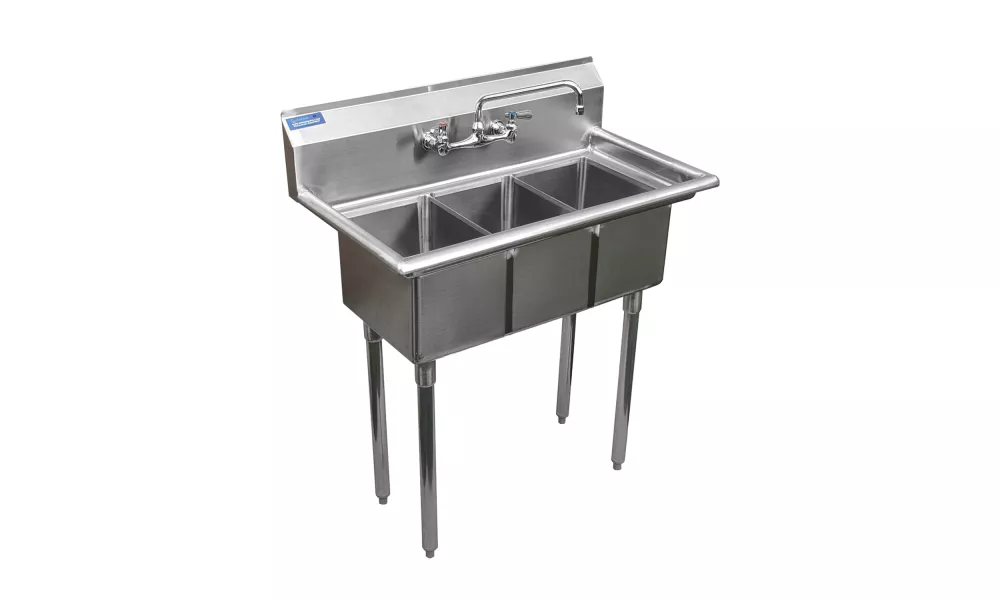
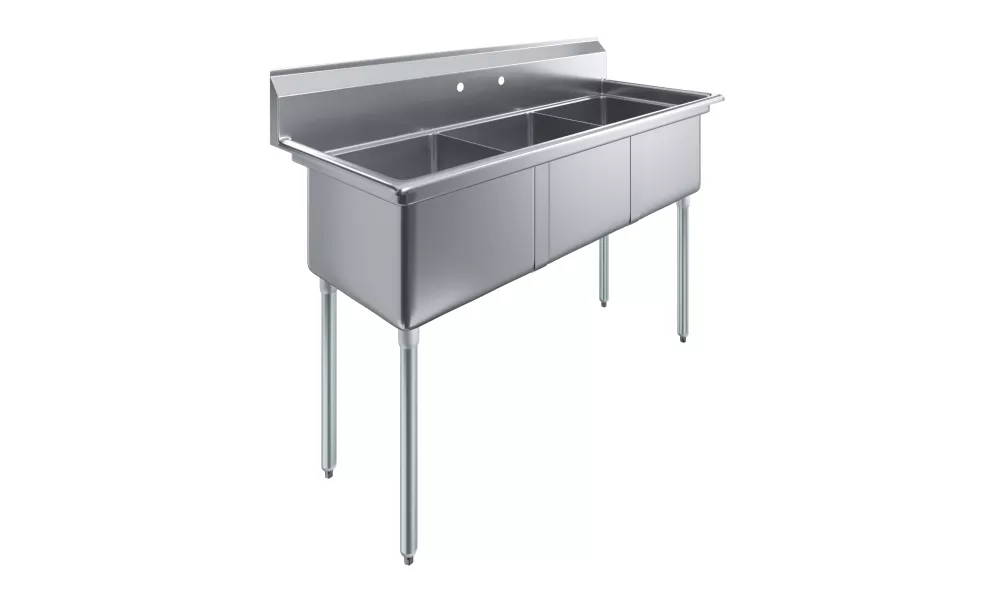
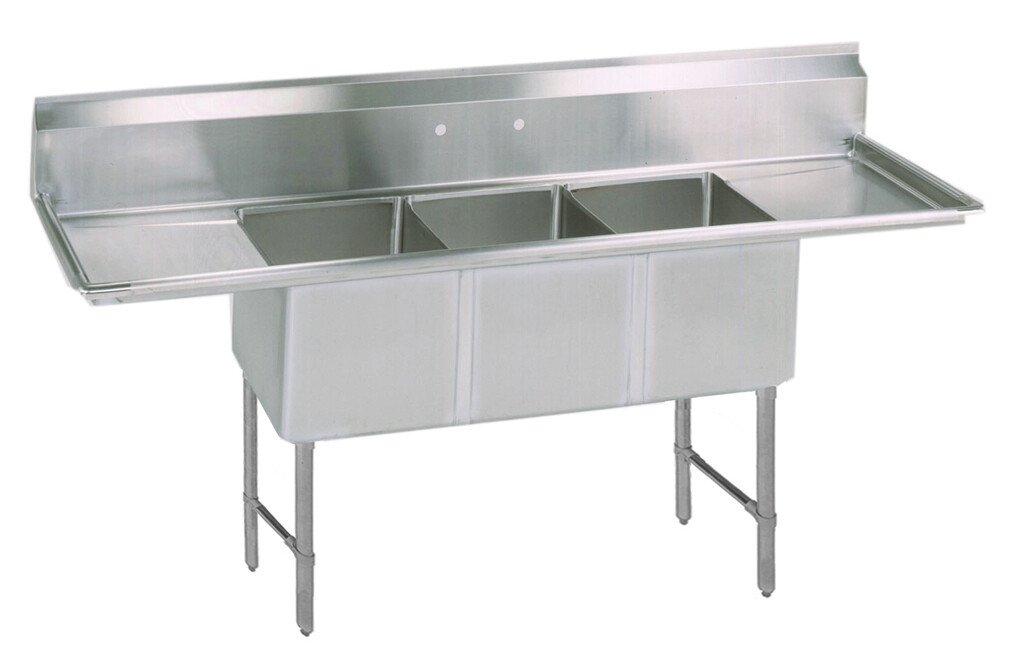
A commercial compartment sink (bay or pot sink) is a stainless fixture with one or more bowls, most often configured with three compartments for manual warewashing — washing, rinsing, and sanitizing pots, pans, and utensils by hand. The specs that decide the right one are compartment count, bowl size and depth, gauge (16-gauge is a common heavy-duty choice; 18-gauge is widely used for value and lighter-duty commercial work), steel grade (304 for a constantly-wet station), and drainboards — pick a path below, or filter on those specs. Confirm the count and bowl size your local plan review requires.













Which one should you buy?
Shortlists filtered to a real buying need — not paid placements or reviews. Each links to full specs.
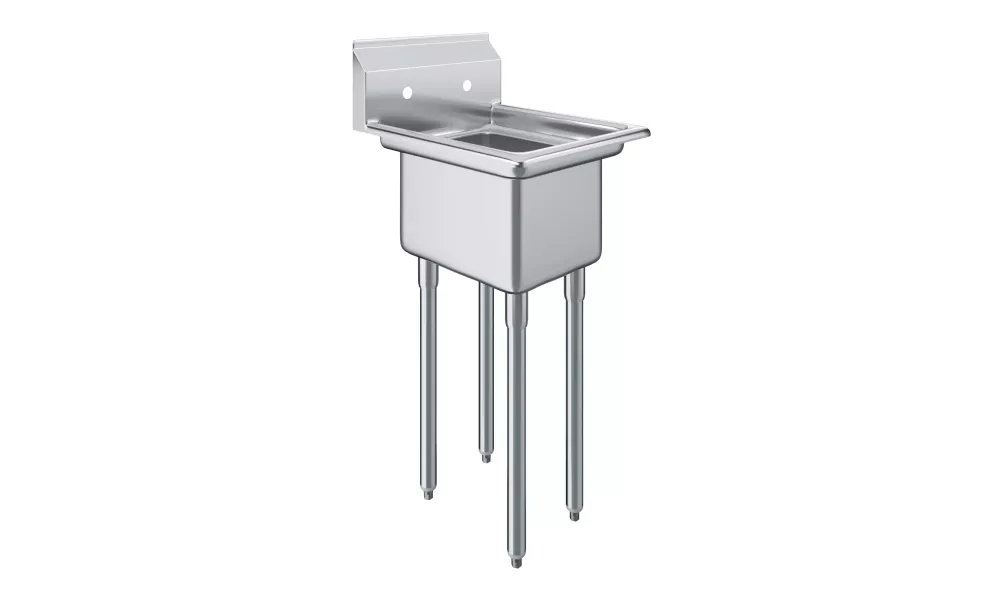
Compact 3-compartment sinks
Smallest overall width — for tight kitchensFor full-size sheet pans
Big bowls that swallow an 18×26″ pan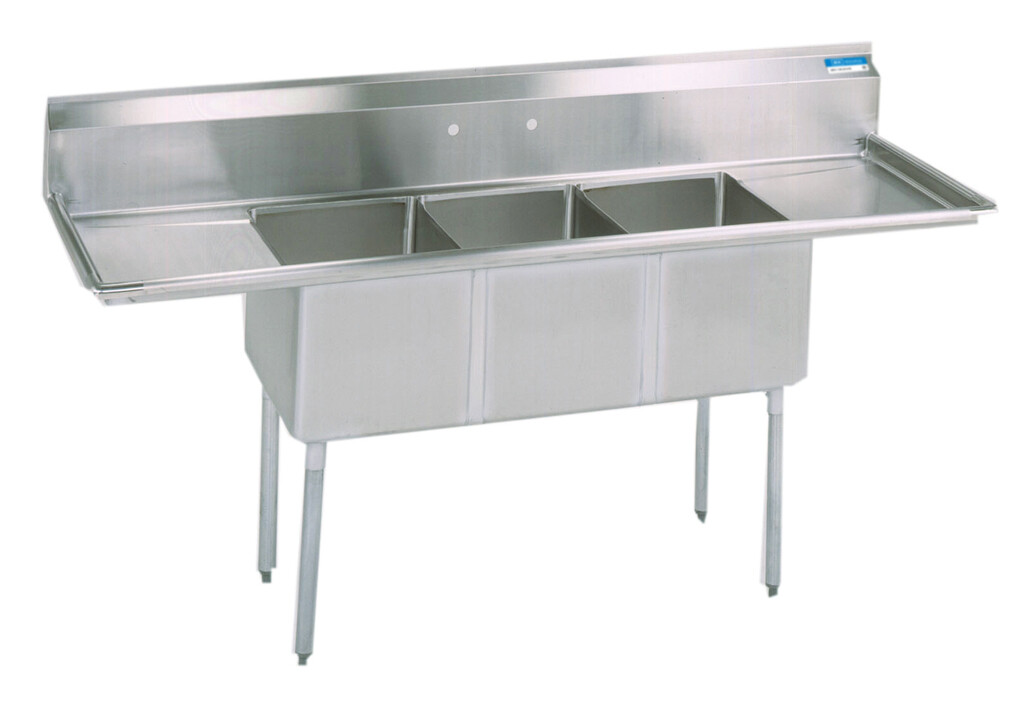
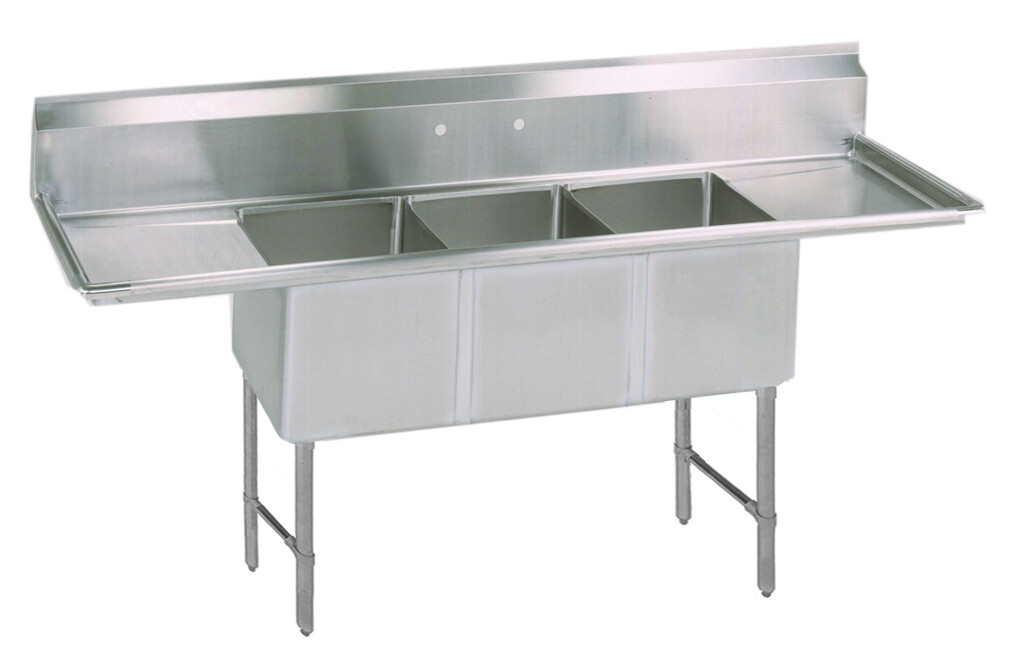
Best-value 304 stainless
304-grade with a listed street price, lowest first


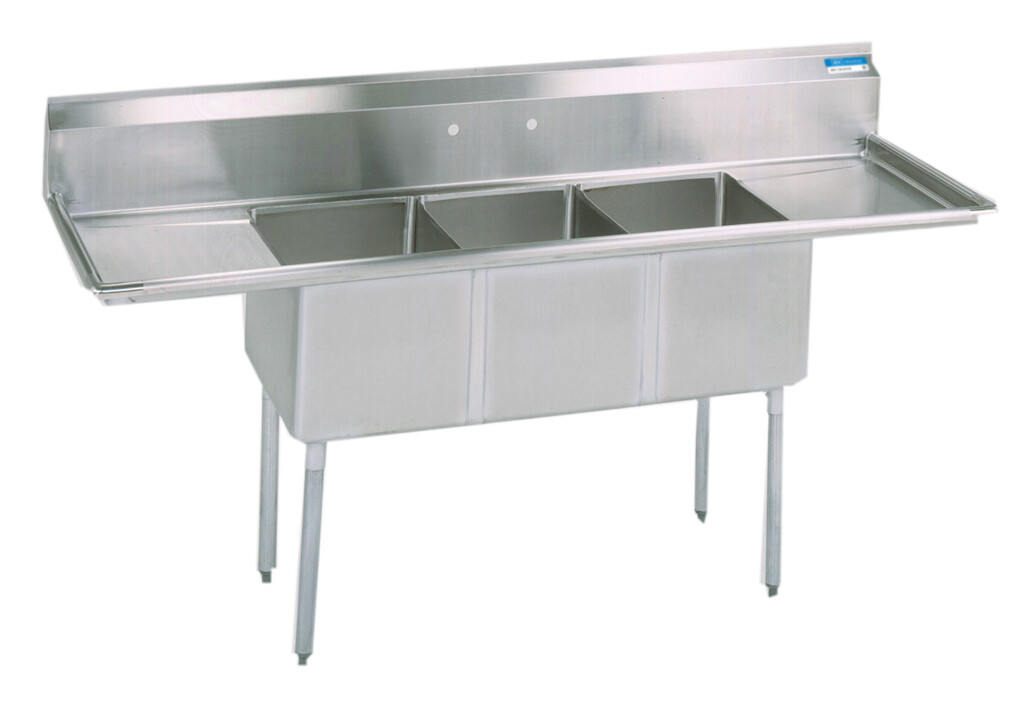
Heavy-duty 14/16-gauge
Thicker steel for a station that stays wet all shift


Under 72 inches wide
Fits a shorter wall run


Commercial compartment sinks: buying guide
Jurisdictions that adopt the FDA Food Code generally call for a sink with at least three compartments where utensils are washed by hand, but the exact requirements — bowl size, drainboards, installation, and certification — vary by local code, so confirm your build with the authority reviewing your plans. Here is how to read the 549 models above.
Types of compartment sinks
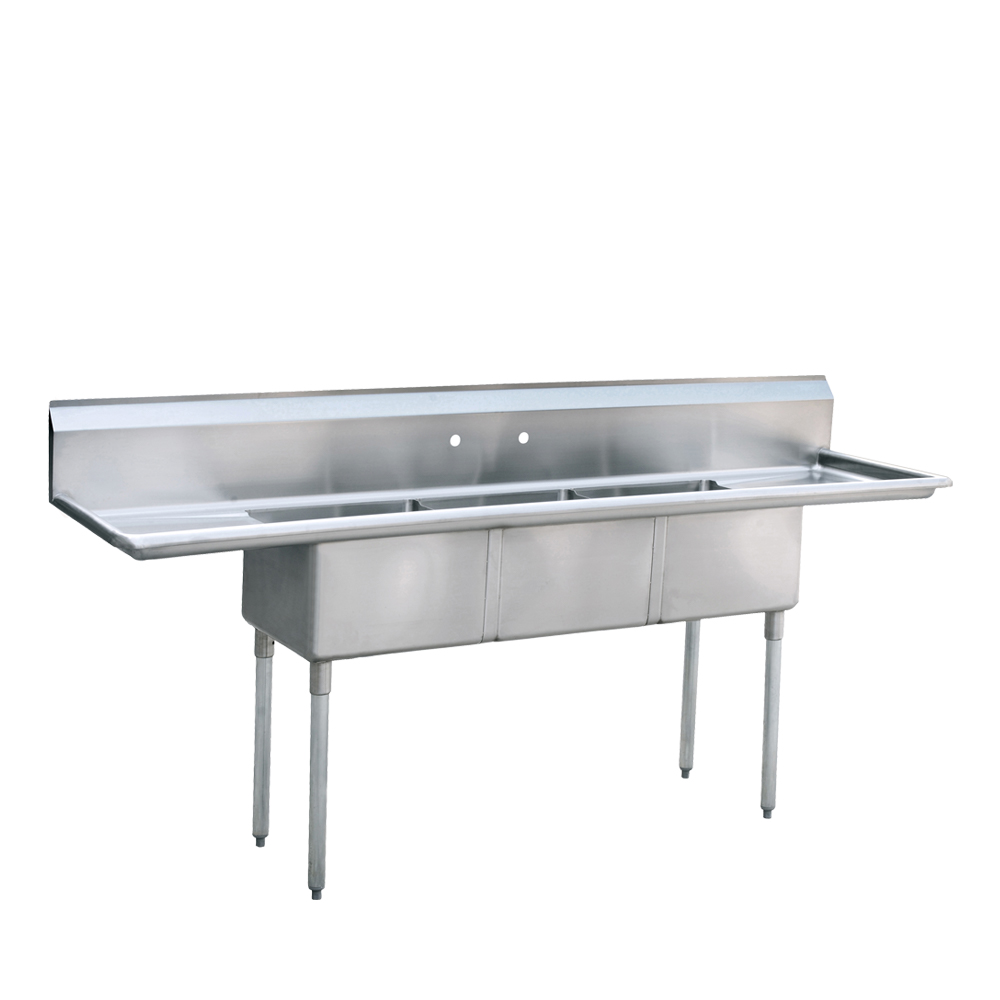
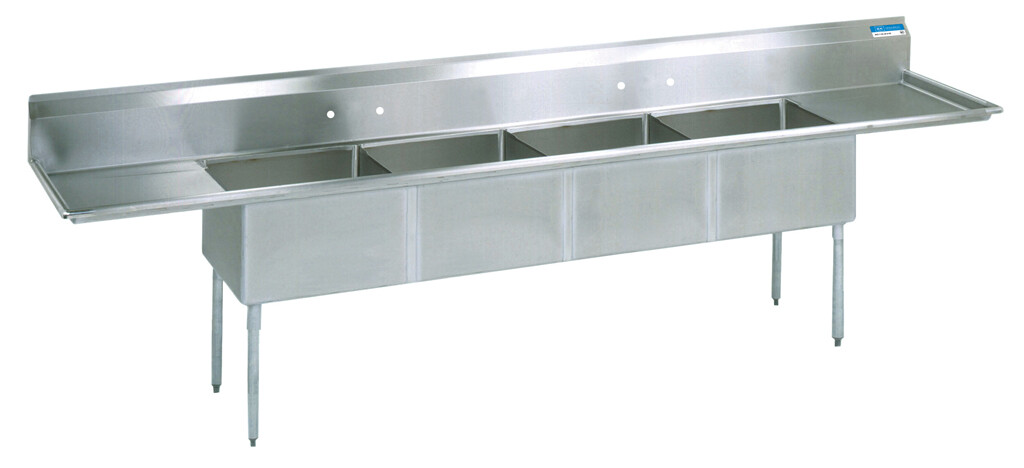
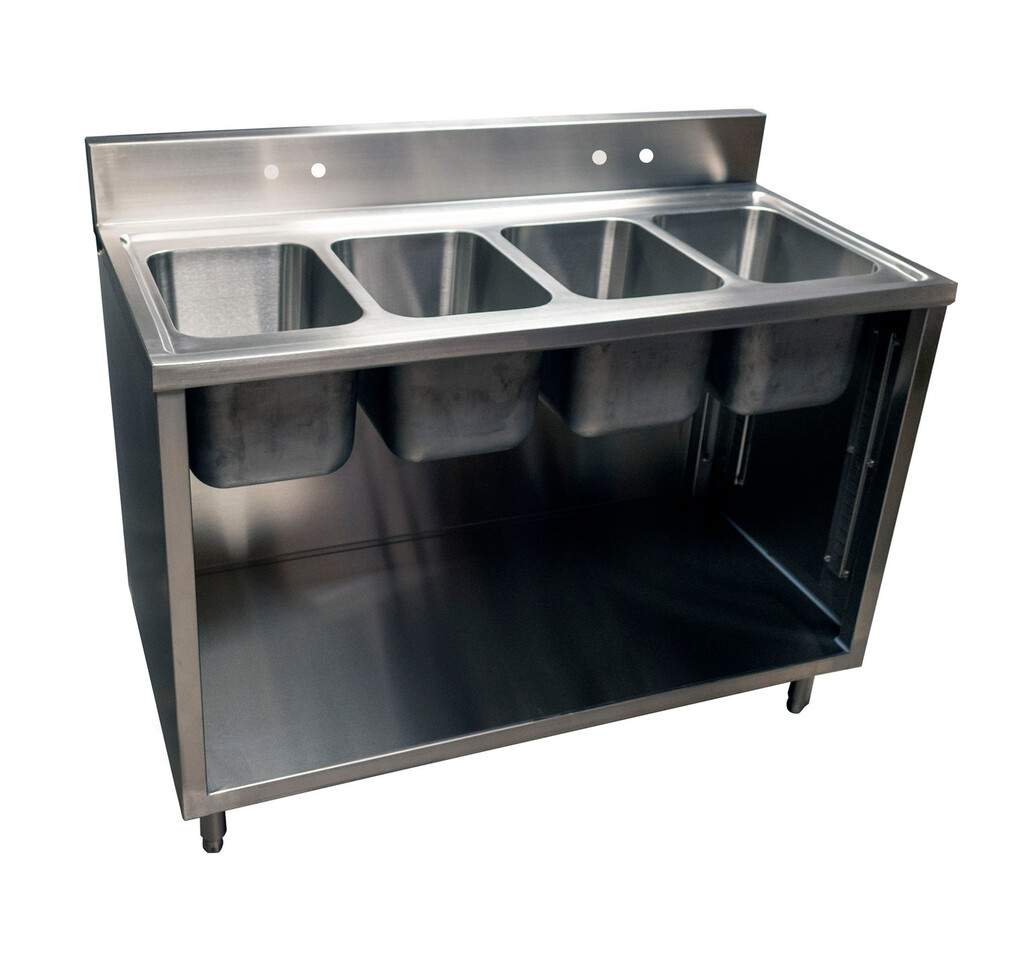
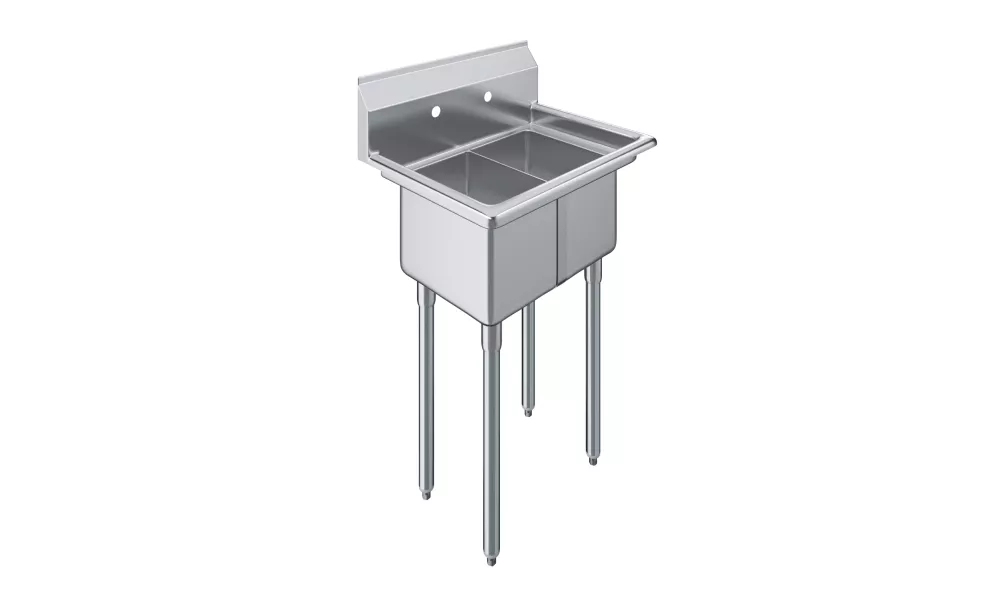
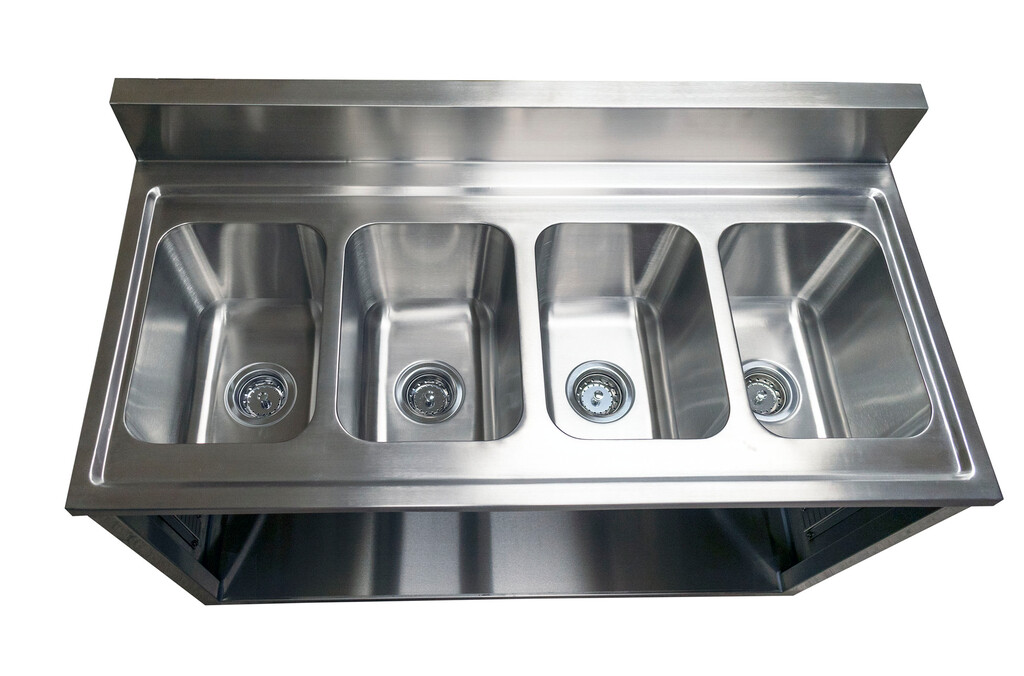
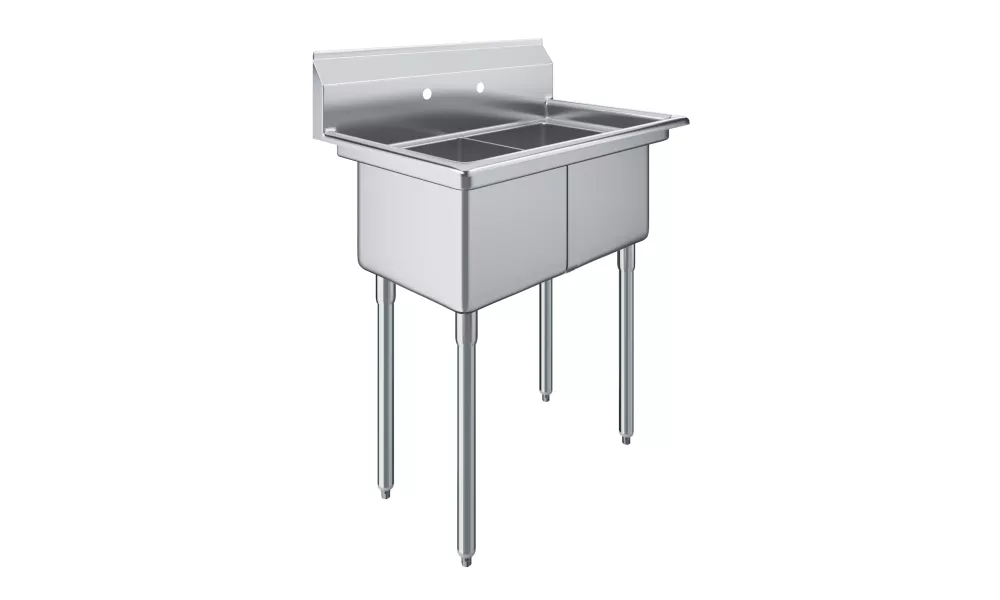
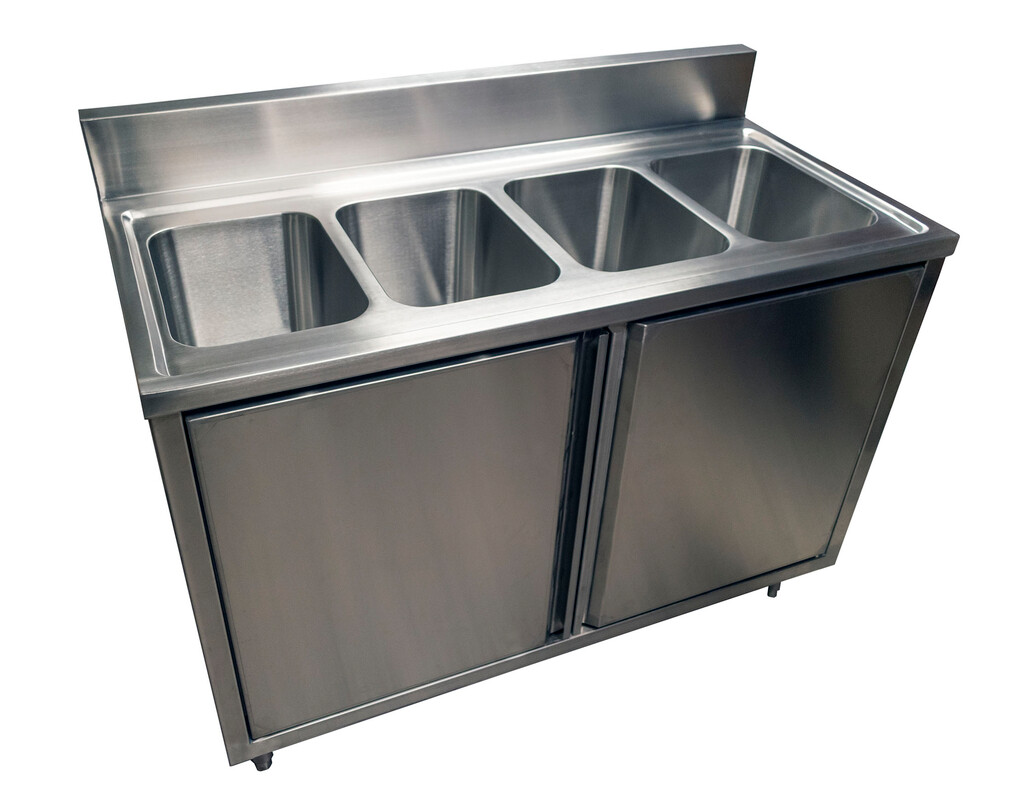
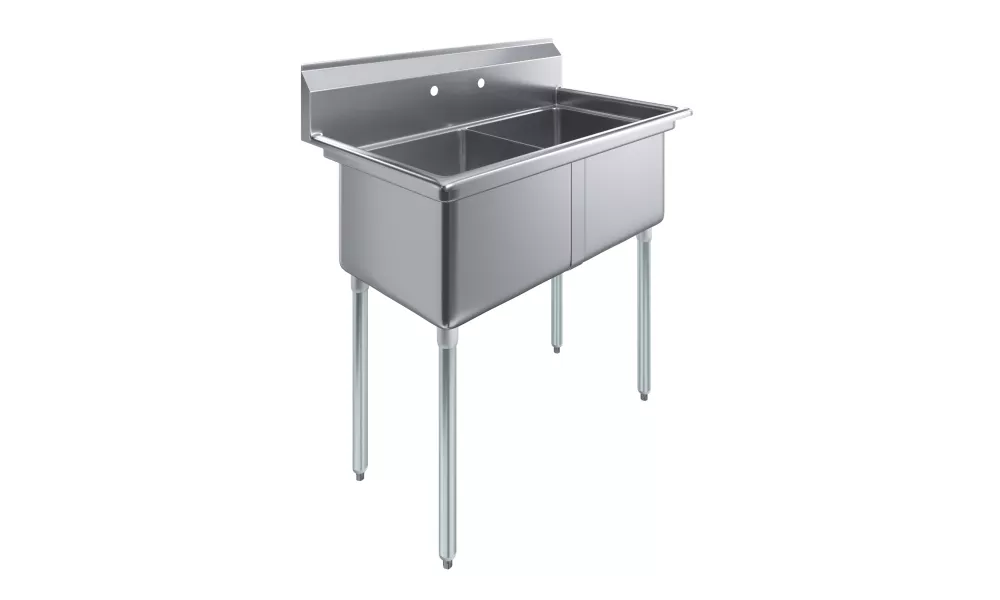
The core choice is bay count: 1-compartment prep/utility sinks, 2-compartment for prep plus wash, 3-compartment for wash-rinse-sanitize (the standard), and 4-compartment where a pre-scrape or prep bay is needed. Most add left, right, or dual drainboards; corner configurations fit tight rooms.
3-compartment vs 4-compartment sinks
Three compartments (wash-rinse-sanitize) is the common configuration for manual warewashing. A fourth bay adds pre-soak/pre-scrape or a dedicated prep bowl, and some jurisdictions require it for specific operations. Verify the count your local health department mandates before buying.
Compartment sink bowl size and depth
Bowls are specified as width x front-to-back x depth. Match them to your largest pans and stockpots — a 20"–24" bowl at 12"–14" deep handles sheet pans without slopping water. Bigger bowls mean a longer overall sink, so balance capacity against your wall run.
Drainboards
Drainboards give landing space for soiled ware coming in and clean ware drying out, and many operations are expected to provide that landing space (requirements vary — confirm locally). Choose the side(s) that match your flow; longer drainboards hold more but add length.
304 vs 430 stainless steel for sinks
Because a sink is always wet, 304 (18/8) is the durable, corrosion-resistant choice and the one to buy for a warewashing station. 430 is cheaper and magnetic but more prone to pitting in constant moisture — reserve it for lighter-duty or budget builds.
14-, 16-, and 18-gauge
Gauge is the top/bowl thickness, and lower is thicker. 16-gauge is a common commercial choice; 14-gauge is heavier-duty for high volume; 18-gauge is economical for lighter use.
| Feature | Best use | Important consideration |
|---|---|---|
| 3-compartment | Standard wash-rinse-sanitize | Baseline for most kitchens |
| 4-compartment | Adds pre-scrape or prep bay | Required in some jurisdictions |
| 304 stainless steel | Constant water, salt, or acid | Better corrosion resistance |
| 430 stainless steel | Lighter-duty or budget | More economical |
| 16 gauge | High-volume commercial use | Rigid, dent-resistant standard |
| 18 gauge | Light-to-medium volume | Lower cost |
| With drainboards | Landing soiled & clean ware | Often expected on inspection |
Faucets and plumbing
Many sinks ship faucet-ready but without the faucet — check the faucet centers (commonly 8" on a compartment sink) and whether one is included. Note the drain size (often 3½") for basket strainers and your waste lines.
NSF and code
An NSF/ANSI listing certifies food-safe materials, welds, and cleanability, and is commonly required on plan review. Many compartment sinks carry it — confirm the specific model’s listing with the manufacturer and your local authority when permitting.
Legs and construction
Look for stainless legs and adjustable bullet feet in a wet area (galvanized costs less but can rust), plus cross-bracing and a reinforced deck. 16-gauge 304 with stainless legs is a durable, common baseline.
How to measure your space
Measure the wall run, then add clearance for the faucet swing and drainboard overhang, and keep a working aisle of at least 36". Long multi-bay sinks are heavy and wide — confirm they clear doorways and corners on the way in.
Cleaning and maintenance
Rinse and wipe stainless with the grain; avoid steel wool and chlorine cleaners that pit the surface. Keep drains and overflows clear, dry the deck to prevent water spots, and check that galvanized legs are not starting to corrode.
How the brands compare
Typical construction, price range, warranty, and best fit for the brands with the most compartment sinks here — a starting point, not a substitute for checking the specific model.
| Brand | Models | Steel | Common gauges | Street price | Warranty | Best suited for |
|---|---|---|---|---|---|---|
| Elkay | 254 | 304 | 14 ga / 16 ga / 18 ga | $1,102–$14,873 | — | Heavy-duty / high-volume |
| BK Resources | 166 | — | — | $604–$4,673 | — | General use |
| Sapphire | 52 | — | — | — | — | General use |
| Advance Tabco | 34 | 430 | 16 ga | $1,665–$3,872 | — | Value / lighter-duty |
| Atosa | 17 | — | — | — | — | General use |
| Eagle Group | 14 | — | 16 ga | — | — | General use |
| AmGood | 12 | 304 | 18 ga | — | — | Value / lighter-duty |
Frequently asked questions
Do I need a 3-compartment or 4-compartment sink?
Three compartments (wash, rinse, sanitize) is the common configuration for manual warewashing, required in many jurisdictions. A fourth bay adds a pre-scrape/pre-soak or a separate prep bowl, and some jurisdictions require four for certain operations — confirm with your local health department before choosing.
What bowl size and depth do I need?
Match the bowl to your largest pans and sheet trays. Common bowls run 16"–24" wide and 10"–14" deep; a deeper bowl handles stockpots and full sheet pans without splashing. This page lists per-bowl width, front-to-back, and depth where the manufacturer publishes them.
Do I need drainboards?
Drainboards give you a landing surface for soiled ware on one side and clean, drying ware on the other, and many operations are expected to provide them (requirements vary by local code). Choose left, right, or both based on your workflow and the space you have.
304 vs 430 stainless for a sink?
A compartment sink lives in constant water, so 304 (18/8, nickel-bearing) is the corrosion-resistant, longer-lasting choice and is worth it here. 430 costs less and can work for lighter-duty or budget builds, but it is more prone to pitting in a wet, salty environment.
What gauge should a compartment sink be?
16-gauge 304 is a common commercial choice — rigid enough for daily heavy use. 14-gauge is heavier-duty for high-volume or abusive settings, and 18-gauge is a lighter, more economical option for low-volume kitchens.
Does the sink include a faucet?
Many compartment sinks ship faucet-ready (pre-punched for a given center spacing) but without the faucet, so you budget it separately. Check the faucet-centers spec (commonly 8" on a compartment sink) and whether a faucet is included before ordering.
Is the sink NSF certified?
Most commercial compartment sinks are NSF/ANSI listed — a listing certifies food-safe materials, welds, and cleanability, and is commonly required on plan review. Confirm the specific model's listing with the manufacturer and your local authority when permitting.
Is the listed width left-to-right or front-to-back?
On this site the overall width is the left-to-right dimension and depth is front-to-back — so a 90" x 30" sink is 90" along the wall. Bowl dimensions are listed separately. Always confirm orientation before you measure the space.
How much space and clearance do I need?
Account for the overall footprint plus a working aisle (at least 36", more in main paths per local code), and leave room for the faucet swing and any drainboard overhang. Confirm the unit clears doorways on the way in — long multi-bay sinks are big.
Stainless or galvanized legs — does it matter?
In a constantly-wet warewashing area, stainless legs and feet resist rust far better than galvanized. Galvanized legs cost less and are acceptable in drier spots, but for a sink they can corrode over time — this page lists leg material where published.
About this data
Last verified: August 2026. Specs are compiled from manufacturer spec sheets and authorized dealer listings; where a value isn't published we leave it blank rather than guess.
Methodology: every compartment-sink model is compared on the same set of specifications, and dimensions are checked (for sinks, overall width must exceed the combined bowl widths) — figures that fail validation are corrected from the manufacturer model number or omitted. “Street price” is the lowest legitimate published price we've found and can change.
Sourcing: product specs come from the manufacturer; regulatory statements link to the source (e.g. the FDA Food Code and NSF). Code requirements vary by jurisdiction — confirm with the authority reviewing your plans.
Disclosure: FoodServiceNerd is vendor-neutral and free to use. Some “where to buy” links may be affiliate links — we may earn a commission at no cost to you, and it never changes what we list or how we rank it. We don't sell equipment ourselves.
Editorial: compiled and reviewed by the FoodServiceNerd equipment desk (about us). Spot an error? Tell us and we'll correct it.