Commercial Mop & Service Sinks
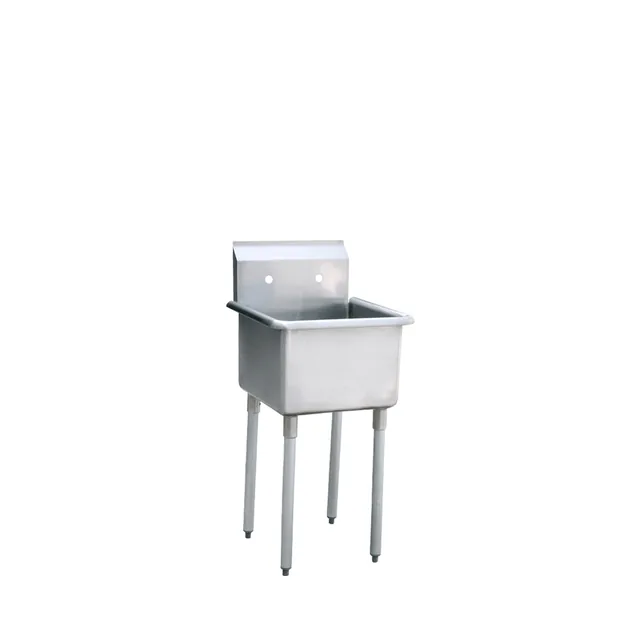
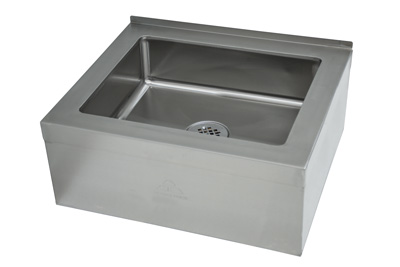
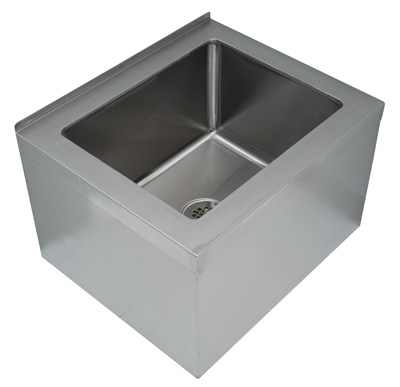
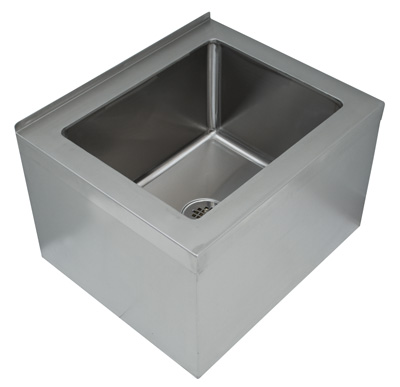
A commercial mop sink (also called a service or utility sink) is a deep stainless basin used to fill and empty mop buckets and rinse cleaning tools, kept separate from food-prep and warewashing sinks. The specs that decide the right one are mount (floor-mount for easy bucket dumping, or wall-hung to keep the floor clear), bowl size, gauge (14/16 for heavy use), steel grade (304 for a wet, chemical area), and whether it includes a faucet with a pail hook and vacuum breaker. Filter the catalog below, and confirm backflow-prevention requirements with your local plumbing code.
Choose floor-mount for easy bucket dumping or wall-hung to keep the floor clear, pick 304 stainless and 14/16-gauge for a wet, chemical area, and get a faucet kit with a vacuum breaker where your plumbing code requires backflow protection. Filter the catalog below, then read the buying guide.
Commercial mop & service sinks: buying guide
A mop sink (service or utility sink) is a deep stainless basin for filling and emptying mop buckets and rinsing cleaning tools — kept separate from food-prep and warewashing sinks. With 70 models above, filter by mount, bowl size, gauge, steel grade, and whether a faucet is included as you read.
Floor-mount vs wall-hung service sinks
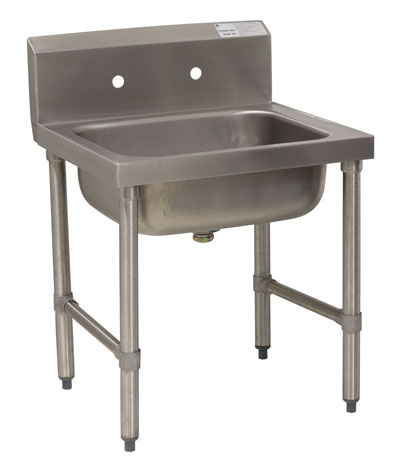
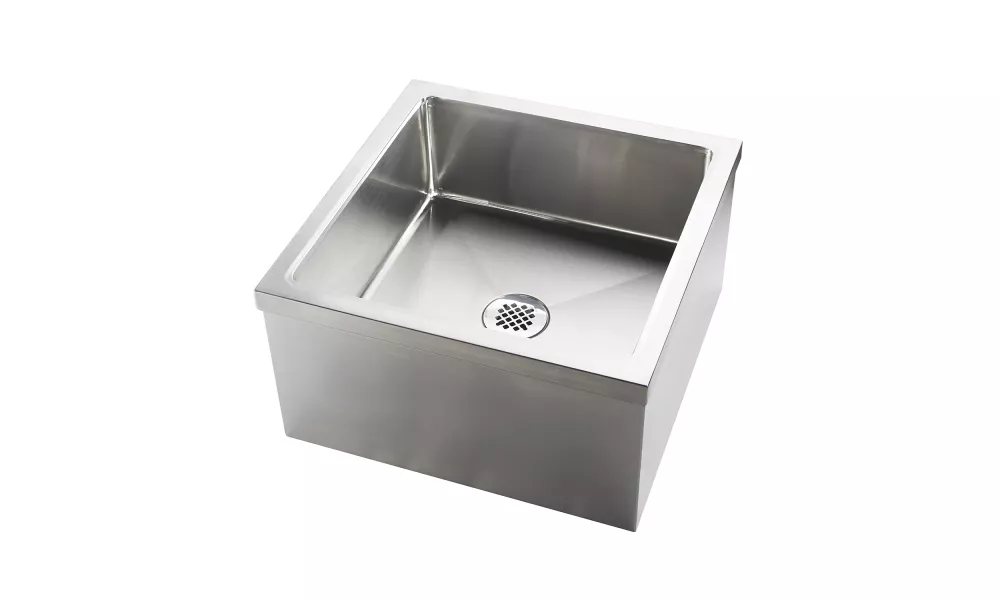
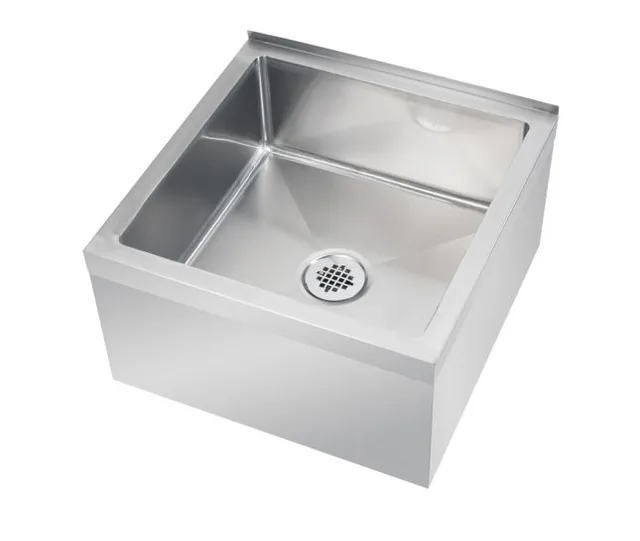
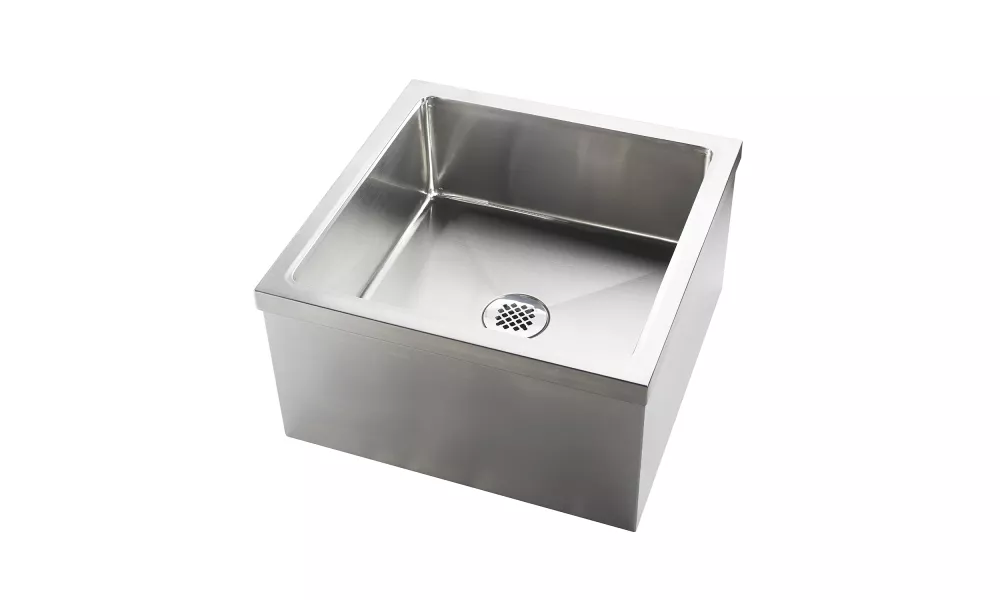
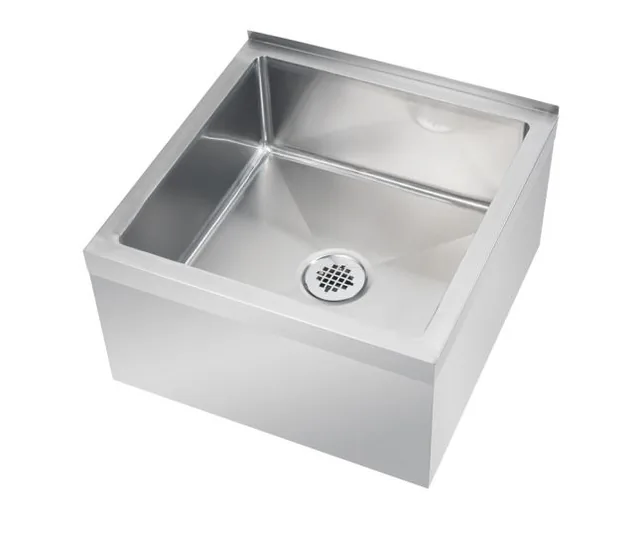
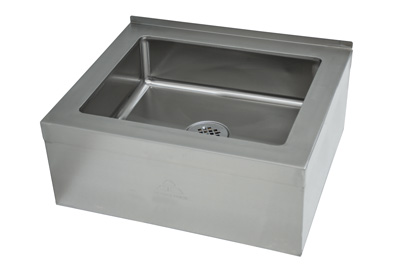
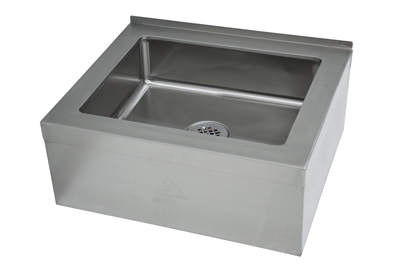
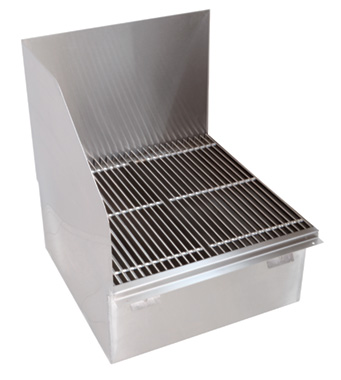
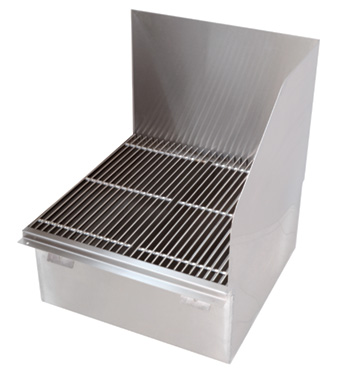
Floor-mount basins sit low on the floor so a heavy mop bucket is easy to fill and dump; they suit dedicated mop/janitor areas and some add side or back wall guards. Wall-hung service sinks bolt to a load-bearing wall and keep the floor clear underneath for cleaning — good in tight utility closets. Choose by your space and how you move buckets.
| Option | Best use | Important consideration |
|---|---|---|
| Floor-mount basin | Dedicated mop/janitor areas; easy bucket dumping | Sits low; some add wall guards |
| Wall-hung service sink | Tight utility closets; keeps floor clear | Bolts to a load-bearing wall |
| 14 / 16 gauge | Heavy bucket and chemical use | Thicker, dent-resistant |
| 304 stainless | Constant water and cleaning chemicals | Best corrosion resistance |
| 430 stainless | Lighter-duty, budget | More economical |
| Faucet kit w/ pail hook + vacuum breaker | Meeting backflow rules on a hose outlet | '2-hole' models are faucet-ready only |
Bowl size and depth
Size the bowl to your mop bucket. A wider, deeper basin contains splashing when filling and gives room to wring a mop. Floor units commonly run 16"–24" bowls; larger multi-station and wall-hung service sinks go bigger. Confirm the overall footprint fits the utility area and door.
Gauge and steel grade
Mop sinks take knocks from buckets and constant exposure to water and cleaning chemicals, so 14- or 16-gauge is common. 304 stainless resists corrosion in this wet, chemical environment and is the durable pick; 430 is a lower-cost option for lighter duty.
Faucet, pail hook, and backflow protection
Service-sink faucet kits typically include a pail (bucket) hook and an atmospheric vacuum breaker for backflow protection — many plumbing codes require backflow prevention on a hose-threaded outlet. '2-hole' models are faucet-ready but sold without a faucet. Confirm the backflow and hose-bibb requirements with your local plumbing code.
NSF and code
NSF/ANSI listing certifies cleanable, food-safe construction that an inspector checks on plan review. Many mop and service sinks qualify — confirm the specific model's listing when the space is being permitted.
Cleaning and maintenance
Rinse the basin after dumping dirty water, keep the drain and strainer clear, and check the vacuum breaker and faucet periodically. A 304 basin wiped down and kept dry between uses resists staining and corrosion for years.













How the brands compare
Mount styles, typical construction, and street-price range for the brands with the most mop & service sinks here — a starting point, not a substitute for checking the specific model.
| Brand | Models | Mount | Gauge | Grade | Street price |
|---|---|---|---|---|---|
| Advance Tabco | 35 | Floor-mount | 16 ga / 18 ga | 304 | $1,104–$15,862 |
| Elkay | 26 | Floor-mount, Wall-hung | 14 ga / 16 ga | 304 | $695–$9,223 |
| Sapphire | 4 | Floor-mount | 16 ga | 304 | — |
Frequently asked questions
What is a mop sink (service sink)?
A mop sink — also called a service or utility sink — is a deep stainless basin used to fill and empty mop buckets and rinse cleaning tools, kept separate from food-prep and warewashing sinks. Floor-mount models sit low to the floor; wall-hung service sinks bolt to the wall.
Floor-mount or wall-hung?
Floor-mount basins are easiest to fill and dump a heavy mop bucket into and are common in dedicated janitor/mop areas. Wall-hung service sinks keep the floor clear underneath for cleaning and suit tight utility closets. Pick by your space and how you handle buckets.
Does a mop sink need a faucet with a vacuum breaker?
Service-sink faucets commonly include a pail hook and an atmospheric vacuum breaker for backflow protection, which many plumbing codes require on a hose-threaded outlet. 'Kit' models bundle the faucet; '2-hole' models are faucet-ready. Confirm backflow requirements with your local plumbing code.
What gauge and steel grade should a mop sink be?
Mop sinks take abuse from buckets and chemicals, so 14- or 16-gauge is common. 304 stainless resists corrosion from constant water and cleaners and is the safe pick; 430 costs less for lighter-duty use.
What size mop sink do I need?
Size the bowl to your mop bucket — deeper and wider basins contain splashing when filling. Floor units run roughly 16"–24" bowls; larger multi-station and wall-hung service sinks go bigger. Confirm the overall footprint fits the utility area.
Are mop sinks NSF listed?
Many commercial mop and service sinks are NSF/ANSI listed, which inspectors verify on plan review. Confirm the specific model's listing when the space is being permitted.
Do mop sinks come with wall guards or a bucket hook?
Some floor-mount models add side/back splash guards to protect the wall, and many service-sink faucets include a bucket (pail) hook. This page flags those where published.
About this data
Last verified: August 2026. Specs are compiled from manufacturer spec sheets and authorized dealer listings; where a value isn't published we leave it blank rather than guess.
Methodology: every mop-sink model is compared on the same set of specifications, and dimensions are checked (for sinks, overall width must exceed the combined bowl widths) — figures that fail validation are corrected from the manufacturer model number or omitted. “Street price” is the lowest legitimate published price we've found and can change.
Sourcing: product specs come from the manufacturer; regulatory statements link to the source (e.g. the FDA Food Code and NSF). Code requirements vary by jurisdiction — confirm with the authority reviewing your plans.
Disclosure: FoodServiceNerd is vendor-neutral and free to use. Some “where to buy” links may be affiliate links — we may earn a commission at no cost to you, and it never changes what we list or how we rank it. We don't sell equipment ourselves.
Editorial: compiled and reviewed by the FoodServiceNerd equipment desk (about us). Spot an error? Tell us and we'll correct it.