Commercial Hand Sinks
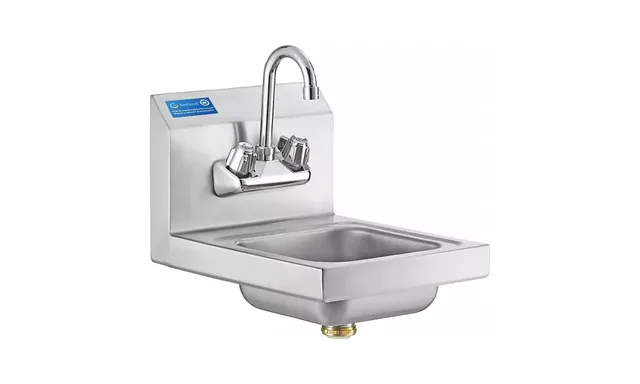
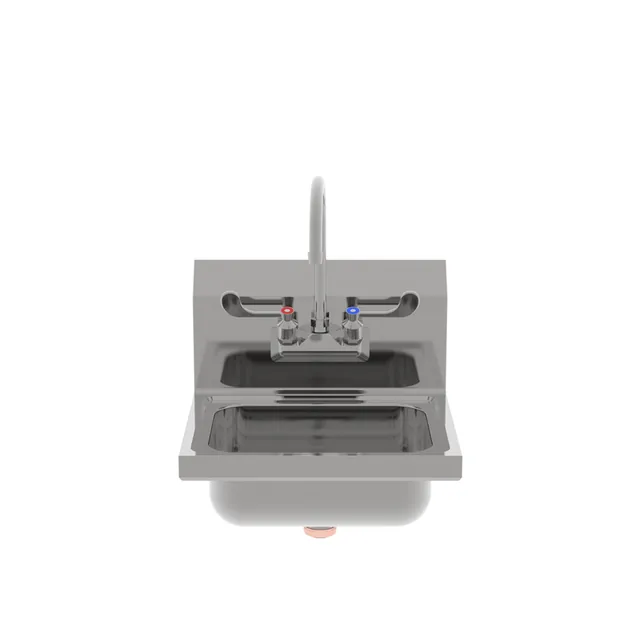
A commercial hand sink is a dedicated handwashing basin required in commercial kitchens, kept separate from prep and warewashing sinks and used only for washing hands. The specs that decide the right one are mount (wall-mount is the space-saving standard), activation (manual, or hands-free by knee valve, foot pedal, or sensor where code calls for it), size, gauge, steel grade (304 for a wet area), and whether it is ADA-compliant for public-facing spaces. Filter the catalog below on those attributes, and confirm how many hand sinks — and what activation — your local health code requires for your layout.
Most are wall-mount; pick hands-free activation (knee, foot, or sensor) where your code calls for it, choose 304 stainless for a wet area, and add an ADA model where accessibility applies. Filter the catalog below by mount, activation, size, gauge, grade, and ADA, then read the buying guide.
Commercial hand sinks: buying guide
A hand sink (handwashing sink) is a dedicated, easily reached basin for washing hands, separate from food-prep and warewashing sinks. Under the FDA Food Code that nearly every U.S. jurisdiction adopts, commercial kitchens are required to provide handwashing sinks — confirm the number and placement your local health department expects. With 340 models above, filter by mount, activation, size, gauge/grade, and ADA as you read.
Types of hand sinks
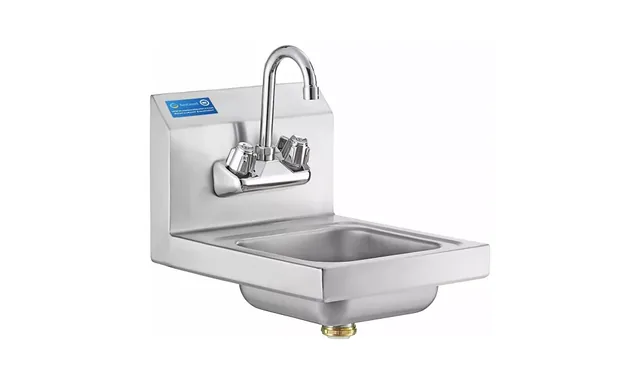
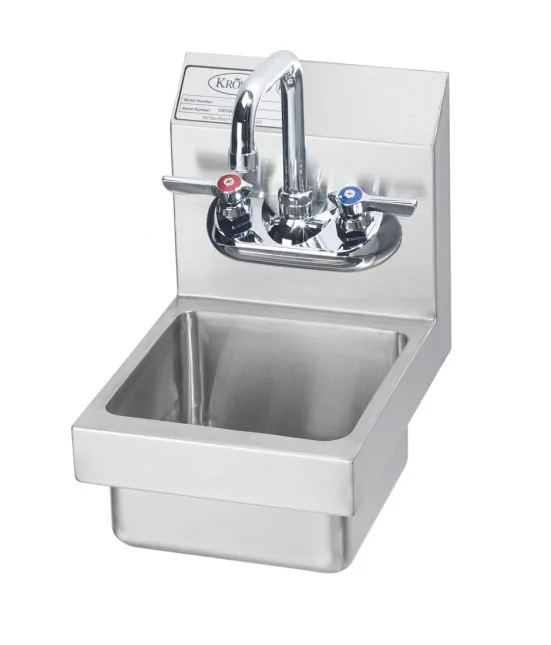
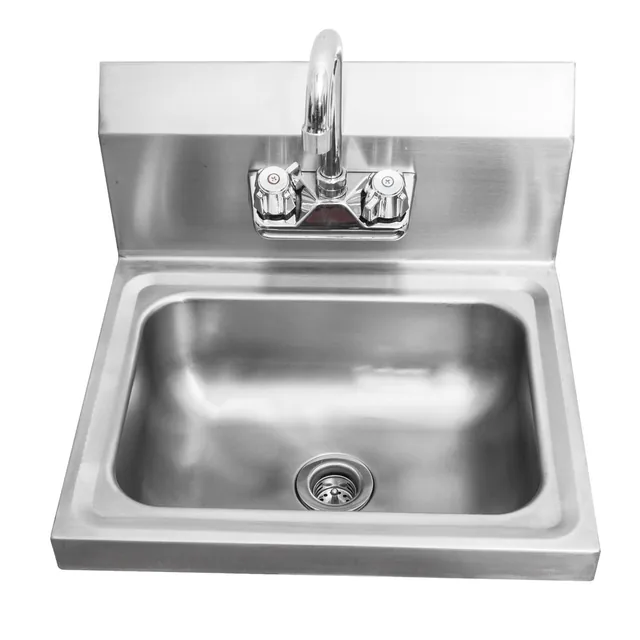
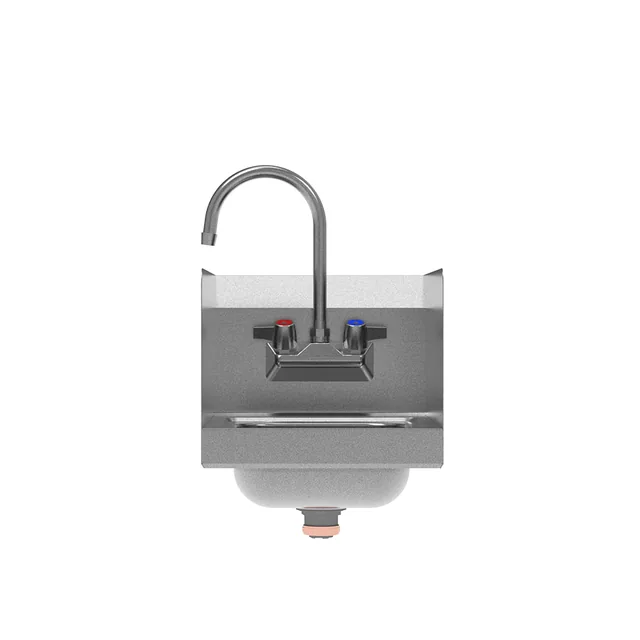
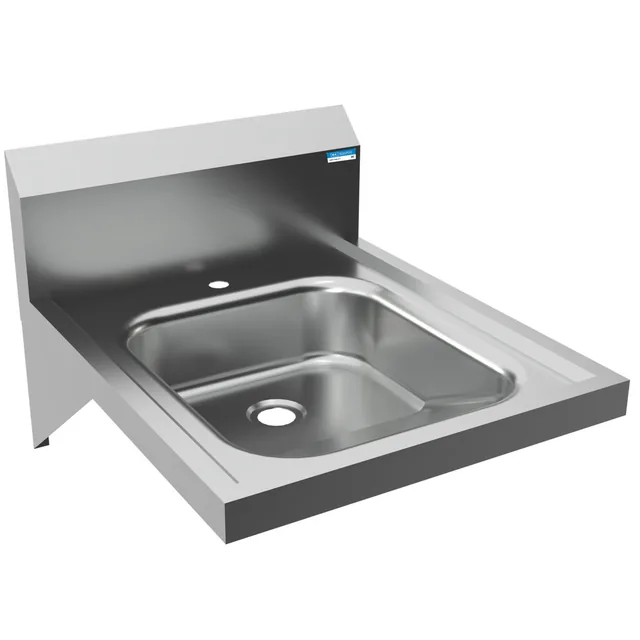
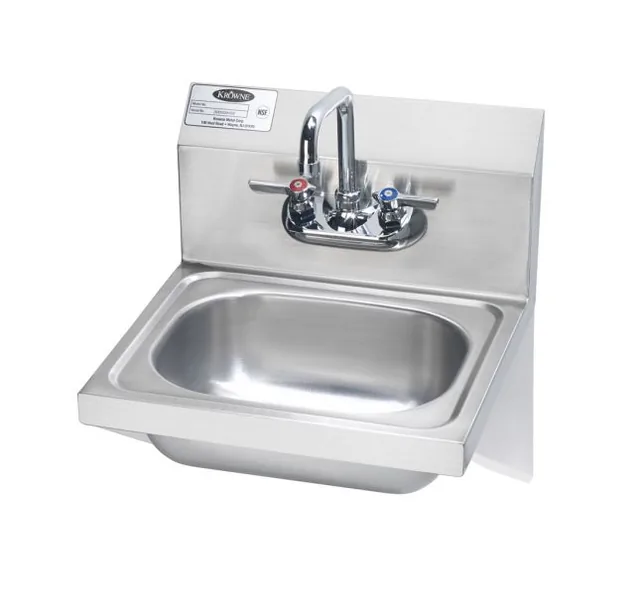
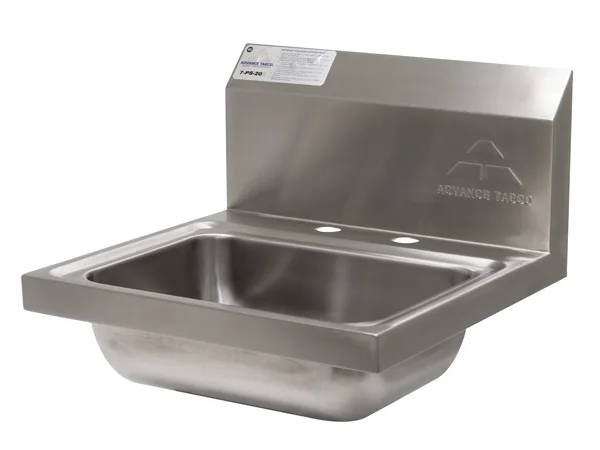
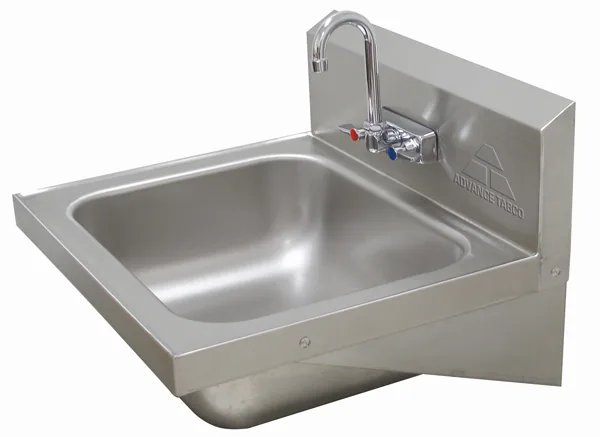
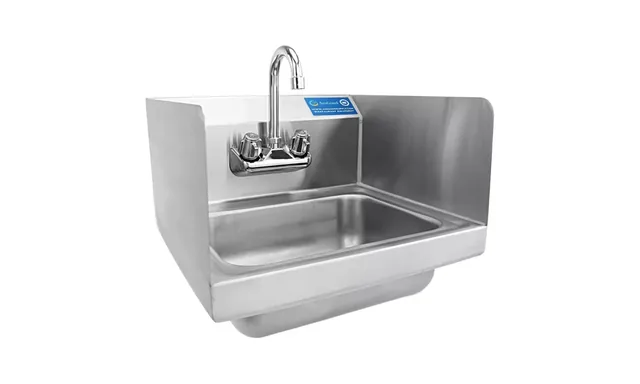
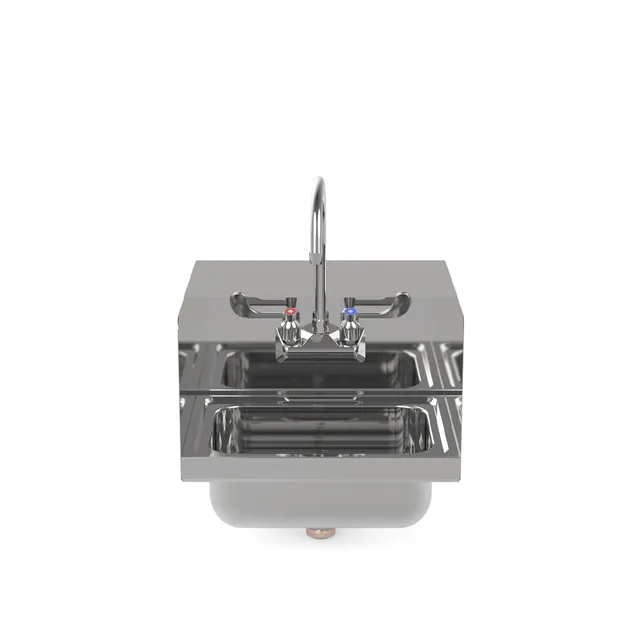
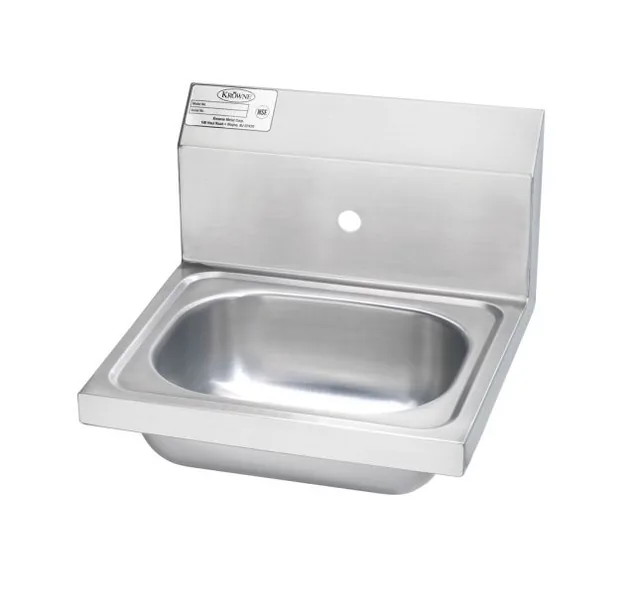
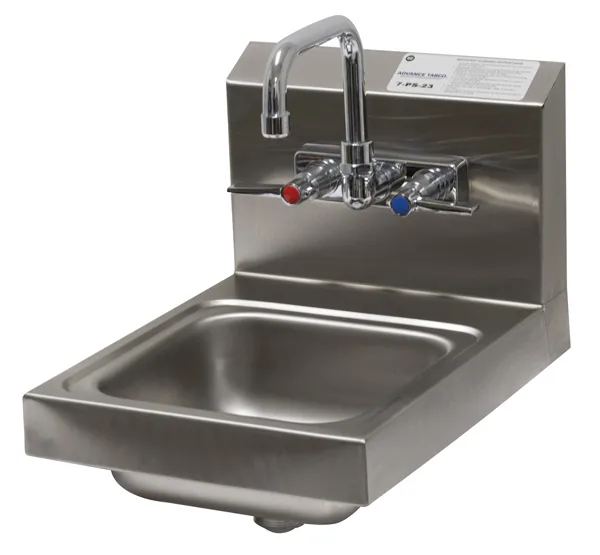
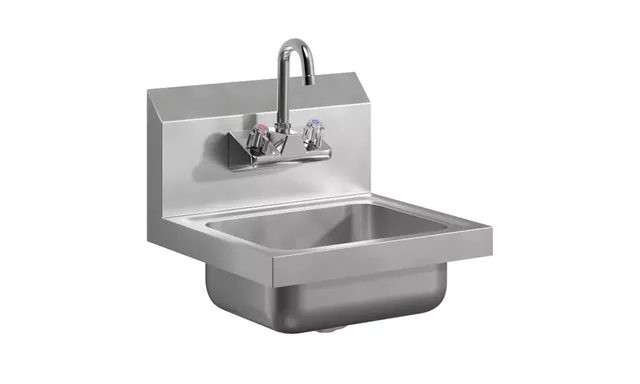
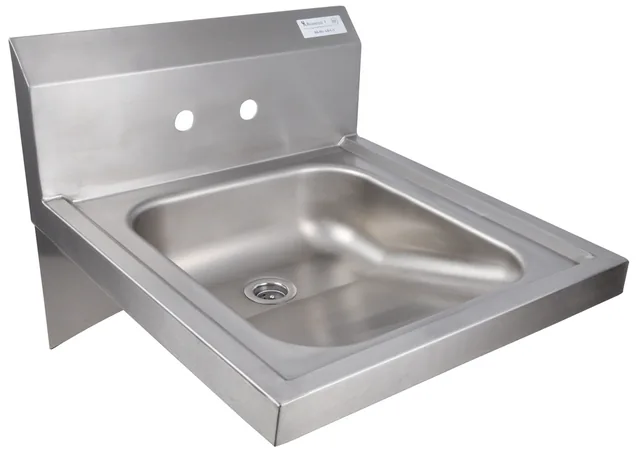
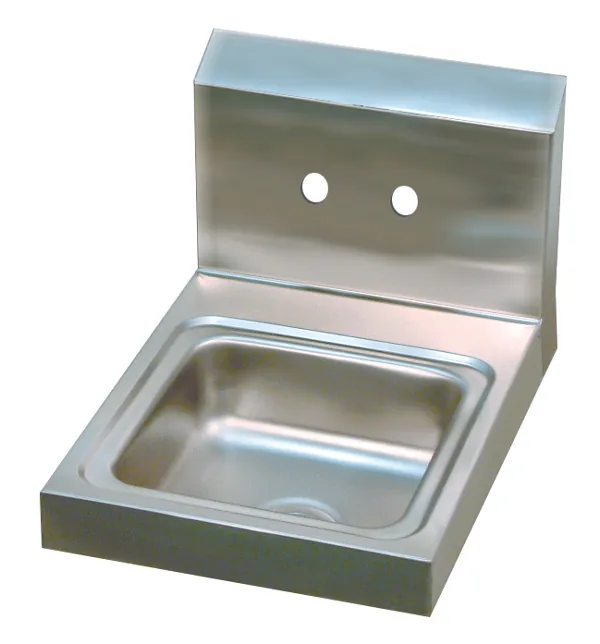
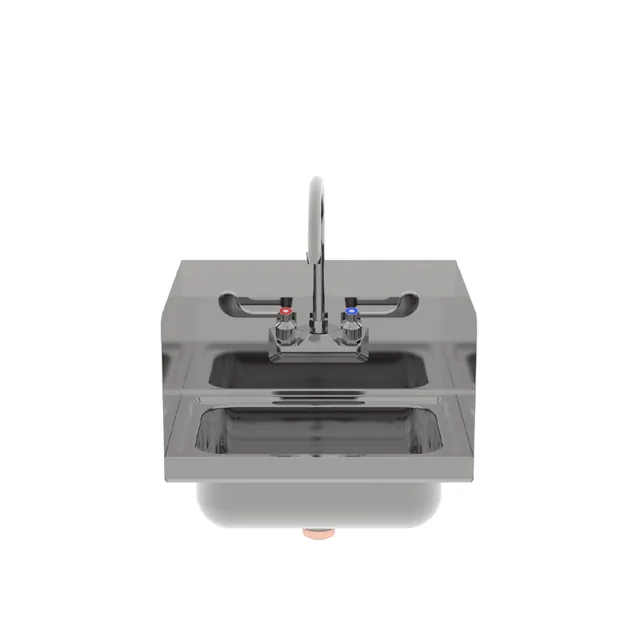
Most are compact wall-mount basins that save floor space; drop-in models set into an existing counter, and a few are freestanding. Many add side splashes, and some bundle soap and paper-towel dispensers.
Hand sink activation: manual vs hands-free
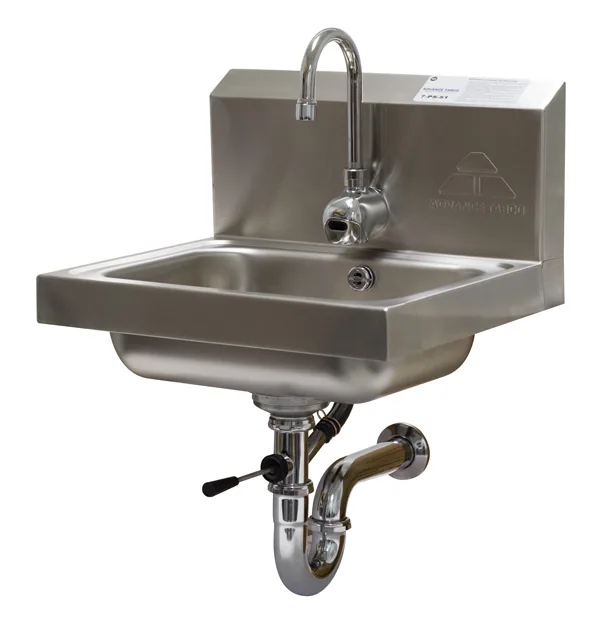
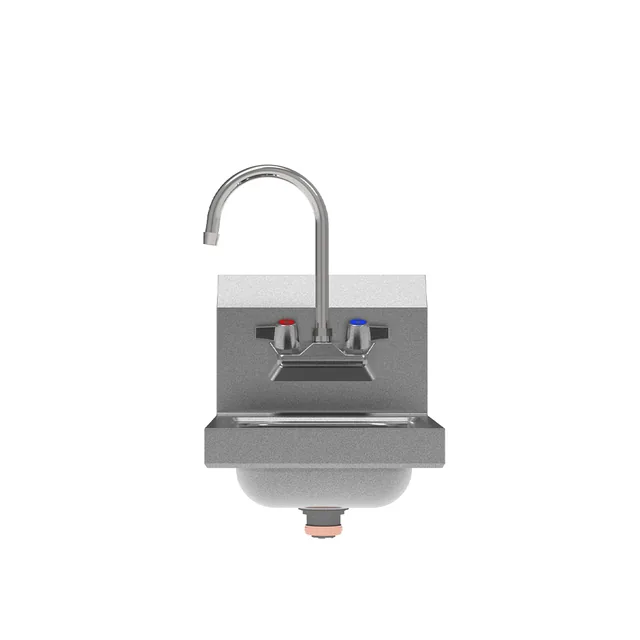
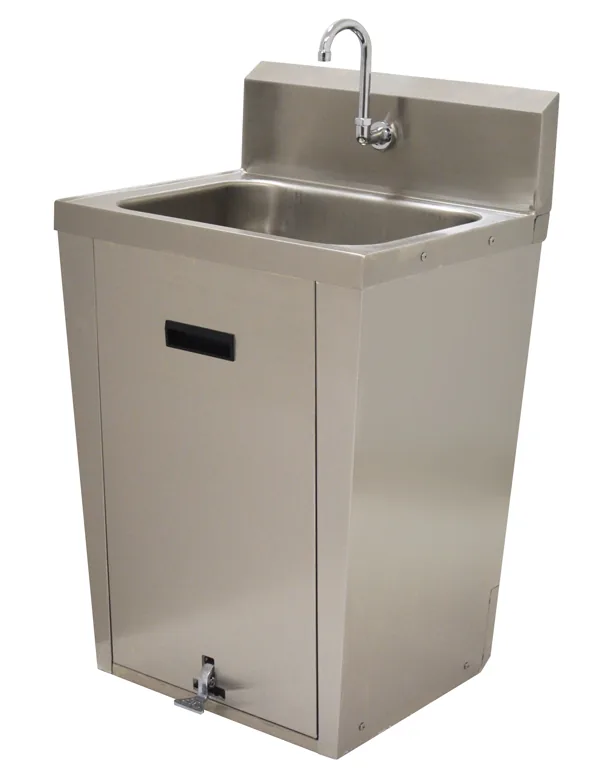
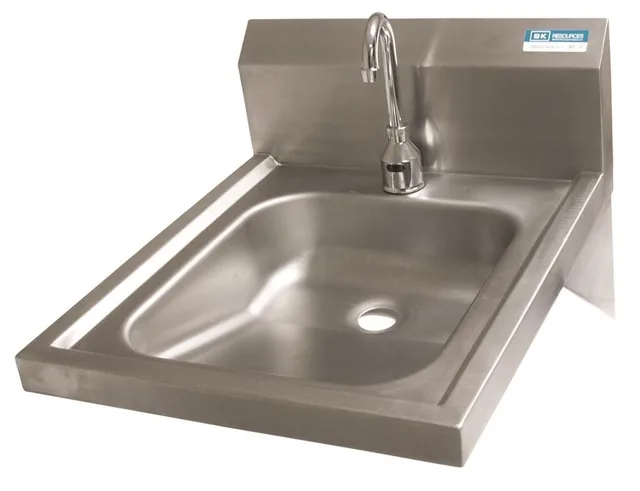
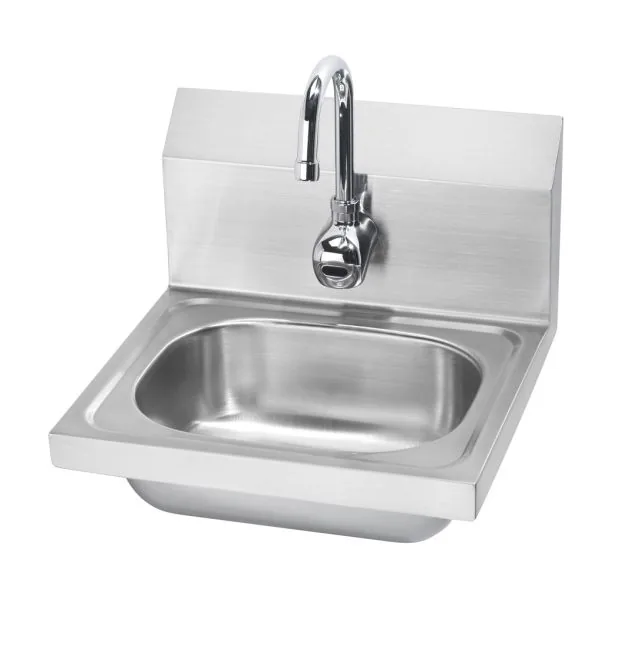
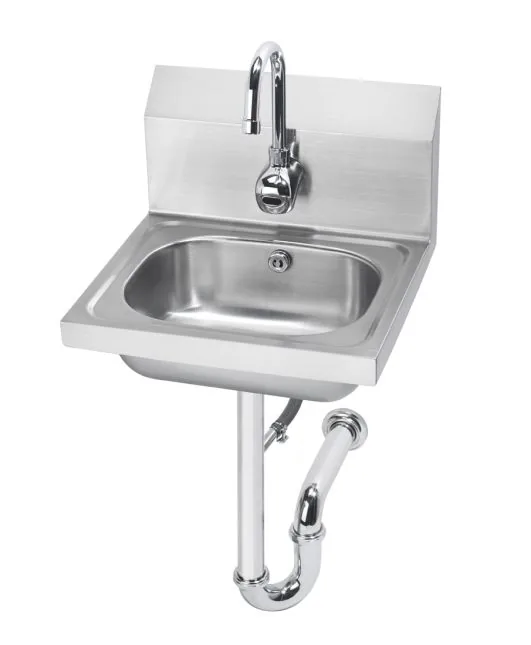
How the water turns on matters for code. Manual faucets use handles. Knee valves and foot pedals are hands-free and hard to beat for reliability; sensor faucets are touchless but need power. Many jurisdictions require or favor hands-free at handwashing stations to prevent recontamination.
| Option | Best use | Important consideration |
|---|---|---|
| Manual faucet | Basic handwashing where hands-free isn't required | Lowest cost |
| Knee valve | Hands-free food-prep and cook lines | Common, code-friendly, low maintenance |
| Foot pedal | Hands-free, high-traffic stations | Floor-mounted valve to plumb |
| Sensor faucet | Touchless, premium/public areas | Needs power or batteries |
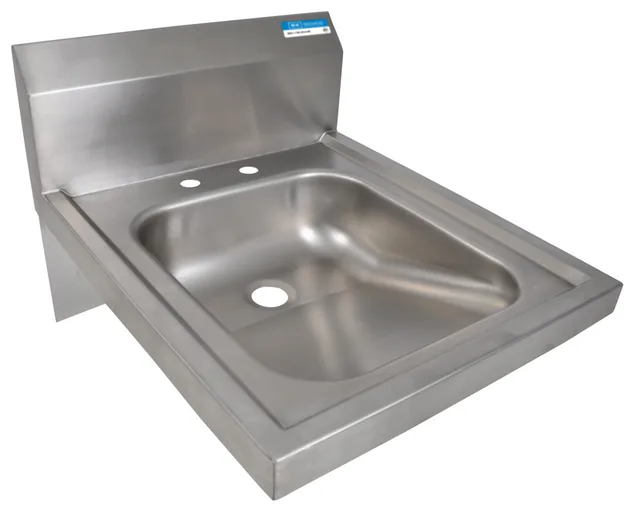
| ADA model | Public or accessible areas | Meets height & knee-clearance rules |
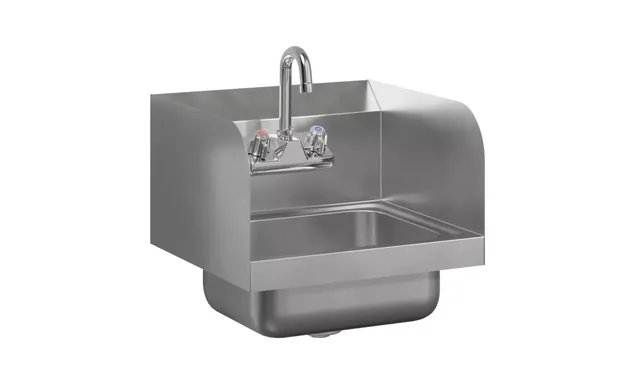
| Side splashes | End-of-run or corner sinks | Contain spray onto walls/equipment |
Where hand sinks are required (and how many)
Most health codes call for a handwashing sink accessible to each work area — prep, cook line, dish, and bar — separate from prep and warewashing sinks. Count your zones and put a hand sink within easy reach of each; verify the required number and placement with your local health department.
Sizing
Hand sinks are small — bowls run roughly 9"–14" wide. Choose a bowl big enough to wash hands without slopping over, and confirm the overall width fits the wall spot plus any required clearances.
ADA-compliant hand sinks
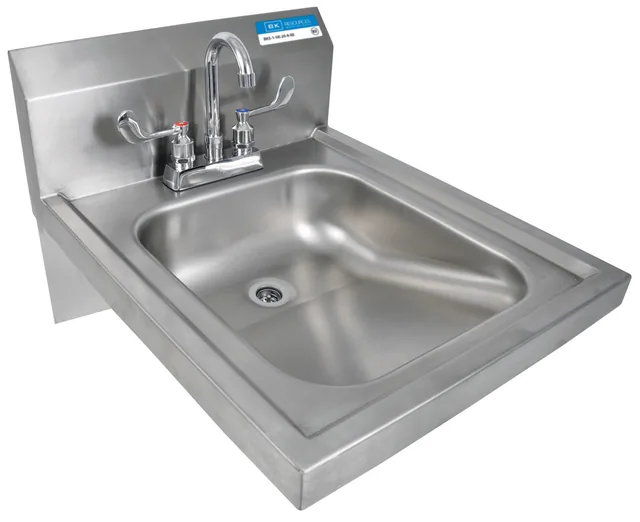
Public and many employee areas must meet ADA: a specific rim height, knee clearance underneath, and insulated or offset drain lines so nobody is burned. If the space is subject to ADA, pick an ADA-listed model.
Splashes and dispensers
Add side splashes at end-of-run or corner sinks to keep spray off walls and adjacent equipment. Handwashing stations need soap and single-use towels nearby — some sinks include integrated dispensers; otherwise mount them adjacent.
Gauge and grade
Hand sinks are commonly 18-gauge; heavier 16-gauge resists dents in rough settings. 304 stainless resists corrosion in a wet area and is the safe pick; 430 costs less.
Faucet and plumbing
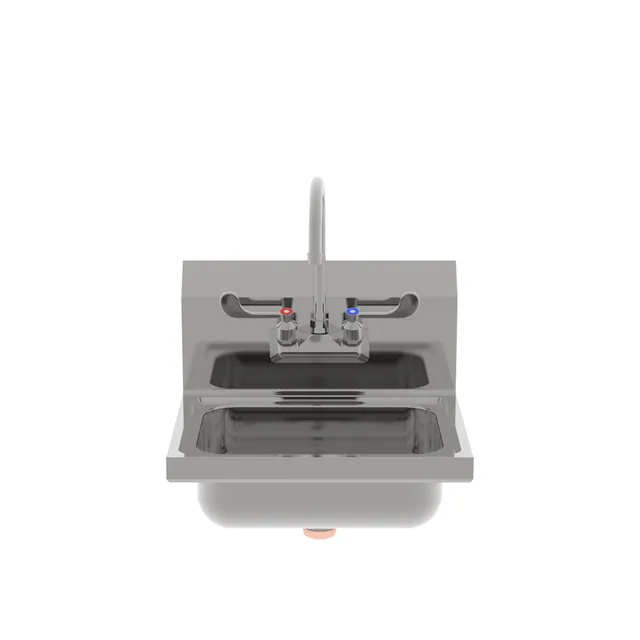
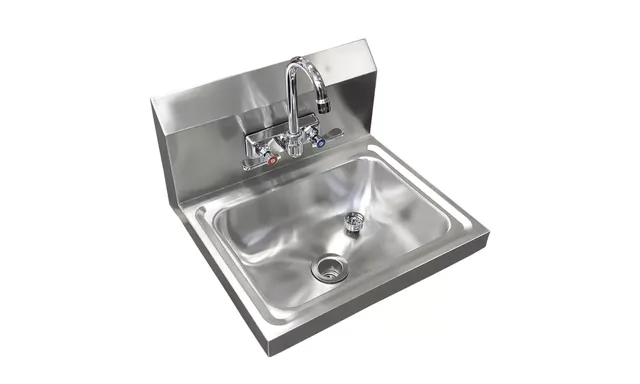
Most hand sinks include a faucet (often gooseneck) — confirm, and check the drain size and whether a strainer/tailpiece is included. Sensor models need a power source or batteries.
NSF and code
NSF/ANSI listing certifies food-safe, cleanable construction — what an inspector checks on plan review. Most hand sinks qualify; confirm on the model page when permitting.
Cleaning and maintenance
Wipe stainless with the grain, keep the drain and overflow clear, and check knee/foot valves and sensor batteries periodically so the sink is always ready for use.





How the brands compare
Construction, activation options, and street-price range for the brands with the most hand sinks here.
| Brand | Models | Gauge | Grade | Activation | Street price |
|---|---|---|---|---|---|
| BK Resources | 99 | 16 ga / 20 ga | 304 | Knee valve, Manual, Sensor, Wrist blade | $342–$2,045 |
| Advance Tabco | 81 | 16 ga / 18 ga / 20 ga | 304 | Foot pedal, Knee valve, Manual, Sensor, Wrist blade | $402–$12,168 |
| Elkay | 66 | 18 ga / 20 ga | 304 | Foot pedal, Knee valve, Manual, Sensor, Wrist blade | $357–$15,381 |
| Krowne | 62 | 20 ga | 304 | Foot pedal, Knee valve, Manual, Sensor, Wrist blade | $3,036–$3,683 |
| AmGood | 15 | 18 ga / 20 ga | 304 | Foot pedal, Knee valve, Manual | — |
| Atosa | 8 | 20 ga | 304 | Wrist blade | — |
Frequently asked questions
Does a commercial hand sink need to be hands-free?
Many jurisdictions require or prefer hands-free operation at handwashing sinks to prevent recontamination after washing. Knee valves, foot pedals, and sensor faucets all qualify; a manual faucet works where hands-free isn't required. Check your local food code.
What's the difference between manual, knee, foot, and sensor activation?
Manual uses standard faucet handles. A knee valve is a panel you push with your knee. A foot pedal is a floor valve you step on. A sensor (electronic) faucet runs touchlessly on power or batteries. Knee and foot valves are the common, low-maintenance hands-free choices.
Does the hand sink include a faucet?
Most commercial hand sinks ship with a faucet (often a gooseneck), but some are sold sink-only — confirm before ordering so you don't pay twice or arrive short a faucet. This page flags faucet-included where published.
Do I need an ADA-compliant hand sink?
Public-facing and many employee areas must meet ADA accessibility — specific rim height, knee clearance, and insulated/offset drain lines. If the space is subject to ADA, choose an ADA-listed model. Filter for ADA above.
Wall-mount or drop-in hand sink?
Wall-mount is the standard commercial choice — it saves floor space and cleans easily underneath. Drop-in models set into an existing counter where you already have deck space. Pick based on your layout.
Do I need side splashes?
Side splashes contain spray when the sink sits at the end of a run, in a corner, or next to equipment or a prep surface. A sink in open space usually doesn't need them.
What size hand sink do I need?
Hand sinks are compact — typical bowls run about 9"–14" wide. Pick a bowl big enough to wash hands without slopping over, and confirm the overall width fits the wall spot and required clearances.
Are commercial hand sinks NSF certified?
Most are NSF/ANSI listed, which inspectors verify on plan review. Confirm the specific model's listing when the kitchen is being permitted — filter for NSF above.
Does it come with soap and towel dispensers?
Some hand sinks include integrated soap and paper-towel dispensers, which handwashing stations are required to have nearby. If the model doesn't include them, plan to mount them adjacent.
How many hand sinks does my kitchen need and where?
Most health codes call for a dedicated handwashing sink accessible to each work area (prep, cook line, dish, bar), separate from warewashing and food-prep sinks. Count your zones and place a hand sink within easy reach of each — verify the required number and placement with your local health department.
About this data
Last verified: August 2026. Specs are compiled from manufacturer spec sheets and authorized dealer listings; where a value isn't published we leave it blank rather than guess.
Methodology: every hand-sink model is compared on the same set of specifications, and dimensions are checked (for sinks, overall width must exceed the combined bowl widths) — figures that fail validation are corrected from the manufacturer model number or omitted. “Street price” is the lowest legitimate published price we've found and can change.
Sourcing: product specs come from the manufacturer; regulatory statements link to the source (e.g. the FDA Food Code and NSF). Code requirements vary by jurisdiction — confirm with the authority reviewing your plans.
Disclosure: FoodServiceNerd is vendor-neutral and free to use. Some “where to buy” links may be affiliate links — we may earn a commission at no cost to you, and it never changes what we list or how we rank it. We don't sell equipment ourselves.
Editorial: compiled and reviewed by the FoodServiceNerd equipment desk (about us). Spot an error? Tell us and we'll correct it.