Stainless Steel Cabinets
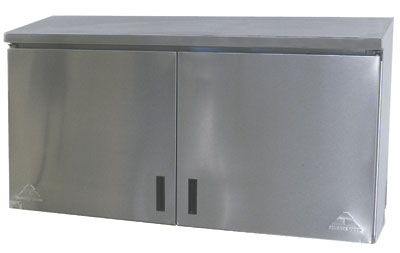
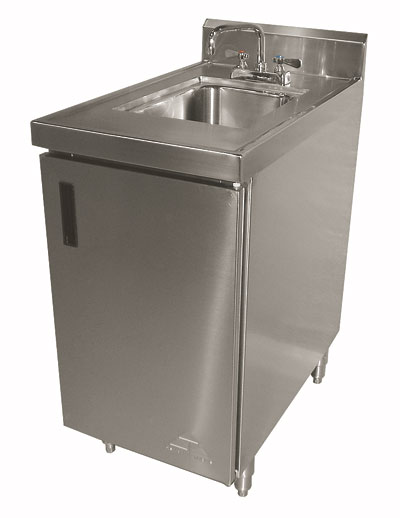
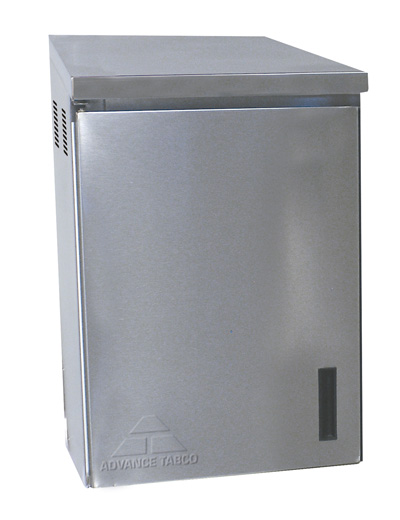
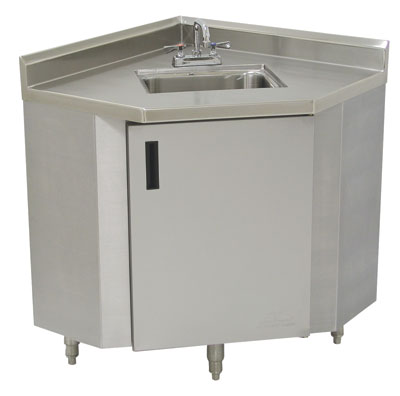
An enclosed stainless steel cabinet gives the kitchen or dish room fully cleanable, corrosion-resistant storage — keeping smallwares, supplies, or dishware off open shelving and away from splash and dust. This group also includes sink base cabinets, which enclose a hand or prep sink in a stainless housing. Choose by overall width to fit your run or corner. Gauge, depth, height, and door style are shown where the manufacturer publishes them.
Compare enclosed stainless steel cabinets and sink base cabinets by width. Filter to the width that fits your run. Gauge, depth, height, series, and door style are shown where the manufacturer publishes them; these are made-to-order stainless fixtures that rarely carry an online price, so cards read “check dealer pricing.”
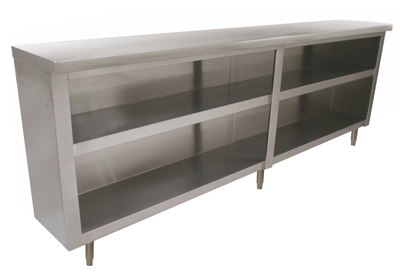
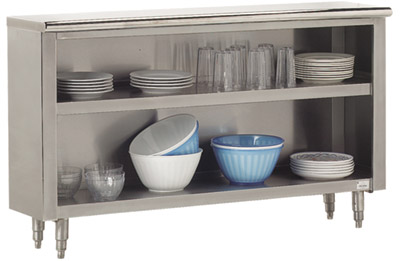
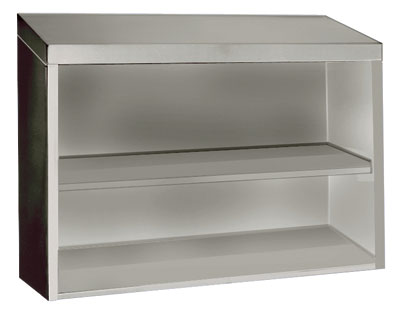
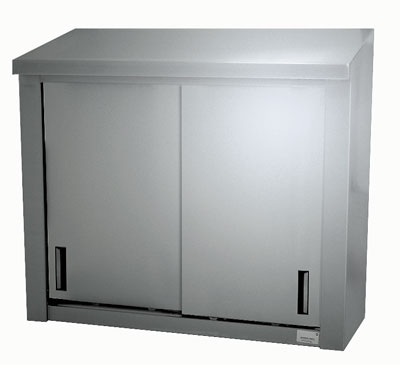
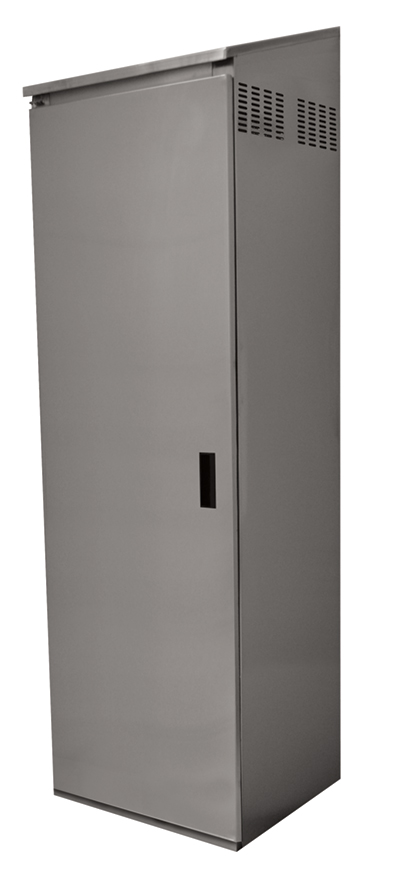
Stainless steel cabinets: buying guide
Enclosed stainless cabinets give the kitchen and dish room cleanable, corrosion-resistant storage; sink base cabinets enclose a hand or prep sink in a stainless housing. The 45 models above filter by width and gauge.
Size to the run
Size the width to the run or corner the cabinet fills. Depth and height are shown where the manufacturer publishes them so you can confirm the cabinet clears your space and lines up with adjacent equipment.
Gauge and grade
A lower gauge is thicker, more dent-resistant stainless; 304 resists corrosion in wet and washdown areas, while 430 costs less in drier spots.
Enclosed vs open shelving
An enclosed cabinet protects contents from splash, dust, and stray contact — useful near dish and prep areas — where open shelving is fine in low-splash storage. Keep the cabinet off the floor and cleanable inside and out.
How the brands compare
Model count, size span, and street-price range for the brands with the most models here — a starting point, not a substitute for the specific model’s spec sheet.
| Brand | Models | Width range | Street price |
|---|---|---|---|
| Advance Tabco | 45 | 18–144″ | — |
Frequently asked questions
What's the difference between a storage cabinet and a sink cabinet?
A storage cabinet is enclosed stainless for smallwares and supplies; a sink base cabinet encloses a hand or prep sink in a stainless housing. Both are in this group — the model's style shows which it is where the manufacturer publishes it.
What gauge stainless cabinet should I choose?
A lower gauge is thicker and more dent-resistant. Match it to how much abuse the cabinet takes — heavier traffic and wash-down areas favor a thicker, 304-grade build.
Why stainless instead of a standard cabinet?
Stainless is non-absorbent, corrosion-resistant, and fully cleanable, which is what a health inspector expects in a commercial kitchen — standard wood or laminate cabinets don't hold up to the moisture and sanitizing.
Where do your specs and prices come from?
Specifications are compiled from manufacturer spec sheets and authorized dealer listings; where a value isn’t published we leave it blank rather than guess. “Street price” is the lowest legitimate published price from an online dealer we track for that exact model — equipment only, and it changes often. Many models here have no published online price and show “check dealer pricing.”
Does this equipment need to be NSF listed?
Storage and dish-room equipment used in a commercial kitchen is generally expected to be NSF/ANSI listed for cleanable, food-safe construction — that’s what a health inspector checks on plan review. We don’t assert a listing for a specific model unless the manufacturer publishes it; confirm the exact model’s listing when you permit your kitchen.
About this data
Last verified: August 2026. Specs are compiled from manufacturer spec sheets and authorized dealer listings; where a value isn't published we leave it blank rather than guess.
Methodology: every cabinet model is compared on the same set of specifications, and dimensions are checked (for sinks, overall width must exceed the combined bowl widths) — figures that fail validation are corrected from the manufacturer model number or omitted. “Street price” is the lowest legitimate published price we've found and can change.
Sourcing: product specs come from the manufacturer; regulatory statements link to the source (e.g. the FDA Food Code and NSF). Code requirements vary by jurisdiction — confirm with the authority reviewing your plans.
Disclosure: FoodServiceNerd is vendor-neutral and free to use. Some “where to buy” links may be affiliate links — we may earn a commission at no cost to you, and it never changes what we list or how we rank it. We don't sell equipment ourselves.
Editorial: compiled and reviewed by the FoodServiceNerd equipment desk (about us). Spot an error? Tell us and we'll correct it.