Walk-In Coolers & Freezers
Start with box type — a cooler holds product just above freezing (about 35–41°F), a freezer holds it below 0°F, and a combo is one box with a freezer section walled off inside a cooler to save space. Size the footprint to your storage volume and delivery frequency (a common planning benchmark is 1–1.5 sq ft of combined refrigerated floor per meal served per day, about two-thirds cooler to one-third freezer). Decide indoor vs. outdoor (outdoor boxes are weatherproof and often self-contained; indoor boxes usually take a remote or top-mount system) and whether you need an insulated floor (required for freezers and on rough or non-refrigerated slabs; coolers can be floorless on a sealed, screeded floor). Panel R-value, door placement, and the refrigeration system are the rest of the spec — sized by a refrigeration contractor. Use our walk-in sizing calculator to estimate the footprint first.
Modular cold-storage boxes for bulk refrigerated and frozen product. Most walk-ins are configured to order, so this catalog lists the standard and quick-ship footprints manufacturers actually publish. Compare by box type (cooler, freezer, or a combo box split into both), nominal footprint, and whether the box is indoor or outdoor — then confirm the exact build and refrigeration with a dealer.



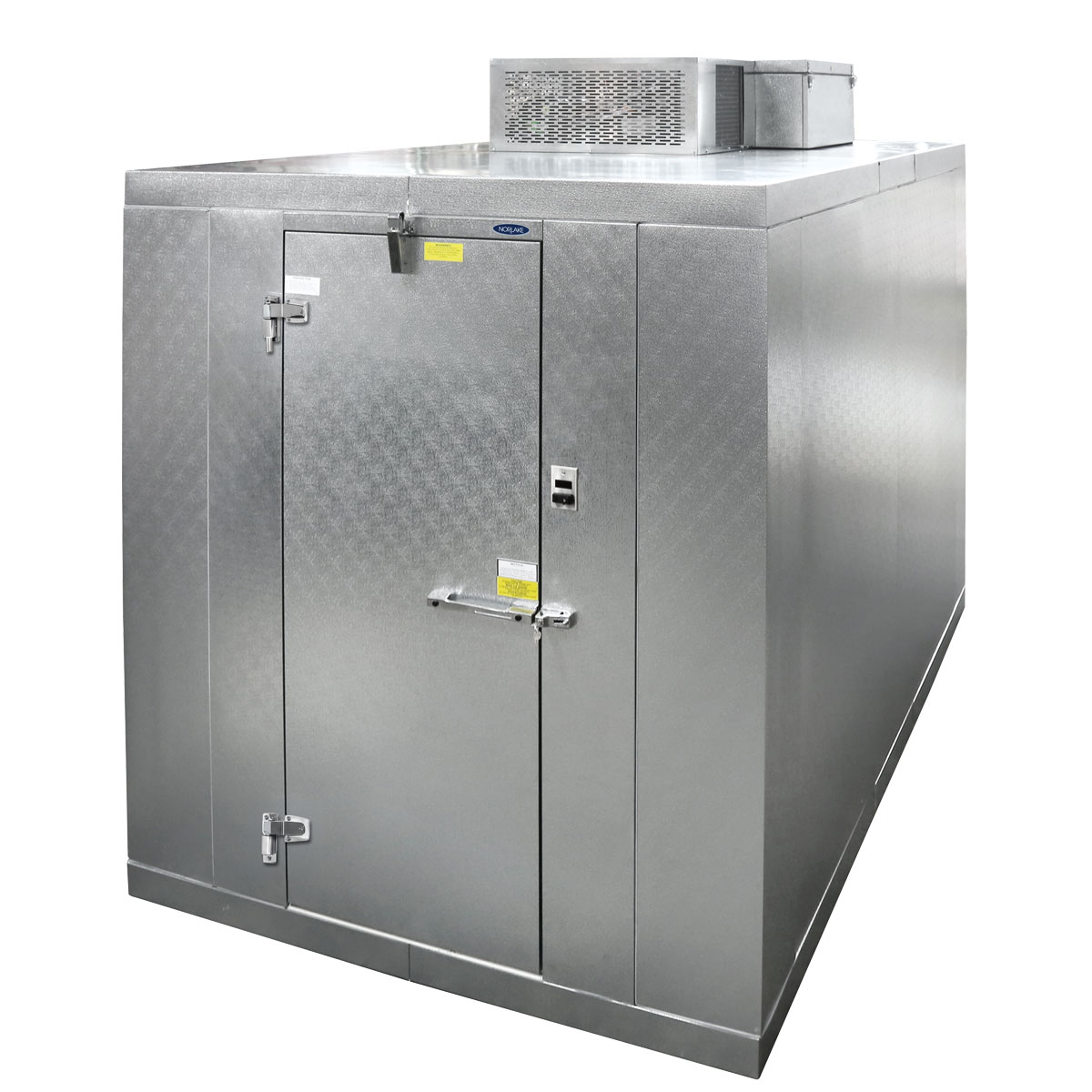

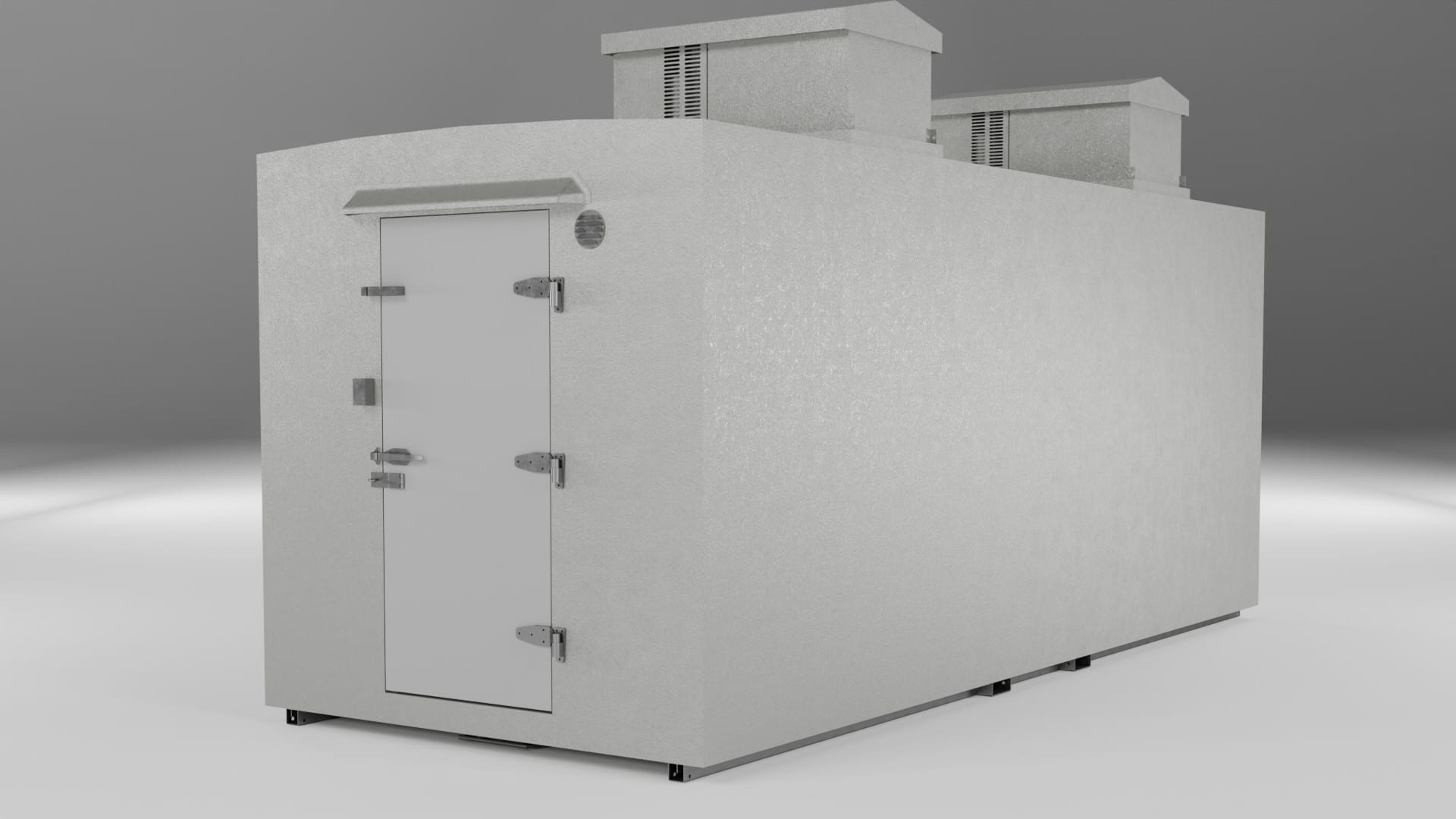


Walk-In Coolers & Freezers: buying guide
A walk-in is chosen by box type (cooler / freezer / combo), footprint, and indoor vs. outdoor. Here is how to read the 292 standard boxes above.
Cooler, freezer, or combo
A cooler holds product just above freezing (≈35–41°F) for produce, dairy, and prepped food; a freezer holds below 0°F for frozen storage; a combo box builds a freezer section into one corner of a cooler to save floor space and cost. Small operations often run a combo; higher volumes justify separate boxes for efficiency and organization.
Sizing the footprint
Size the footprint to your storage volume and how often you take delivery — daily produce deliveries shrink the box you need, twice-weekly deliveries grow it. A common planning benchmark is 1–1.5 sq ft of combined refrigerated floor per meal/day, split roughly two-thirds cooler to one-third freezer. Remember only ~45–55% of the interior is usable after shelving and aisles. Our sizing calculator estimates this from meals per day.
Indoor vs. outdoor and the floor
Outdoor walk-ins are weatherproof and frequently self-contained (a packaged roof or side unit) so they free up kitchen space; indoor boxes usually pair with a remote or top-mount system. An insulated floor is required for freezers and over rough or non-refrigerated slabs; coolers can be floorless (screeded) on a sealed, level floor. Confirm the refrigeration system, door swing, and electrical with a contractor — these are configured-to-order.
| Choice | Best use | Consideration |
|---|---|---|
| Cooler | Produce, dairy, prep | ≈35–41°F, can be floorless |
| Freezer | Frozen storage | Below 0°F, insulated floor |
| Combo | Space-tight operations | Freezer section inside a cooler |
| Outdoor | Free up kitchen space | Weatherproof, often self-contained |
Frequently asked questions
What size walk-in cooler do I need?
As a planning rule, a full-service restaurant needs roughly 1–1.5 sq ft of combined refrigerated floor (cooler + freezer) per meal served per day, about two-thirds cooler and one-third freezer, then adjusted for delivery frequency. A 100-meal-a-day restaurant lands near an 8×10 cooler plus a 6×8 freezer. Use our walk-in sizing calculator to estimate, then have a refrigeration contractor size the real box.
Cooler, freezer, or combo box?
A cooler holds product just above freezing; a freezer holds below 0°F; a combo builds a freezer section into a corner of the cooler. Small operations often choose a combo to save space and cost; higher volumes usually justify separate boxes for efficiency. Size the cooler and freezer portions separately either way.
Are these exact, buildable sizes?
These are the standard and quick-ship footprints the manufacturers publish. Walk-ins are otherwise configured to order — exact exterior dimensions, panel R-value, door placement, and the refrigeration system are finalized with a dealer. Treat the footprints here as the shortlist, not the final engineered spec.
Indoor or outdoor walk-in?
Outdoor walk-ins are weatherproof and usually self-contained, so they free up kitchen floor space and are simpler to install; indoor boxes generally pair with a remote or top-mount refrigeration system. Choose outdoor when you're short on interior space and have a suitable exterior pad.
Does a walk-in need an insulated floor?
Freezers require an insulated floor, and any box over a rough or non-refrigerated slab should have one. Coolers can be floorless (screeded) when they sit on a sealed, level, insulated floor. The floor choice is listed where the manufacturer publishes it.
About this data
Last verified: August 2026. Specs are compiled from manufacturer spec sheets and authorized dealer listings; where a value isn't published we leave it blank rather than guess.
Methodology: every equipment model is compared on the same set of specifications, and dimensions are checked (for sinks, overall width must exceed the combined bowl widths) — figures that fail validation are corrected from the manufacturer model number or omitted. “Street price” is the lowest legitimate published price we've found and can change.
Sourcing: product specs come from the manufacturer; regulatory statements link to the source (e.g. the FDA Food Code and NSF). Code requirements vary by jurisdiction — confirm with the authority reviewing your plans.
Disclosure: FoodServiceNerd is vendor-neutral and free to use. Some “where to buy” links may be affiliate links — we may earn a commission at no cost to you, and it never changes what we list or how we rank it. We don't sell equipment ourselves.
Editorial: compiled and reviewed by the FoodServiceNerd equipment desk (about us). Spot an error? Tell us and we'll correct it.