Commercial Pizza Ovens
Start with oven type. A deck oven bakes on a hot stone/steel hearth for classic crust and the most control, but needs a skilled operator. A conveyor oven runs pies through on a belt at a set time and temperature for consistent, high-volume output with minimal skill. A countertop oven fits low-volume or satellite spots, and a brick/stone hearth oven delivers artisan and Neapolitan styles. Then choose fuel (gas for economical high heat where a line exists, electric otherwise) and size capacity by deck count or conveyor belt width. Most need a Type I hood — confirm with your mechanical code.
Ovens built for pizza — deck, conveyor, countertop, and brick/stone hearth. The first decision is oven type (which sets crust style, skill needed, and throughput), then fuel (gas or electric) and capacity (deck count or conveyor belt width). Compare across every brand.


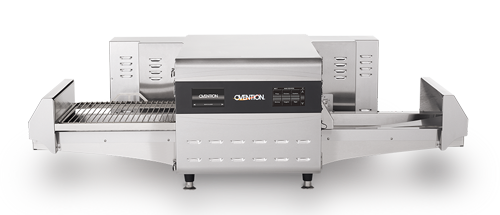

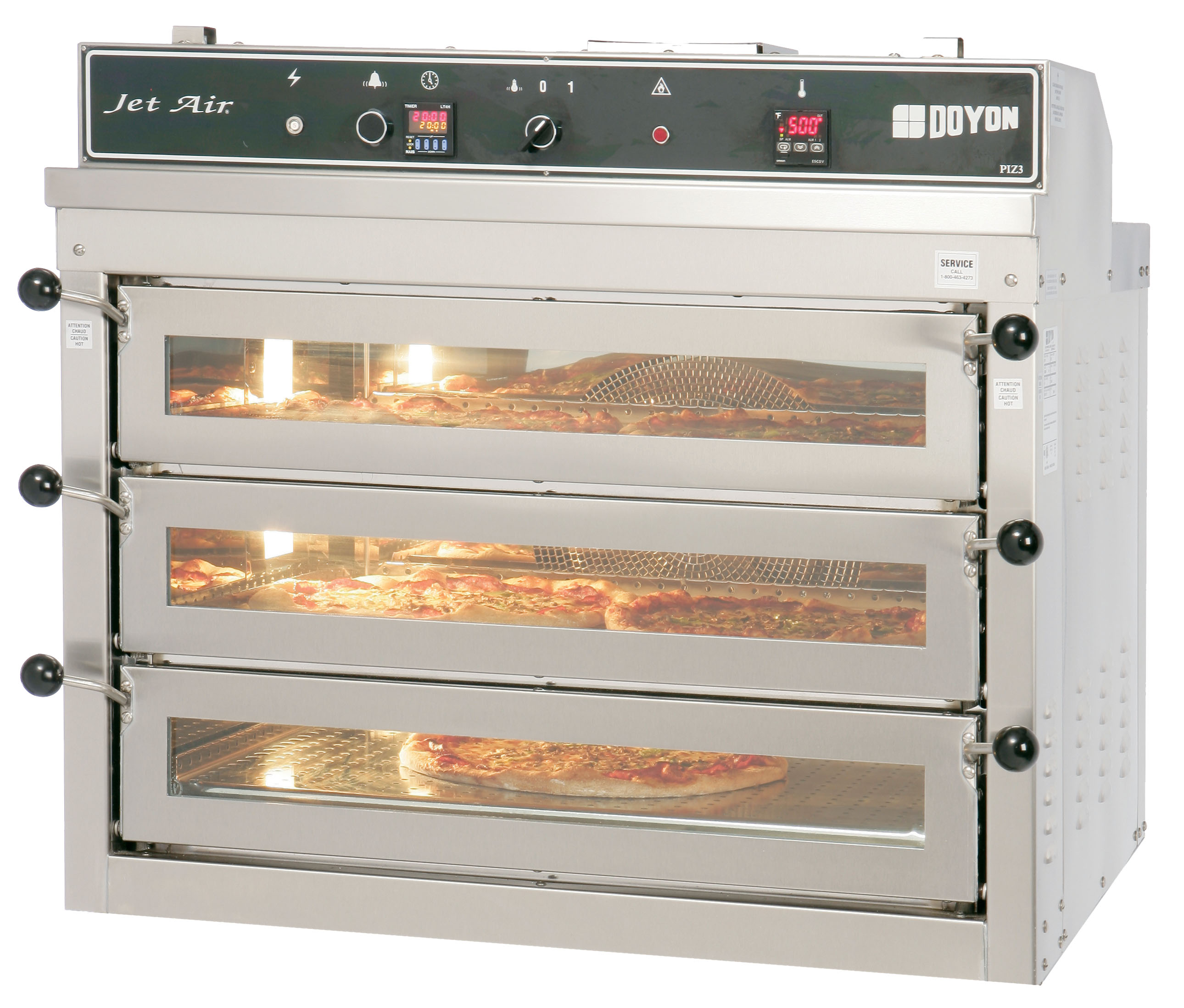
Commercial Pizza Ovens: buying guide
A commercial pizza oven is chosen by oven type, fuel, and capacity (decks or belt width). Here is how to read the 26 ovens above.
Oven type
A deck oven bakes directly on a heated stone or steel hearth — the classic choice for control and crust, stackable for capacity, but it takes an operator's judgment. A conveyor oven carries pies through on a belt at a fixed speed and temperature, so output is consistent and needs little skill — ideal for chains and high volume. A countertop oven suits low-volume or satellite service; a brick/stone hearth oven is for artisan and Neapolitan pizza.
Fuel
Choose gas for economical, high, responsive heat where a gas line exists, or electric where gas isn't available or for precise deck control. Match the fuel to the utilities you actually have — and confirm the BTU (gas) or voltage/phase (electric) on the spec sheet.
Capacity: decks vs belt
Deck ovens scale by deck count — stack chambers to bake more at once without widening the footprint. Conveyor ovens scale by belt width (how many pies fit across per pass) and can be stacked too. Size to your peak orders per hour, not your average.
Venting
Most commercial pizza ovens require a Type I exhaust hood; some electric countertop units are listed for ventless operation. Venting is a code and plan-review item — confirm the specific model's requirement with your local mechanical code before you buy.
| Choice | Best use | Consideration |
|---|---|---|
| Deck | Classic crust, control | Hearth bake, stackable, needs skill |
| Conveyor | High volume, consistency | Belt at fixed speed, low skill |
| Countertop | Low-volume / satellite | Compact, often stackable |
| Brick / hearth | Artisan & Neapolitan | Stone hearth, high heat |
| Gas | Economical high heat | Needs a gas line + BTU sizing |
| Electric | No gas / precise control | Check voltage & phase |
Frequently asked questions
Deck oven vs conveyor oven for pizza?
A deck oven bakes on a hot hearth for classic crust and maximum control, but it needs a skilled operator to load, turn, and time each pie. A conveyor oven runs pies through on a belt at a set speed and temperature for identical results and high throughput with minimal skill — the choice for chains and high volume. Pick by crust style, volume, and staff skill.
Gas or electric pizza oven?
Gas gives economical, high, responsive heat where a gas line exists and is common on high-BTU deck and conveyor ovens; electric suits spaces without gas and offers precise deck-temperature control. Confirm the BTU (gas) or the voltage and phase (electric) on the spec sheet, and match to your available utilities.
How are pizza ovens sized?
Deck ovens are sized by deck count (stack chambers for more capacity); conveyor ovens by belt width (pies across per pass) and can also be stacked. Size to your peak orders per hour, not the daily average, and remember footprint — stacking adds capacity without adding floor width.
Does a pizza oven need a hood?
Most commercial pizza ovens require a Type I exhaust hood; some electric countertop models are listed for ventless use. Ventilation is a code and plan-review requirement, so confirm the exact model's needs with your local mechanical code before purchase and installation.
What is a deck oven's hearth made of?
Deck ovens bake on a heated hearth of stone (cordierite), ceramic, or steel that stores and radiates heat into the crust for the characteristic bake. Stone/ceramic hearths give the traditional result; the hearth material and deck temperature are part of what defines the crust style.
About this data
Last verified: August 2026. Specs are compiled from manufacturer spec sheets and authorized dealer listings; where a value isn't published we leave it blank rather than guess.
Methodology: every equipment model is compared on the same set of specifications, and dimensions are checked (for sinks, overall width must exceed the combined bowl widths) — figures that fail validation are corrected from the manufacturer model number or omitted. “Street price” is the lowest legitimate published price we've found and can change.
Sourcing: product specs come from the manufacturer; regulatory statements link to the source (e.g. the FDA Food Code and NSF). Code requirements vary by jurisdiction — confirm with the authority reviewing your plans.
Disclosure: FoodServiceNerd is vendor-neutral and free to use. Some “where to buy” links may be affiliate links — we may earn a commission at no cost to you, and it never changes what we list or how we rank it. We don't sell equipment ourselves.
Editorial: compiled and reviewed by the FoodServiceNerd equipment desk (about us). Spot an error? Tell us and we'll correct it.