Commercial Hot Plates & Countertop Ranges
A commercial hot plate (countertop range) adds open-burner cooking where a full range won't fit. Choose by burner count (1–2 for a garnish or sauté station, 4–6 for a small line), fuel (gas for fast high heat where a line exists, electric otherwise), and total BTU/kW. Heavy open-flame cooking still needs the right hood — confirm with your mechanical code.
Compact countertop cooking — gas and electric hot plates and countertop ranges for a prep station, catering line, or space-tight kitchen. Compare by burner count, fuel, and heat output, then match to the line and hood.
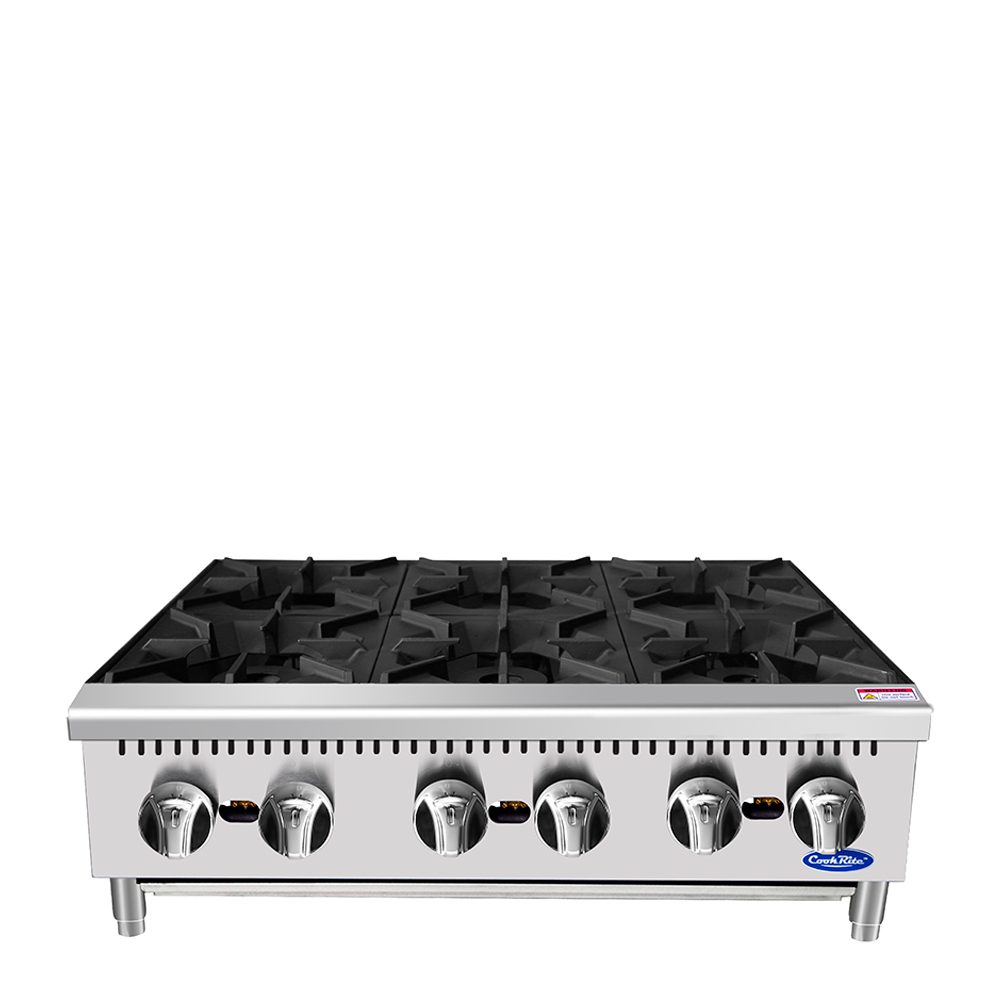
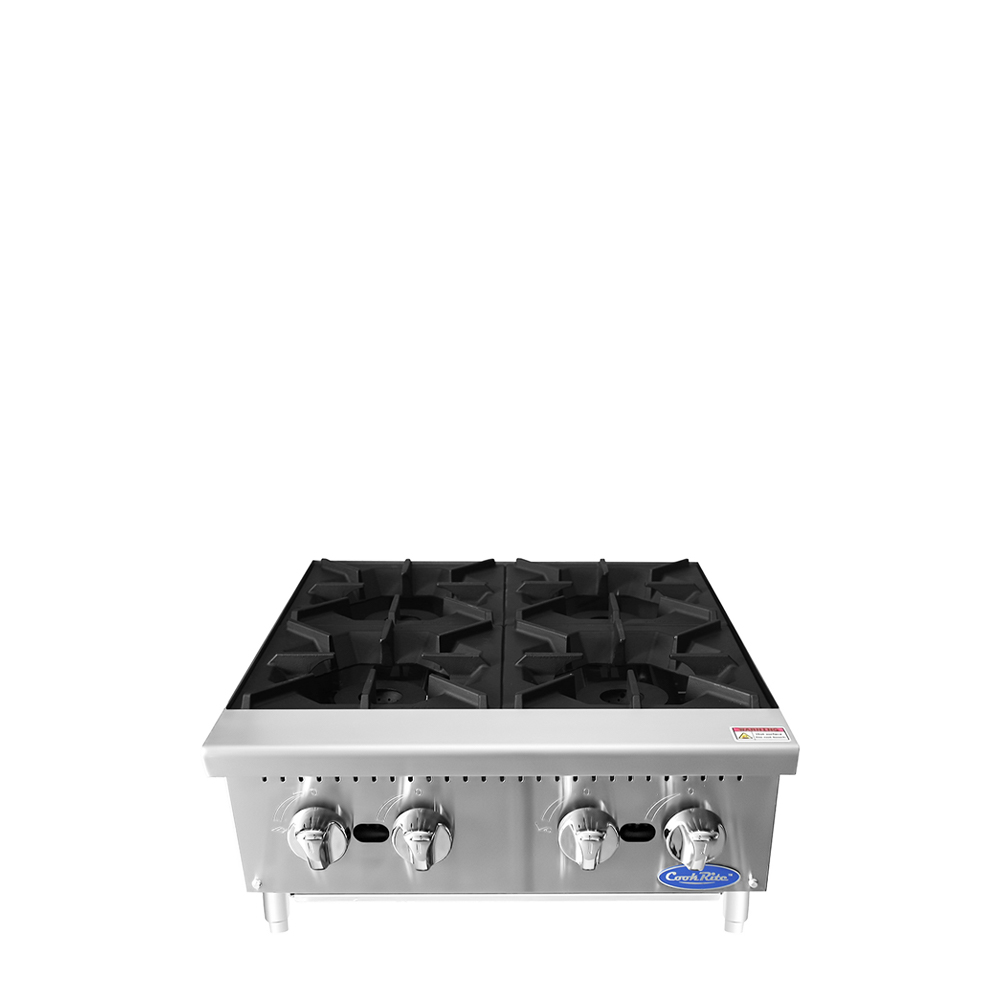
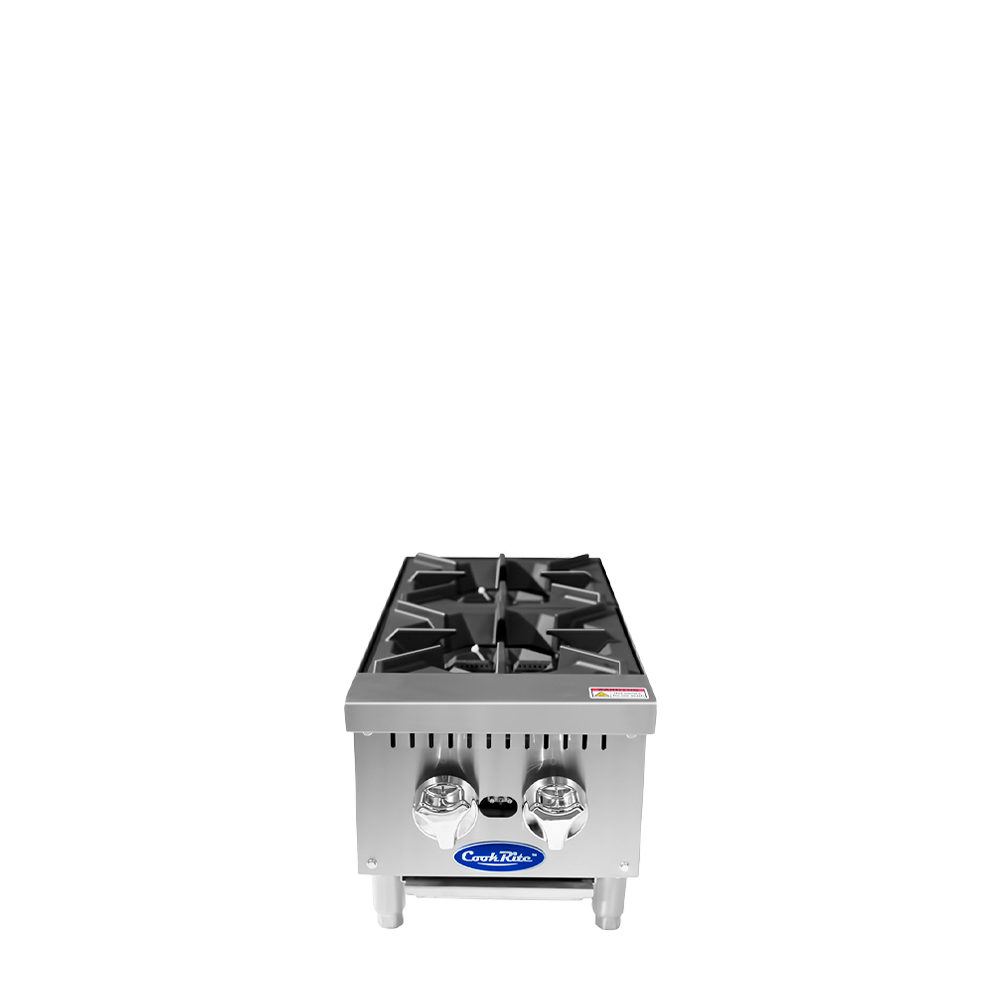


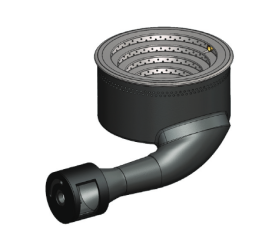
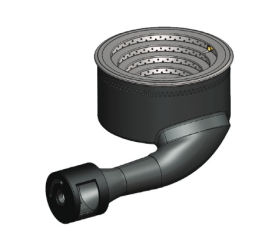
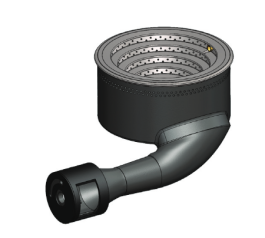
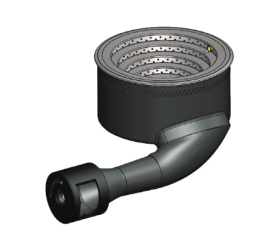
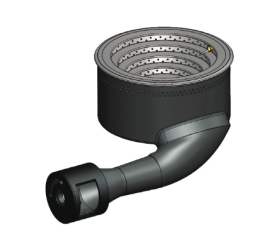
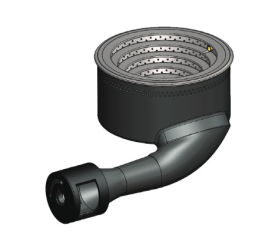
Commercial Hot Plates & Countertop Ranges: buying guide
A hot plate is chosen by burner count, fuel, and heat output. Here is how to read the 14 units above.
Burners and output
Size burner count to the station — 1–2 burners for a garnish/sauté spot, 4–6 for a compact line — and check total BTU (gas) or kW (electric) for how fast it recovers heat under a pot.
Gas or electric
Gas gives fast, high, responsive heat where a gas line exists; electric suits spaces without gas and offers steady, even heat. Match to the utilities you actually have at the counter.
Hood and clearance
Open-burner cooking produces heat and grease vapor — confirm the hood and combustible clearances your mechanical code requires, even for a countertop unit.
| Choice | Best use | Consideration |
|---|---|---|
| 1–2 burner | Garnish / sauté station | Compact footprint |
| 4 burner | Small line / prep | Standard countertop range |
| Gas | Fast high heat | Needs a gas line |
| Electric | No gas hookup | Steady even heat |
Frequently asked questions
Hot plate vs a full range?
A hot plate is the countertop, oven-less top section — open burners for boiling, sautéing, and holding where a full floor range won't fit. Buy a hot plate for a prep or catering station; buy a range when you also need the oven base.
Gas or electric hot plate?
Gas gives fast, high, responsive heat where a line exists; electric is steady and suits spaces without gas. Fuel is listed where the manufacturer states it.
How many burners do I need?
Match burner count to the station: 1–2 for garnish/sauté, 4–6 for a small line. More burners need more BTU and more counter space, so size to actual simultaneous pots.
Does a hot plate need a hood?
Open-burner cooking generally requires the appropriate hood and combustible clearance under the mechanical code, even on a countertop. Confirm the requirement with your local authority.
About this data
Last verified: August 2026. Specs are compiled from manufacturer spec sheets and authorized dealer listings; where a value isn't published we leave it blank rather than guess.
Methodology: every equipment model is compared on the same set of specifications, and dimensions are checked (for sinks, overall width must exceed the combined bowl widths) — figures that fail validation are corrected from the manufacturer model number or omitted. “Street price” is the lowest legitimate published price we've found and can change.
Sourcing: product specs come from the manufacturer; regulatory statements link to the source (e.g. the FDA Food Code and NSF). Code requirements vary by jurisdiction — confirm with the authority reviewing your plans.
Disclosure: FoodServiceNerd is vendor-neutral and free to use. Some “where to buy” links may be affiliate links — we may earn a commission at no cost to you, and it never changes what we list or how we rank it. We don't sell equipment ourselves.
Editorial: compiled and reviewed by the FoodServiceNerd equipment desk (about us). Spot an error? Tell us and we'll correct it.