Commercial Exhaust Hoods
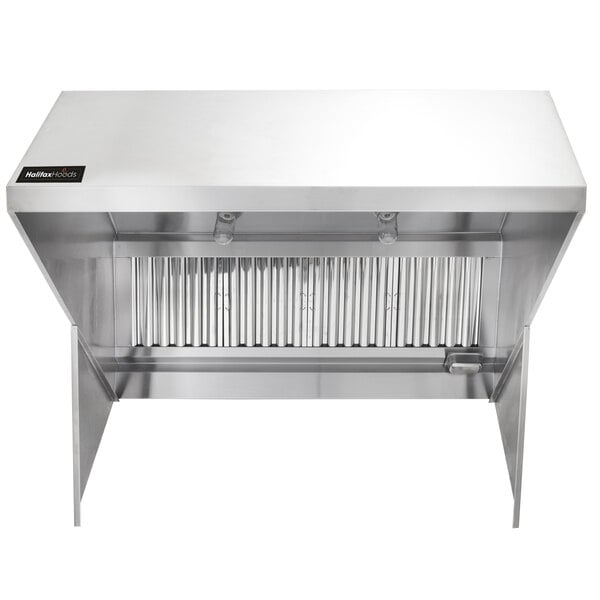
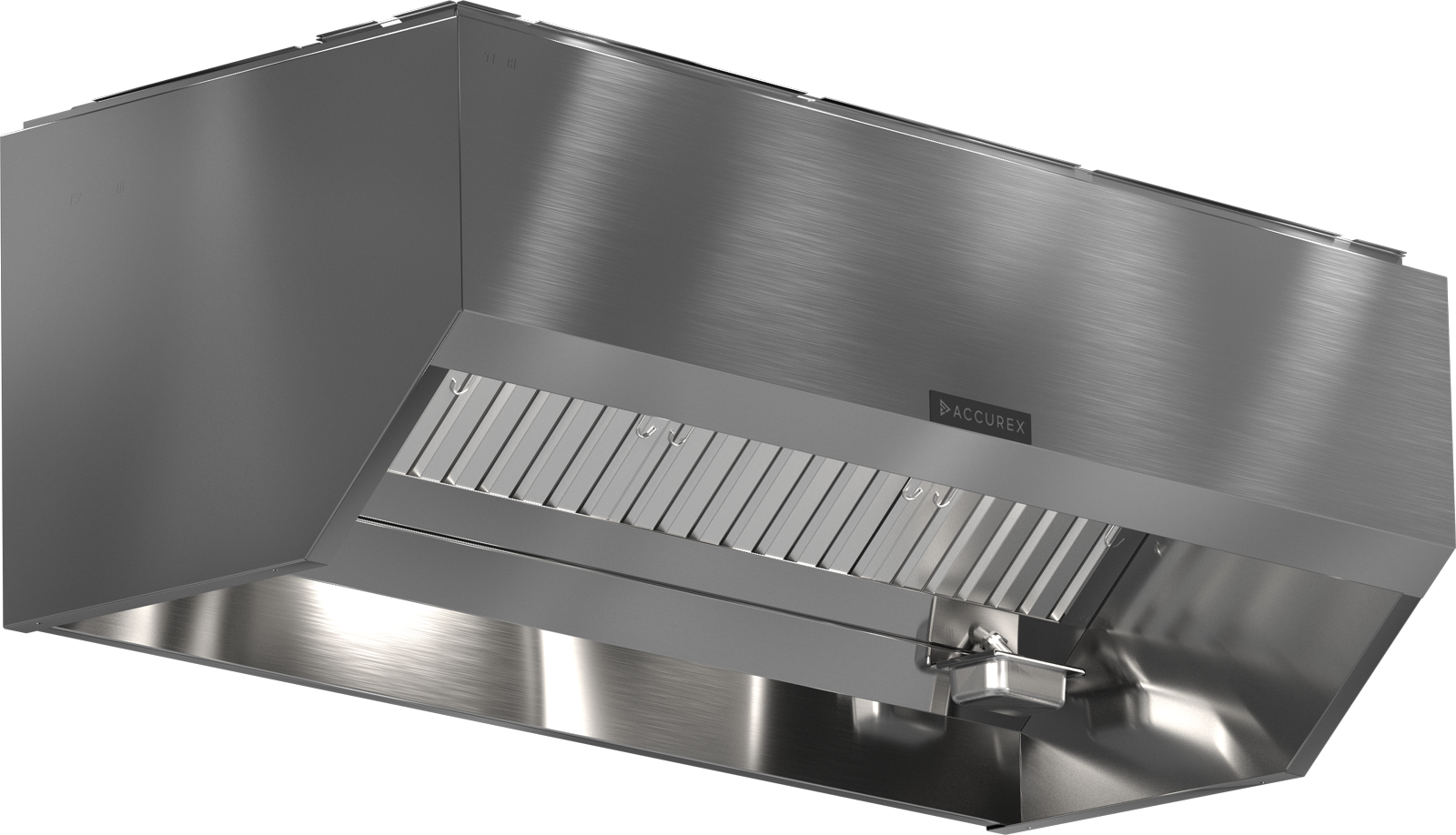
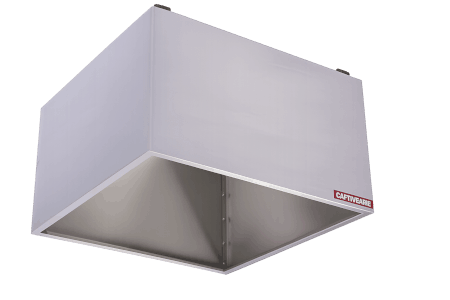
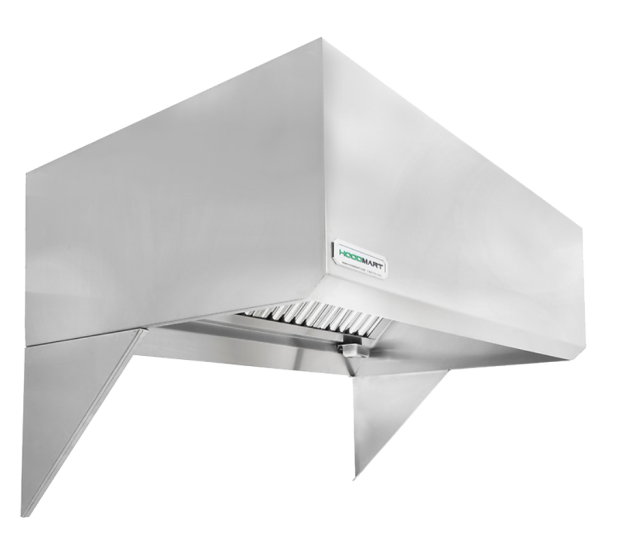
Start with hood type, which is a code requirement, not a preference. A Type I hood is required over grease- and smoke-producing equipment (fryers, ranges, griddles, charbroilers) and carries grease filters and fire suppression. A Type II hood handles heat, steam, and odor only (ovens, steamers, dishwashers). Then choose the style — wall canopy against a wall, island canopy for a cook line open on all sides, or a low-profile backshelf/proximity hood — and size the hood length to overhang your equipment line and the exhaust CFM to the appliances beneath it. Hood selection, make-up air, and fire suppression are all governed by your mechanical code and plan review — confirm with your local authority.
Kitchen ventilation that captures grease, smoke, heat, and steam over the cook line. The first decision is hood type — Type I for grease-and-smoke over fryers, ranges, and charbroilers, or Type II for heat/steam over ovens, dishwashers, and steamers. Then choose the style (wall canopy, island, backshelf) and size the length and airflow to your equipment line.
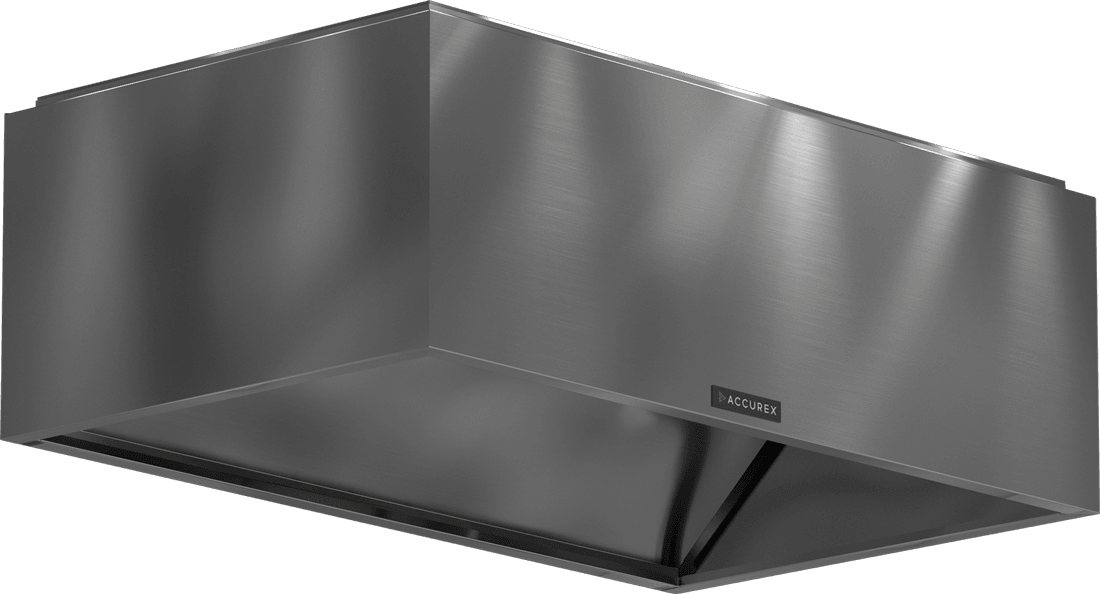
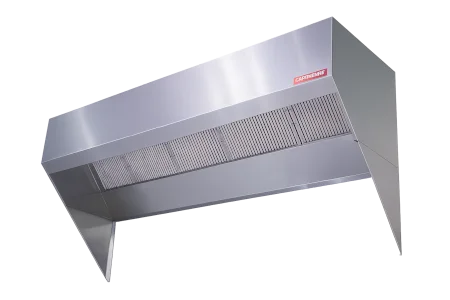
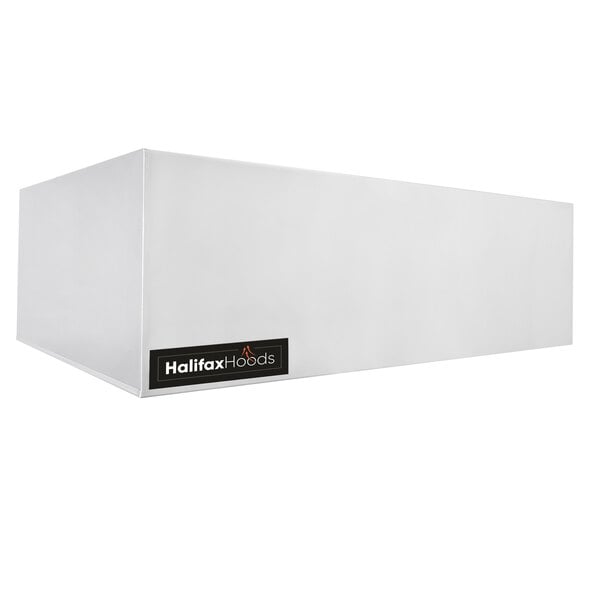
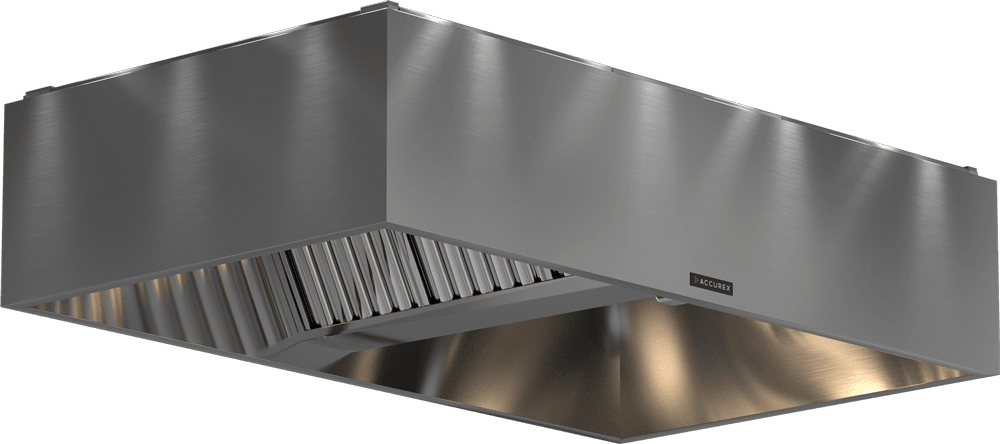
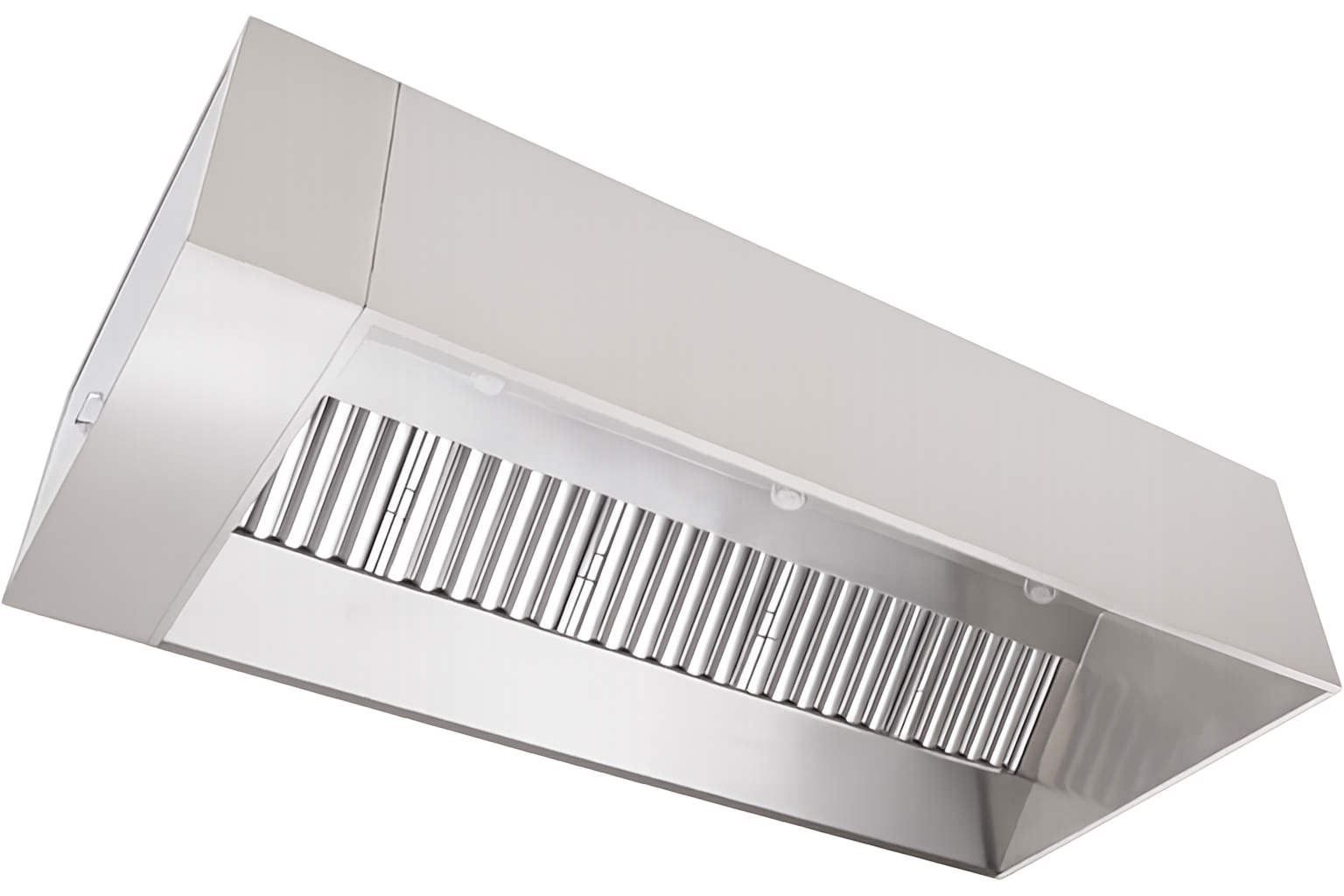
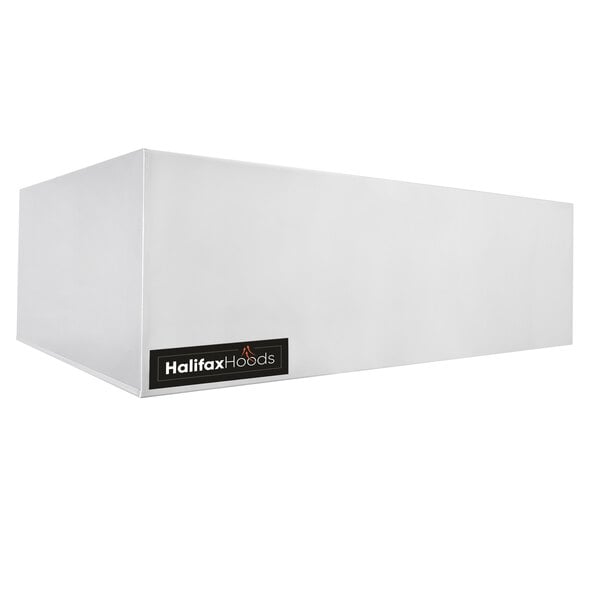

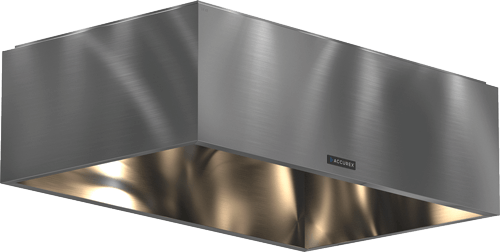
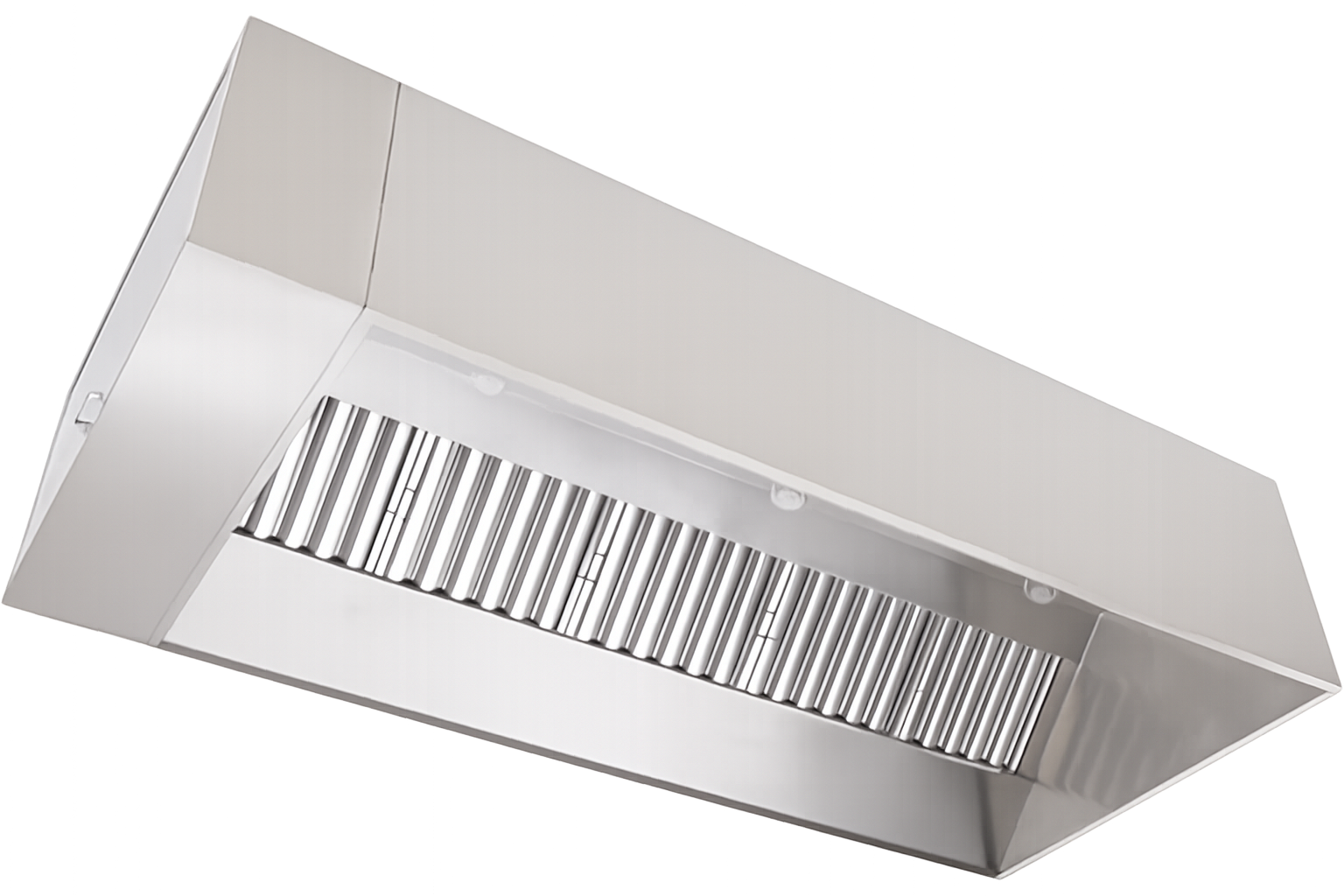
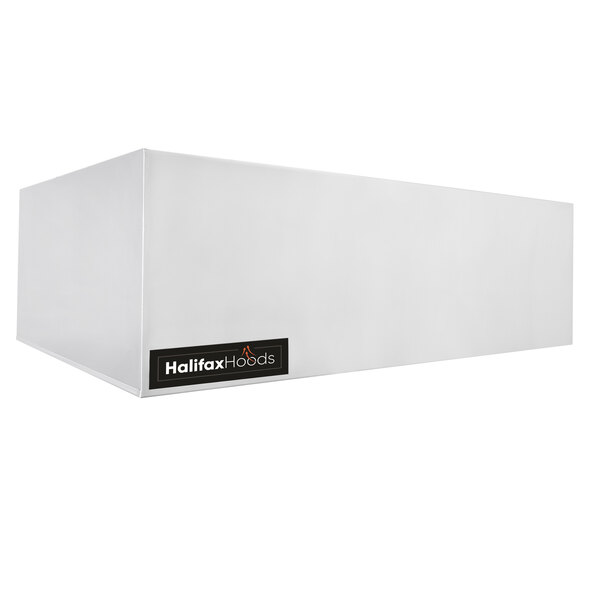
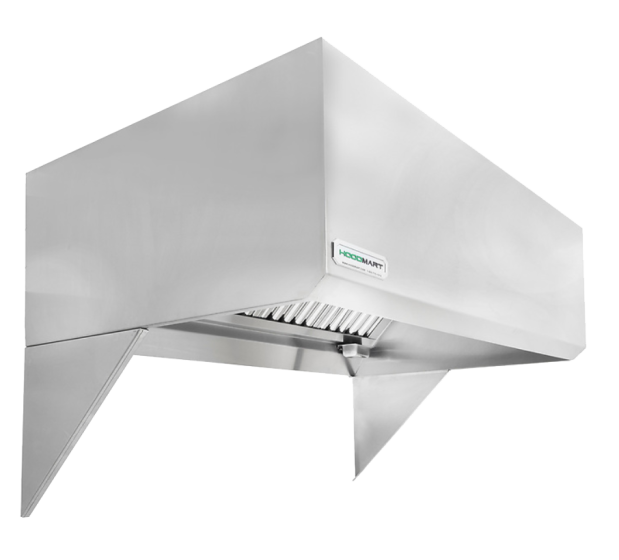
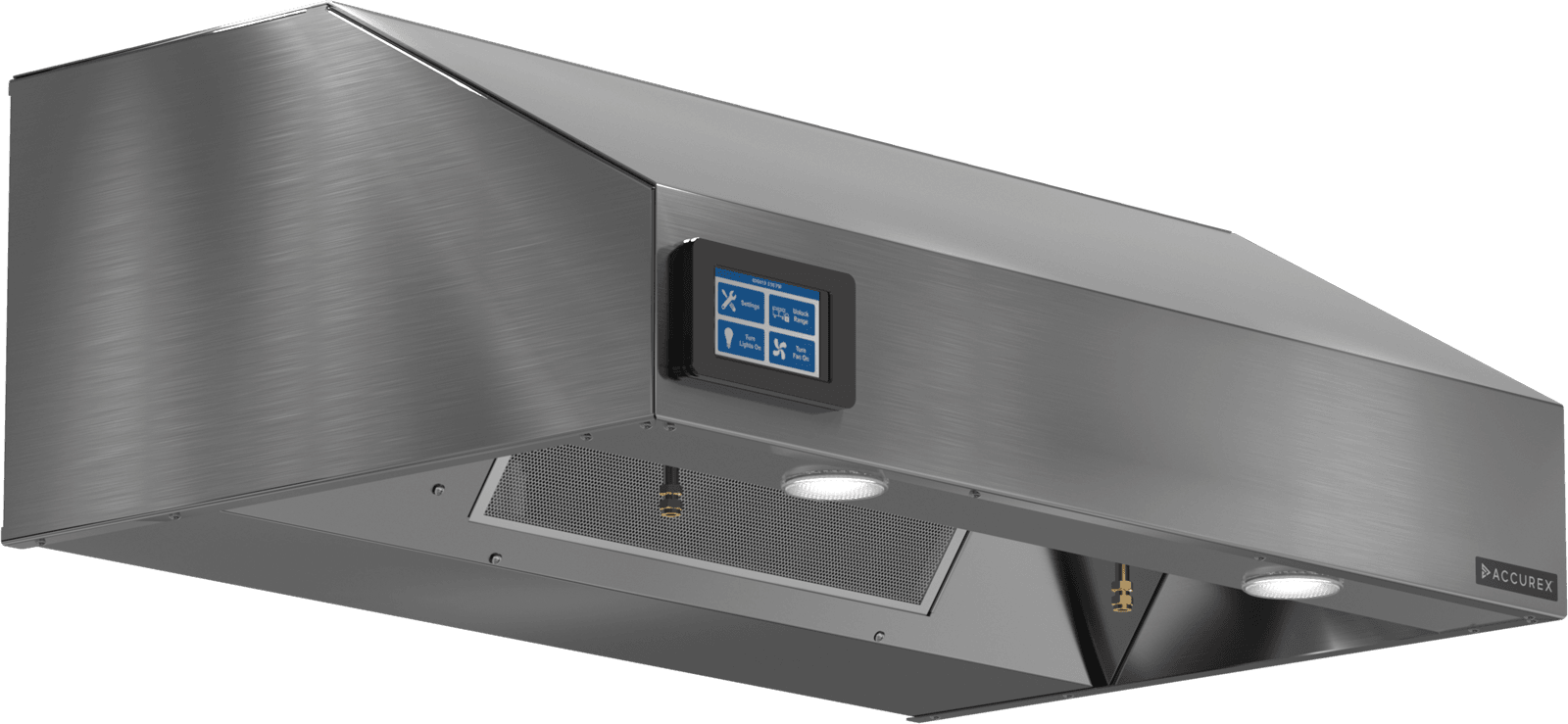
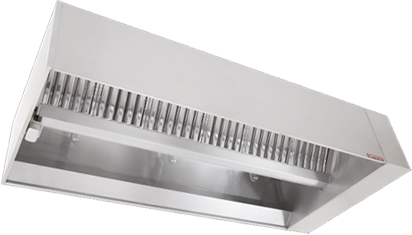

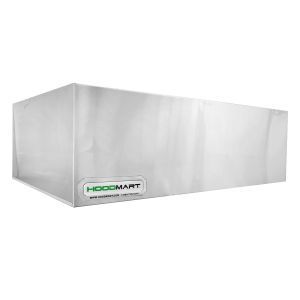
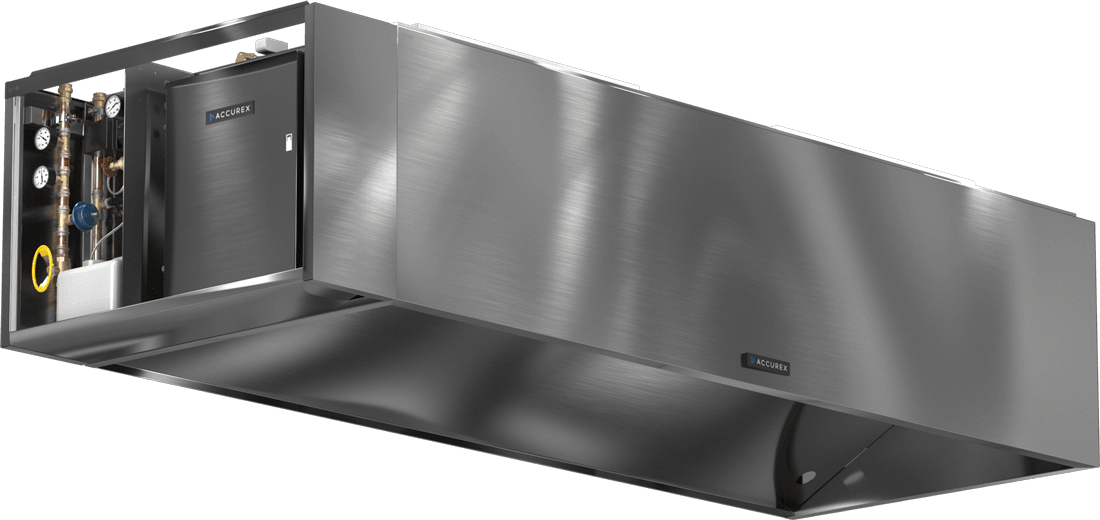
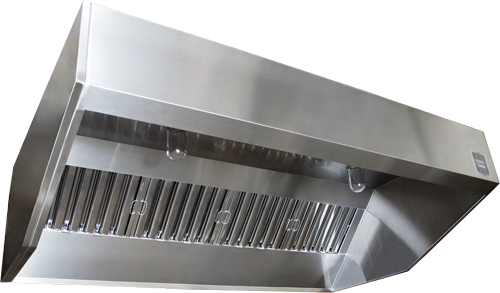


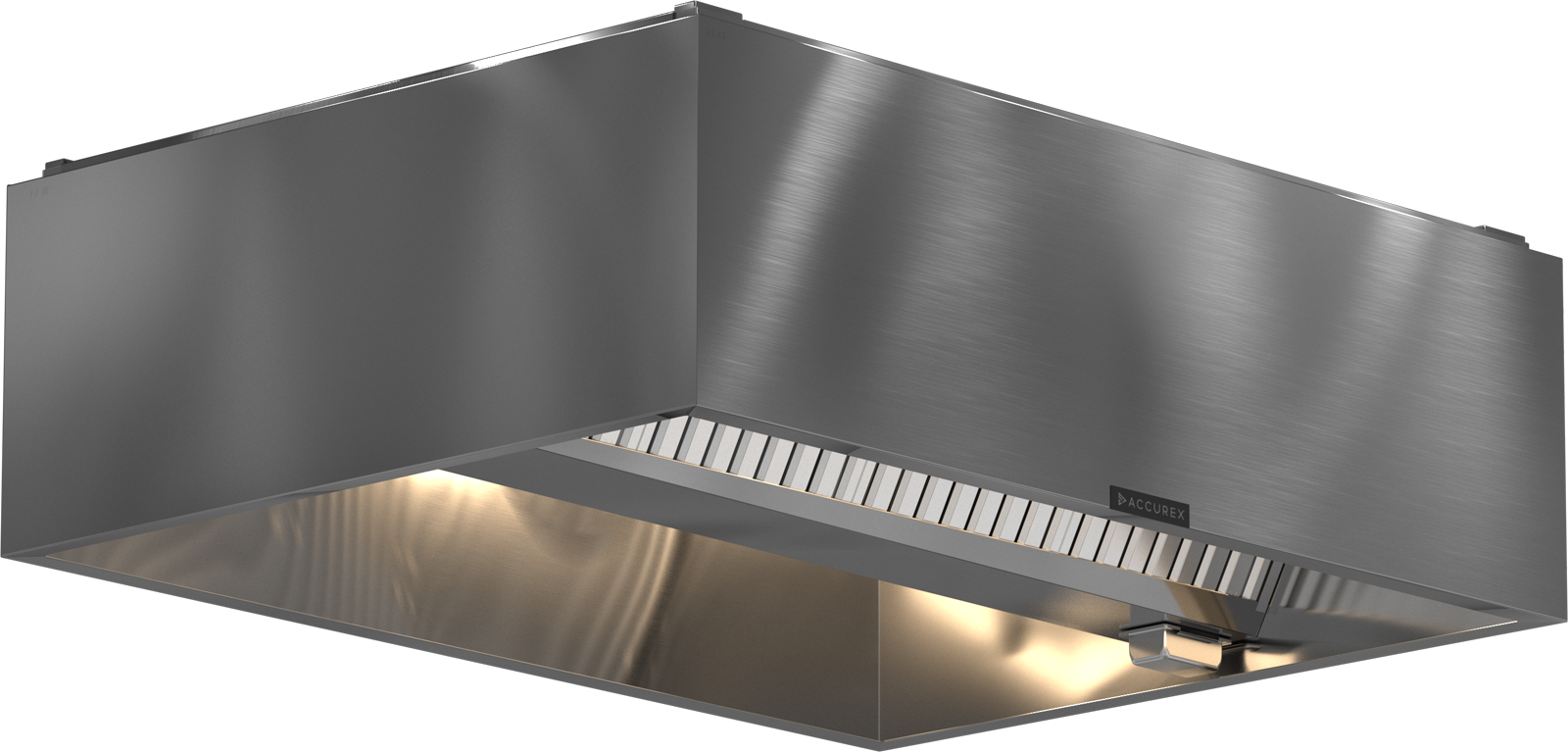
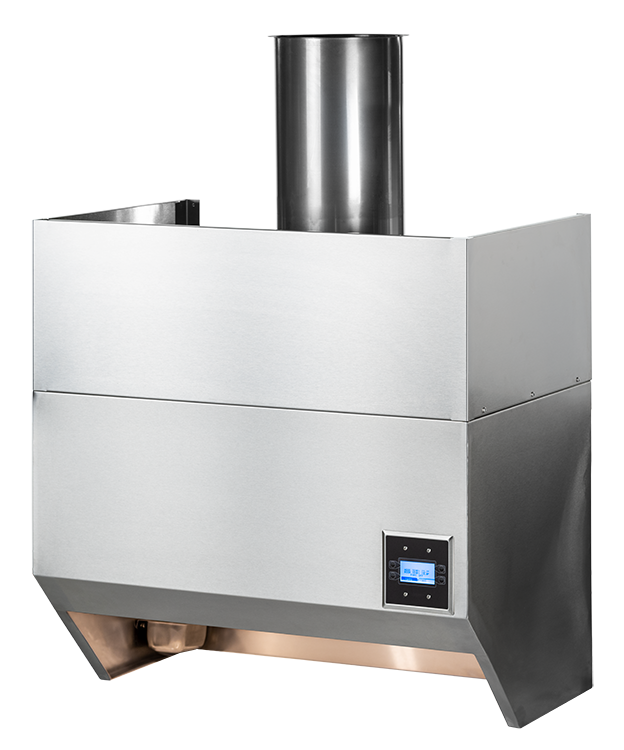
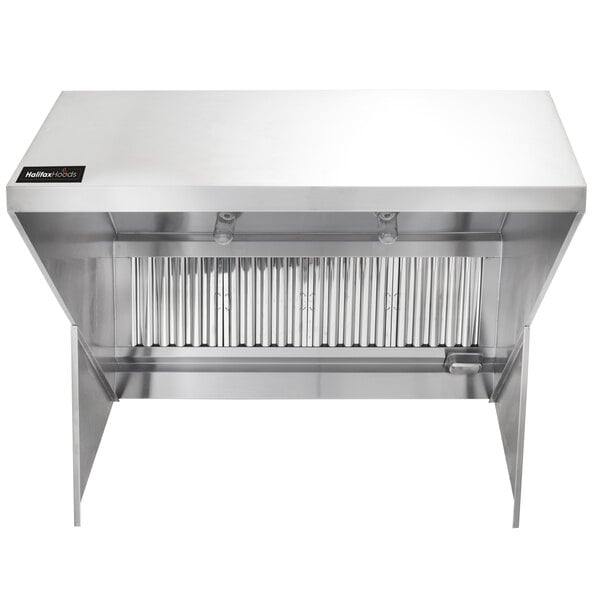
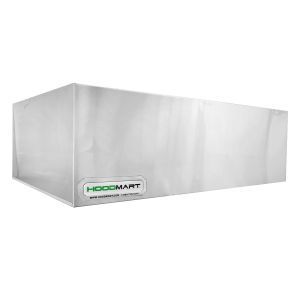
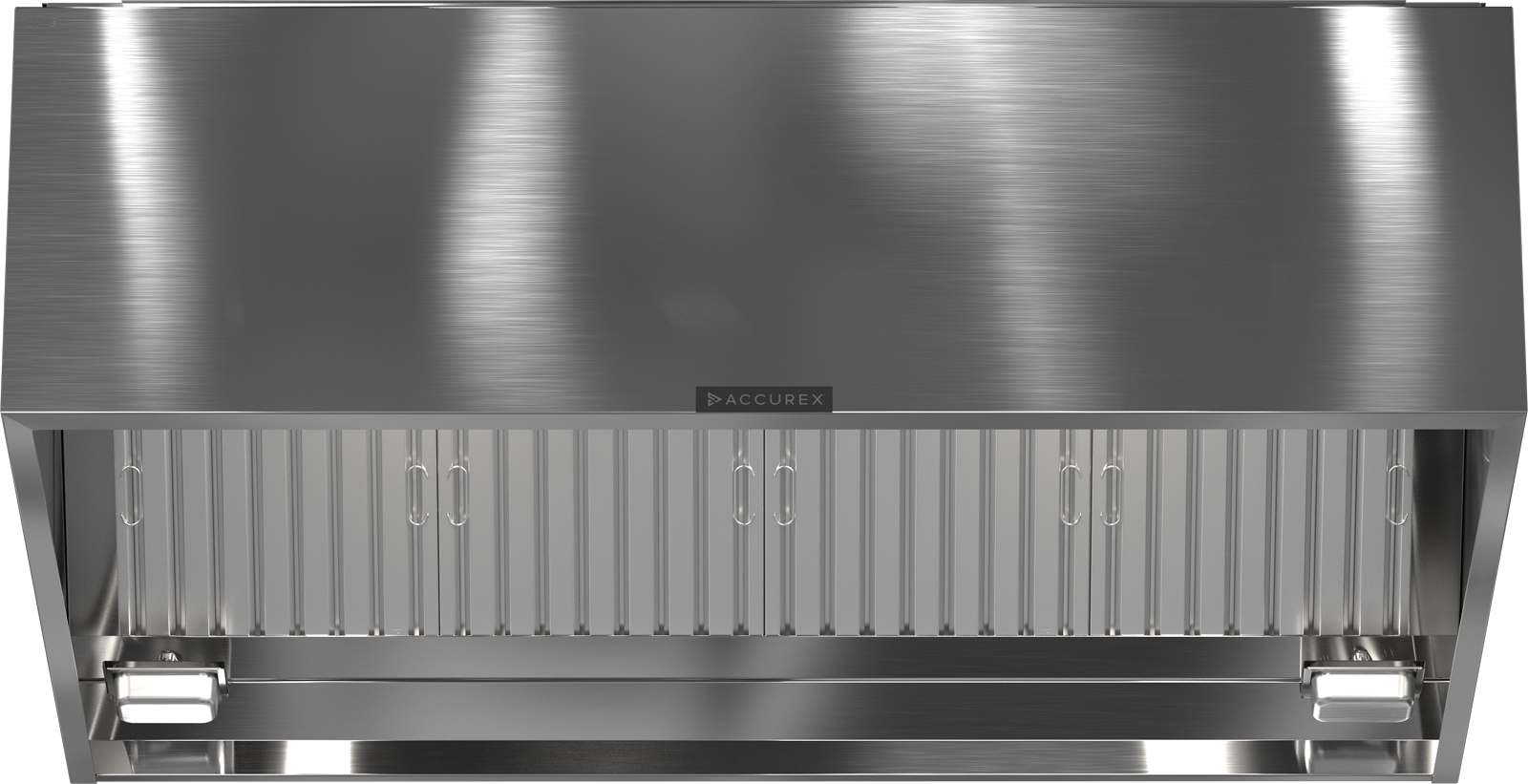
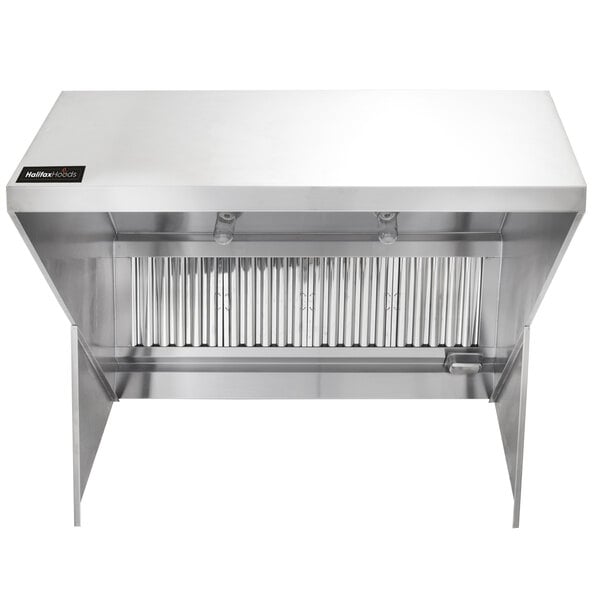

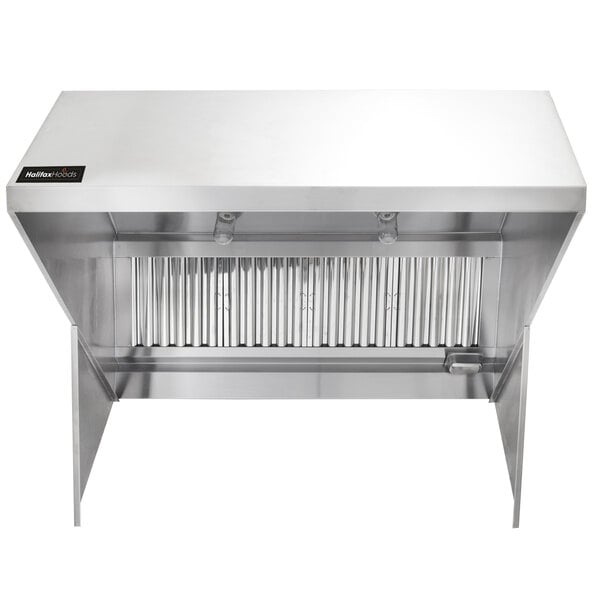
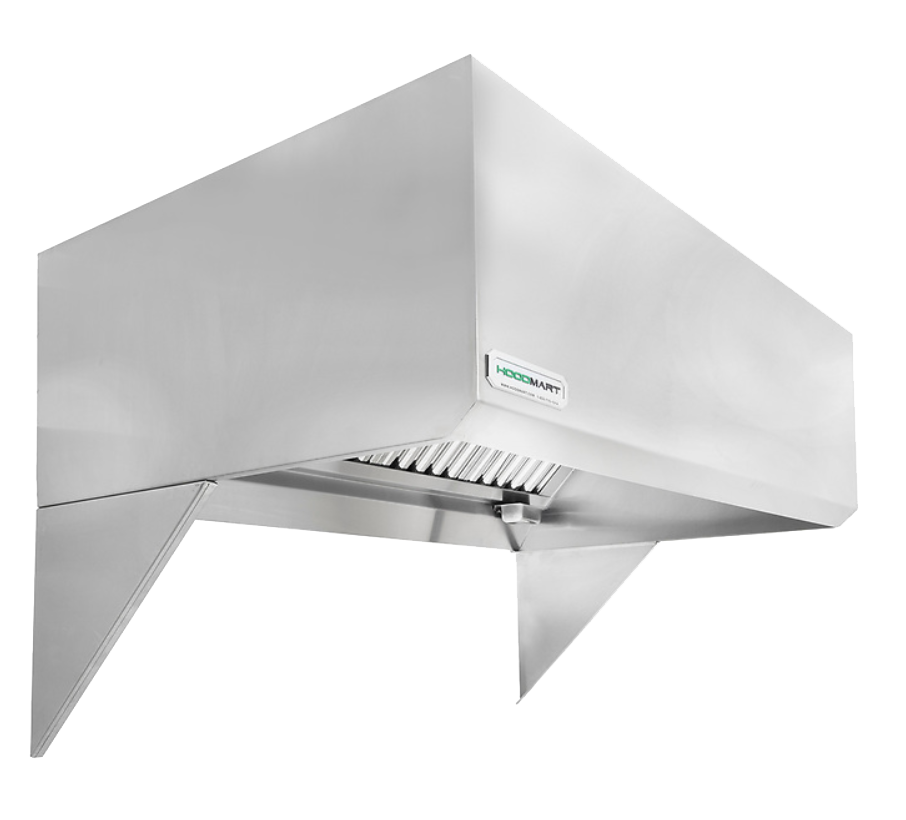
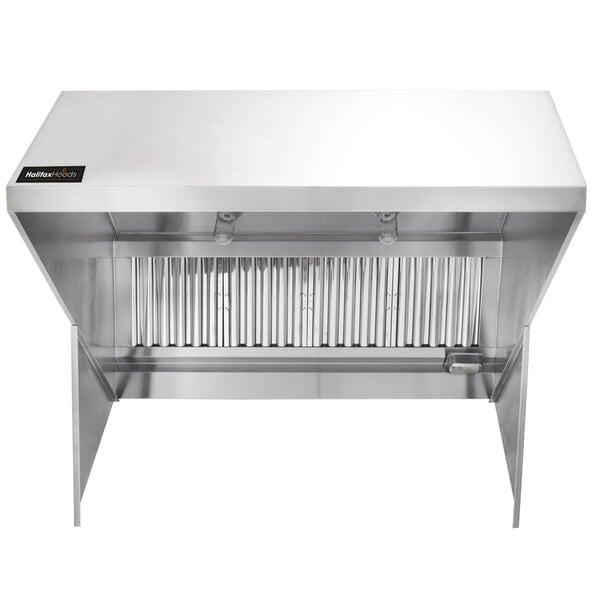
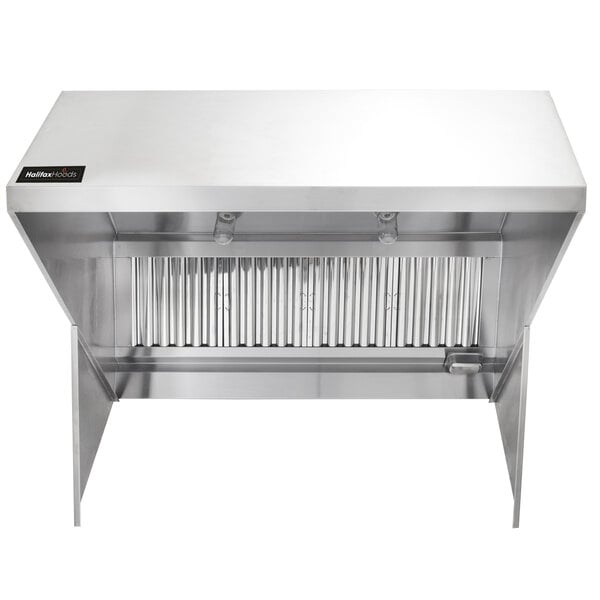

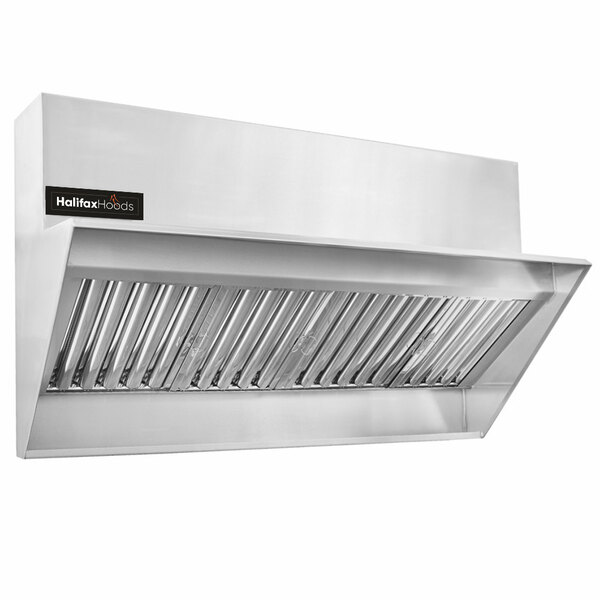
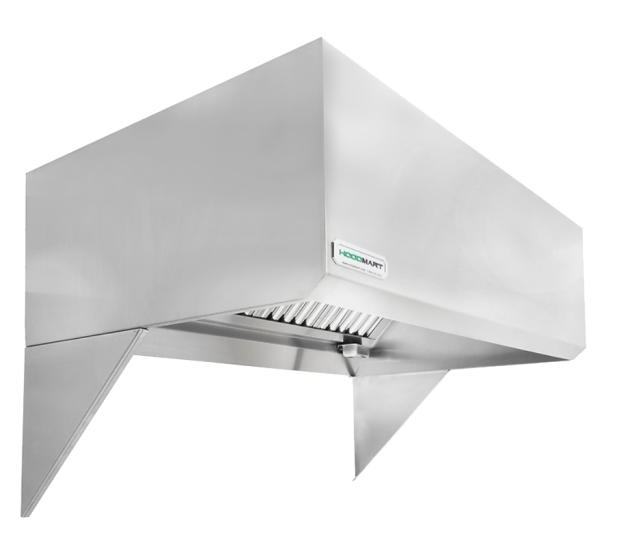
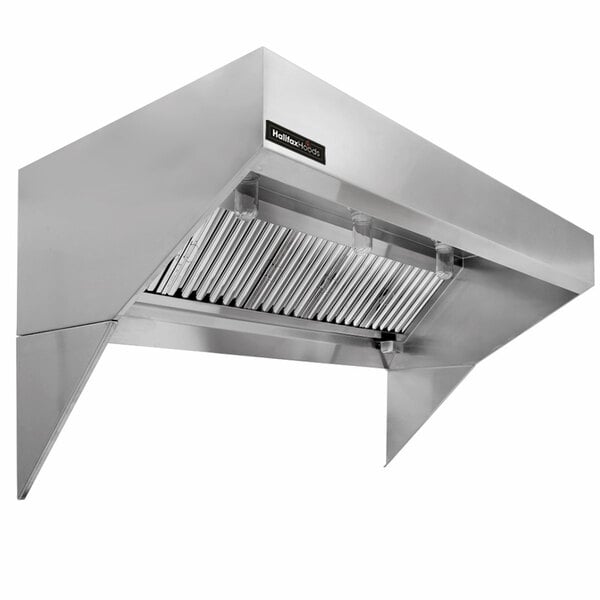
Commercial Exhaust Hoods: buying guide
A commercial exhaust hood is chosen by hood type (I vs II), style, and by sizing length and CFM to the equipment line. Here is how to read the 61 hoods above.
Type I vs Type II
Type I hoods are required over grease- and smoke-producing appliances (fryers, ranges, griddles, charbroilers); they use grease-extracting baffle filters and pair with a fire-suppression system. Type II hoods handle only heat, steam, and odor (over ovens, steamers, dishwashers) and are simpler. The equipment under the hood determines which type the code requires — this is not optional.
Style
A wall-canopy hood mounts against a wall over a line placed against it; an island (single/double) canopy serves a cook line open on all sides and needs more airflow; a backshelf/proximity hood sits low and close for a smaller footprint over counter equipment. Match the style to how the line is laid out.
Sizing: length and CFM
The hood length must overhang the equipment line (with the code-required overhang at each end), and the exhaust CFM is calculated from the appliances beneath it and the hood geometry. Undersizing airflow lets grease and smoke escape capture. Sizing is a plan-review calculation — use the manufacturer's/engineer's numbers, not a guess.
Make-up air, fire suppression, and code
Exhaust must be balanced by make-up air, and Type I hoods require a listed fire-suppression system and welded grease duct. Hood selection, ductwork, make-up air, and suppression are all governed by NFPA 96, the mechanical code, and local plan review. Confirm the full system with your authority having jurisdiction before you buy.
| Choice | Best use | Consideration |
|---|---|---|
| Type I | Grease & smoke (fryers, ranges, charbroilers) | Grease filters + fire suppression |
| Type II | Heat & steam (ovens, dishwashers, steamers) | Simpler, no grease/suppression |
| Wall canopy | Line against a wall | Most common |
| Island canopy | Cook line open on all sides | Needs more airflow |
| Backshelf / proximity | Counter equipment, low profile | Compact footprint |
Frequently asked questions
What's the difference between a Type I and Type II hood?
A Type I hood is required over grease- and smoke-producing equipment — fryers, ranges, griddles, charbroilers — and uses grease baffle filters plus a fire-suppression system. A Type II hood handles only heat, steam, and odor (over ovens, steamers, dishwashers) and is much simpler. The equipment underneath dictates which type your code requires; it isn't a matter of preference.
How is exhaust hood CFM determined?
Exhaust airflow (CFM) is calculated from the type and duty of the appliances under the hood, the hood style and length, and code formulas — higher-temperature equipment like charbroilers needs more airflow than a range. It's a plan-review calculation done by the manufacturer or your engineer, not a guess; undersized airflow fails to capture grease and smoke.
Do I need make-up air with an exhaust hood?
Yes. Air exhausted by the hood has to be replaced, so a make-up air unit brings in (and often tempers) outside air to balance the exhaust. Unbalanced ventilation causes negative pressure, poor capture, drafts, and doors that won't close. Make-up air is part of the code-required system and the plan review.
Are commercial hoods sold ready-made or built to size?
Both. Some brands sell standard, published stock sizes you can buy off the shelf, while others build the hood to your line's exact length and configuration. Either way the type, length, CFM, ductwork, make-up air, and fire suppression must meet NFPA 96 and your local mechanical code — confirm the full design with your authority having jurisdiction.
About this data
Last verified: August 2026. Specs are compiled from manufacturer spec sheets and authorized dealer listings; where a value isn't published we leave it blank rather than guess.
Methodology: every equipment model is compared on the same set of specifications, and dimensions are checked (for sinks, overall width must exceed the combined bowl widths) — figures that fail validation are corrected from the manufacturer model number or omitted. “Street price” is the lowest legitimate published price we've found and can change.
Sourcing: product specs come from the manufacturer; regulatory statements link to the source (e.g. the FDA Food Code and NSF). Code requirements vary by jurisdiction — confirm with the authority reviewing your plans.
Disclosure: FoodServiceNerd is vendor-neutral and free to use. Some “where to buy” links may be affiliate links — we may earn a commission at no cost to you, and it never changes what we list or how we rank it. We don't sell equipment ourselves.
Editorial: compiled and reviewed by the FoodServiceNerd equipment desk (about us). Spot an error? Tell us and we'll correct it.